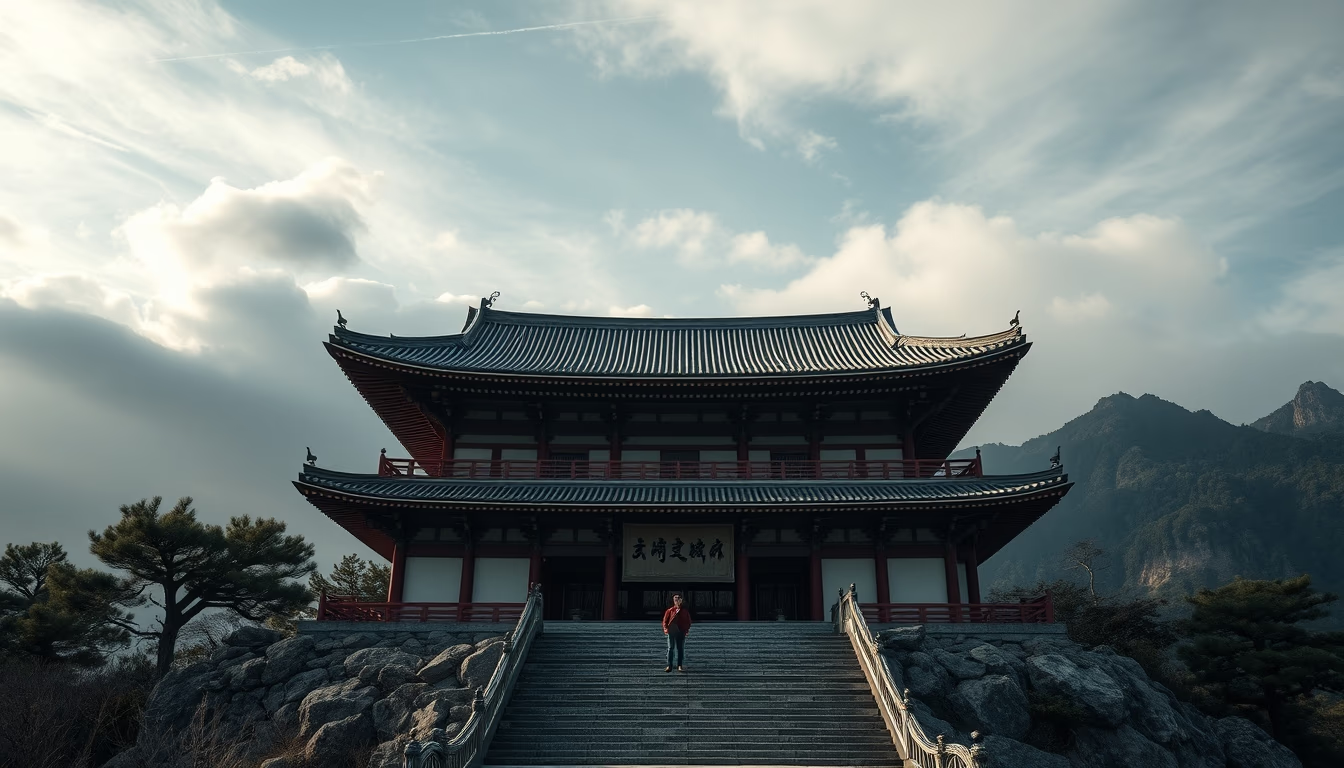
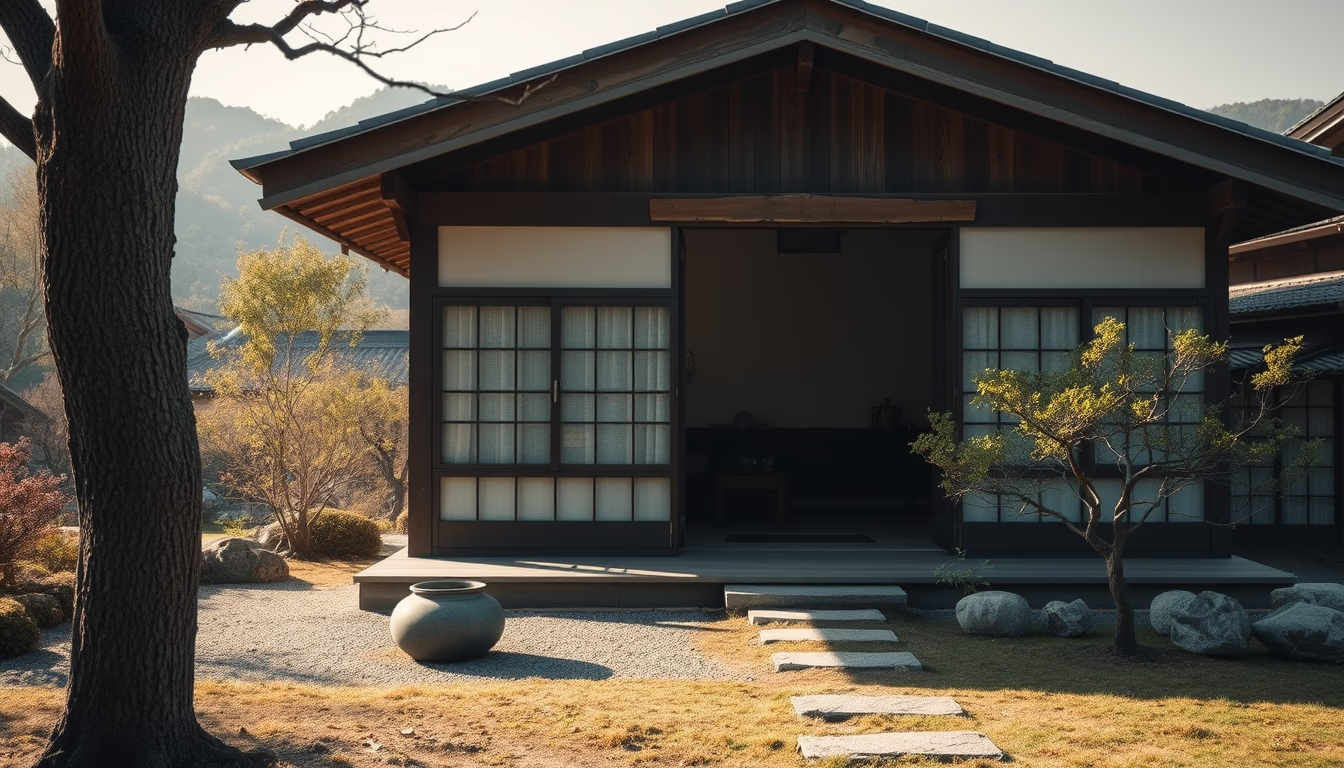
Rock garden raked patterns
1344×768 · AVIF · CC BY 4.0

Japanese dry gardens, or karesansui, use gravel and sand to represent water and clouds, creating abstract landscapes for contemplation.
About this subject
The Japanese rock garden, known as karesansui (dry landscape garden), is a form of landscape art dating back to the Muromachi period (14th-16th centuries). Inspired by Zen Buddhism, these gardens replace water with fine gravel or sand, meticulously raked into wavy patterns to evoke rivers, waves, or whirlpools. Stones are strategically placed to represent mountains, islands, or animals, while empty space invites meditation.
The most famous example is the Ryoan-ji Temple in Kyoto, where fifteen stones rest on a bed of white raked gravel. The raking patterns are not random; Zen monks redraw them daily as a mindfulness practice, breaking monotony with circular and straight strokes imitating sea currents. The technique demands concentration and balance, as each movement of the wooden rake must be precise.
Culturally, karesansui embody impermanence and harmony between humans and nature. They have influenced not only Japanese landscape design but also Western garden design and minimalist art. Today, they are found in temples, museums, and private residences worldwide, maintaining their role as spaces for meditation and aesthetic reflection. Maintaining these gardens requires specialized knowledge, including selecting sand with the right grain size and stones with moss for natural aging.
Frequently Asked Questions
What is the meaning of the raked patterns in Japanese rock gardens?
The raked patterns, such as waves and concentric circles, represent water elements like rivers, ocean waves, or whirlpools. They are made with a wooden rake and redone daily as a moving meditation practice.
Where are the most famous rock gardens in Japan located?
Ryoan-ji Temple in Kyoto is the most iconic, followed by Daisen-in Temple and Ginkaku-ji (Silver Pavilion). Notable examples also exist in Tokyo, such as the Nezu Museum garden.
How do dry gardens relate to Zen Buddhism?
They serve as aids for meditation, encouraging contemplation of nature and emptiness. Their simplicity and lack of superfluous elements help calm the mind and focus on the present, core Zen principles.
Direct URL
https://pub-c7d6a6ea828543ac903a74a341ccb2e1.r2.dev/imagens/rock-garden-raked-patterns-cinematic-wide-shot-fresh10.avifHow to credit
Include a visible link back to UtilizAí. Copy one of the snippets below:
<a href="https://xn--utiliza-eza.com/en/midia/imagens/rock-garden-raked-patterns-cinematic-wide-shot-fresh10">Rock garden raked patterns</a> by <a href="https://xn--utiliza-eza.com">UtilizAí</a>, licensed under <a href="https://creativecommons.org/licenses/by/4.0/">CC BY 4.0</a>.
[Rock garden raked patterns](https://xn--utiliza-eza.com/en/midia/imagens/rock-garden-raked-patterns-cinematic-wide-shot-fresh10) by [UtilizAí](https://xn--utiliza-eza.com), CC BY 4.0
License: CC-BY-4.0