Rock garden raked patterns
1344×768 · AVIF · CC BY 4.0

Raked sand patterns in Japanese Zen gardens symbolize water and flow, creating spaces for meditation and contemplation.
About this subject
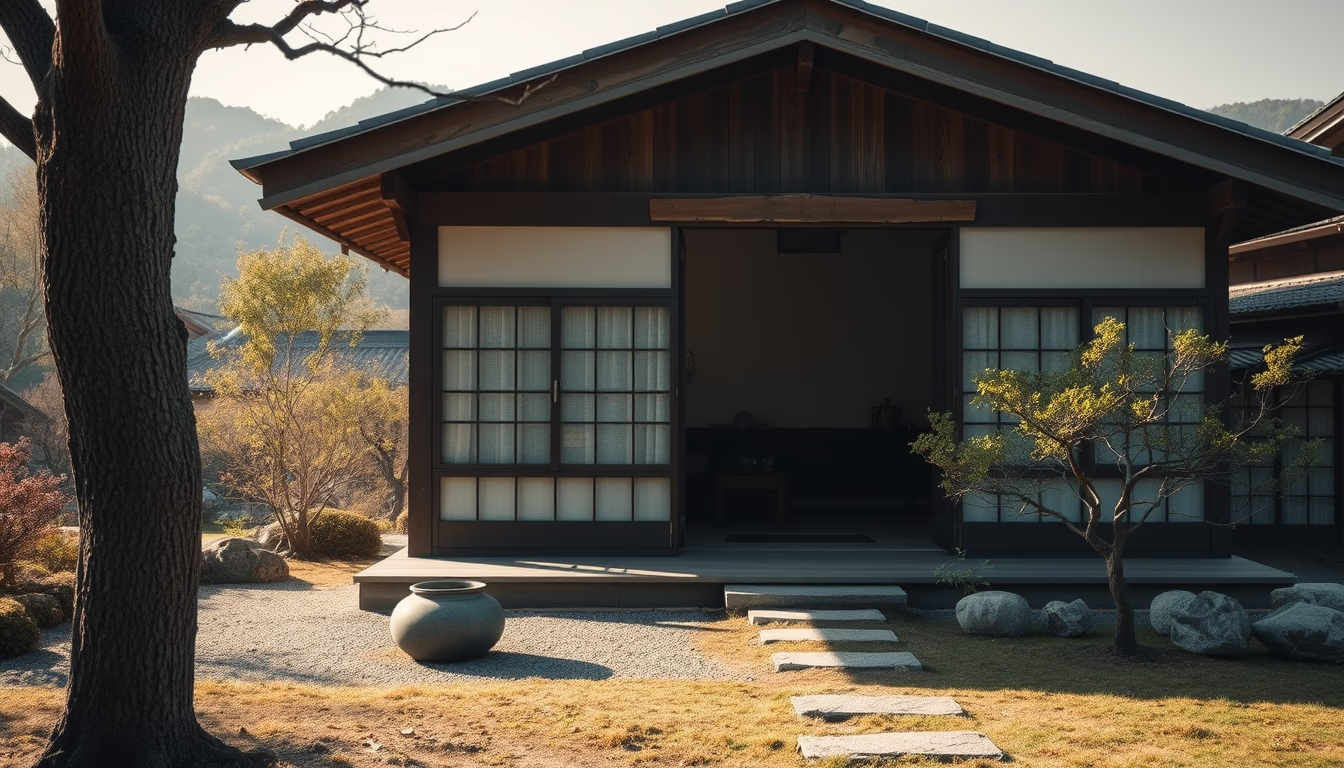
Japanese dry gardens, known as karesansui, are a centuries-old art form that uses sand, rocks, and moss to abstractly represent natural landscapes. Originating in the Muromachi period (1336-1573), these gardens were heavily influenced by Zen Buddhism and the wabi-sabi aesthetic, which cherishes simplicity and imperfection. The act of raking sand into undulating patterns, such as concentric waves or straight lines, is a meditative practice demanding focus and precision. Each stroke can evoke the motion of water, a breeze over a lake, or even the flow of time.
Common patterns include parallel straight lines symbolizing calm waters and concentric circles around rocks simulating waves breaking on islands. At famous temples like Ryoanji in Kyoto, the arrangement of stones and raked sand creates compositions that challenge perspective and invite introspection. Maintenance is performed daily by monks or specialized gardeners using wooden rakes to redraw the patterns, ensuring the space remains pristine and conducive to meditation.
Interestingly, the raking technique requires the gardener to walk backwards while pulling the rake, avoiding footprints on the surface. The depth of the grooves and spacing between lines are meticulously calculated for uniformity. While these gardens are primarily associated with Japan, notable examples exist abroad, such as the Portland Japanese Garden and the San Francisco Zen Temple. The popularity of raked sand patterns has also influenced Western art and interior design, being used in contemporary spaces to evoke calm and balance.
Frequently Asked Questions
What do the raked sand patterns in Zen gardens symbolize?
The patterns symbolically represent water, such as ocean waves, rivers, or lakes. Straight lines depict calm waters, while circles around rocks suggest waves crashing on islands, encouraging contemplation.
How are the sand patterns created in a Zen garden?
A wooden rake is used to draw straight or curved lines. The gardener walks backwards while pulling the rake to avoid footprints. Maintenance is done daily to keep the patterns crisp.
What is a karesansui garden?
Karesansui is a Japanese dry garden that uses sand, rocks, and moss to abstractly recreate natural landscapes without real water. It originated in the Muromachi period and is associated with Zen Buddhism.
Direct URL
https://pub-c7d6a6ea828543ac903a74a341ccb2e1.r2.dev/imagens/rock-garden-raked-patterns-aerial-drone-shot-fresh12.avifHow to credit
Include a visible link back to UtilizAí. Copy one of the snippets below:
<a href="https://xn--utiliza-eza.com/en/midia/imagens/rock-garden-raked-patterns-aerial-drone-shot-fresh12">Rock garden raked patterns</a> by <a href="https://xn--utiliza-eza.com">UtilizAí</a>, licensed under <a href="https://creativecommons.org/licenses/by/4.0/">CC BY 4.0</a>.
[Rock garden raked patterns](https://xn--utiliza-eza.com/en/midia/imagens/rock-garden-raked-patterns-aerial-drone-shot-fresh12) by [UtilizAí](https://xn--utiliza-eza.com), CC BY 4.0
License: CC-BY-4.0