Robotic prosthesis hand
1344×768 · AVIF · CC BY 4.0
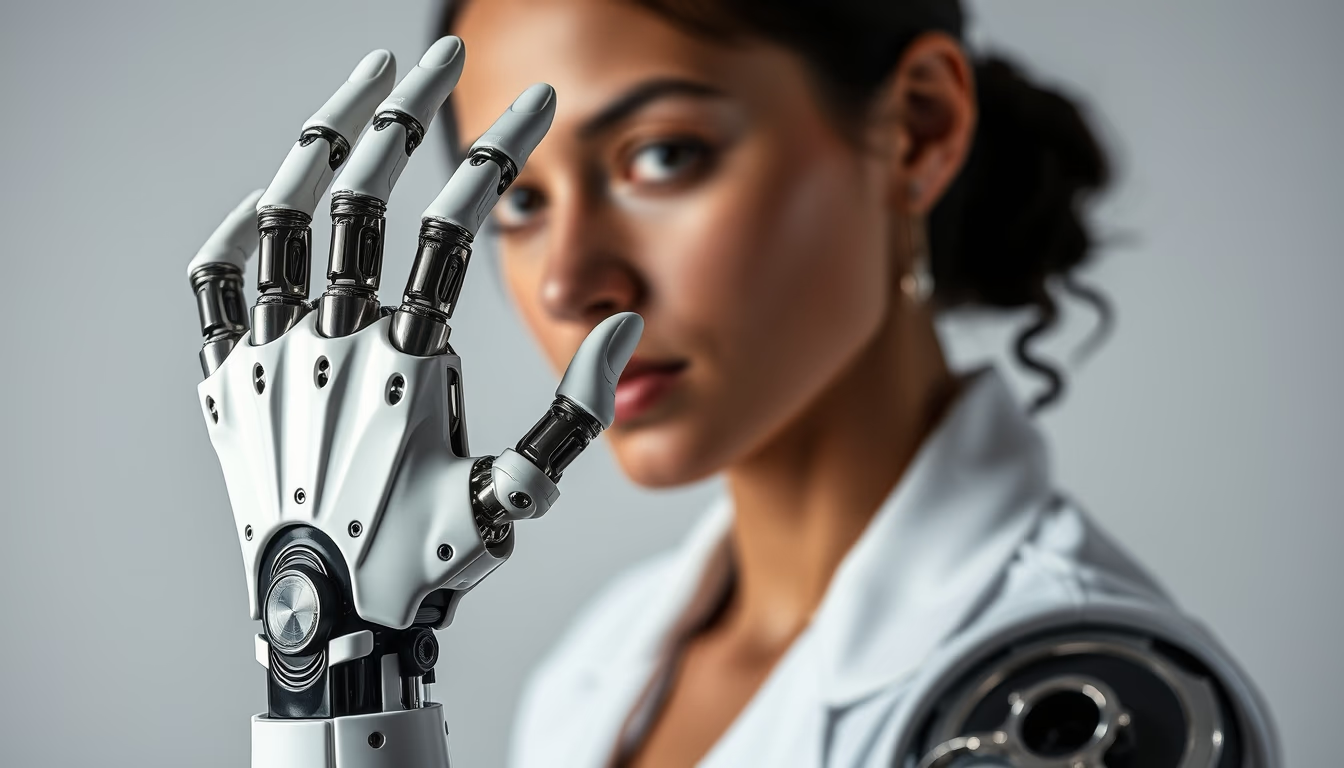
Robotic prosthetic hands, such as myoelectric ones, restore movement and independence to amputees using muscle signals and artificial intelligence.
About this subject
Robotic prosthetic hands represent one of the most significant advances in rehabilitative medicine and robotics. Unlike traditional mechanical prostheses, which offer limited movement, robotic versions use electromyographic (EMG) sensors to capture electrical signals from the residual muscles of the forearm. These signals are processed by microcontrollers that activate motors and actuators, enabling precise movements of the fingers and palm. Modern models, such as the i-Limb from Touch Bionics or the Michelangelo from Ottobock, incorporate artificial intelligence to learn the user's contraction patterns, adjusting the force and speed of each finger intuitively.
The evolution of hand prostheses began in antiquity with hooks and passive devices. The technological leap occurred in the 1960s with the development of the first myoelectric prostheses in Germany and the Soviet Union. Today, the most advanced systems offer over 20 different grip types, from a fine pinch for holding a card to a power grip for lifting heavy objects. Additionally, pressure and slip sensors ensure that the object does not drop, replicating the tactile feedback that a biological hand provides.
Accessibility to these technologies, however, remains a global challenge. While countries like the United States, Germany, and Japan have healthcare systems that partially or fully cover the cost of robotic prostheses (which can exceed $100,000), in most of the world access is restricted to a minority. Organizations like e-NABLE promote the use of low-cost 3D-printed prostheses, but these lack the functionality and durability of commercial versions. Current research focuses on integrating sensory feedback directly into the user's nervous system through neural interfaces, promising to further revolutionize the field in the coming years.
In Brazil, the availability of robotic prostheses through the public health system (SUS) is still limited, but important initiatives exist at universities such as USP and Unicamp, which develop models adapted to local realities. ANVISA regulates the import and sale of these devices, and some national startups have launched lower-cost products. The future of robotic hand prostheses lies in component miniaturization, longer battery life, and integration with wearable technologies such as smartwatches that assist in movement control. For amputees, the most valuable achievement is the ability to perform everyday tasks with naturalness and confidence.
Frequently Asked Questions
How does a robotic prosthetic hand work?
It captures electrical signals from the forearm muscles using EMG sensors, which are processed by a microcontroller to activate motors and move the fingers. Some models use artificial intelligence to adapt movements to the user.
What is the average cost of a robotic prosthetic hand?
Prices range from $20,000 to over $100,000, depending on complexity and built-in technology. In Brazil, the public health system provides basic models, but advanced versions are usually paid out-of-pocket or covered by specific health plans.
Can a robotic prosthetic hand feel what it is touching?
Most do not transmit touch sensation, but cutting-edge models incorporate pressure and slip sensors that provide vibratory feedback to the user. Research into neural interfaces aims to restore actual sensitivity.
Direct URL
https://pub-c7d6a6ea828543ac903a74a341ccb2e1.r2.dev/imagens/robotic-prosthesis-hand-studio-editorial-portrait-p11.avifHow to credit
Include a visible link back to UtilizAí. Copy one of the snippets below:
<a href="https://xn--utiliza-eza.com/en/midia/imagens/robotic-prosthesis-hand-studio-editorial-portrait-p11">Robotic prosthesis hand</a> by <a href="https://xn--utiliza-eza.com">UtilizAí</a>, licensed under <a href="https://creativecommons.org/licenses/by/4.0/">CC BY 4.0</a>.
[Robotic prosthesis hand](https://xn--utiliza-eza.com/en/midia/imagens/robotic-prosthesis-hand-studio-editorial-portrait-p11) by [UtilizAí](https://xn--utiliza-eza.com), CC BY 4.0
License: CC-BY-4.0