Robotic prosthesis hand
1344×768 · AVIF · CC BY 4.0
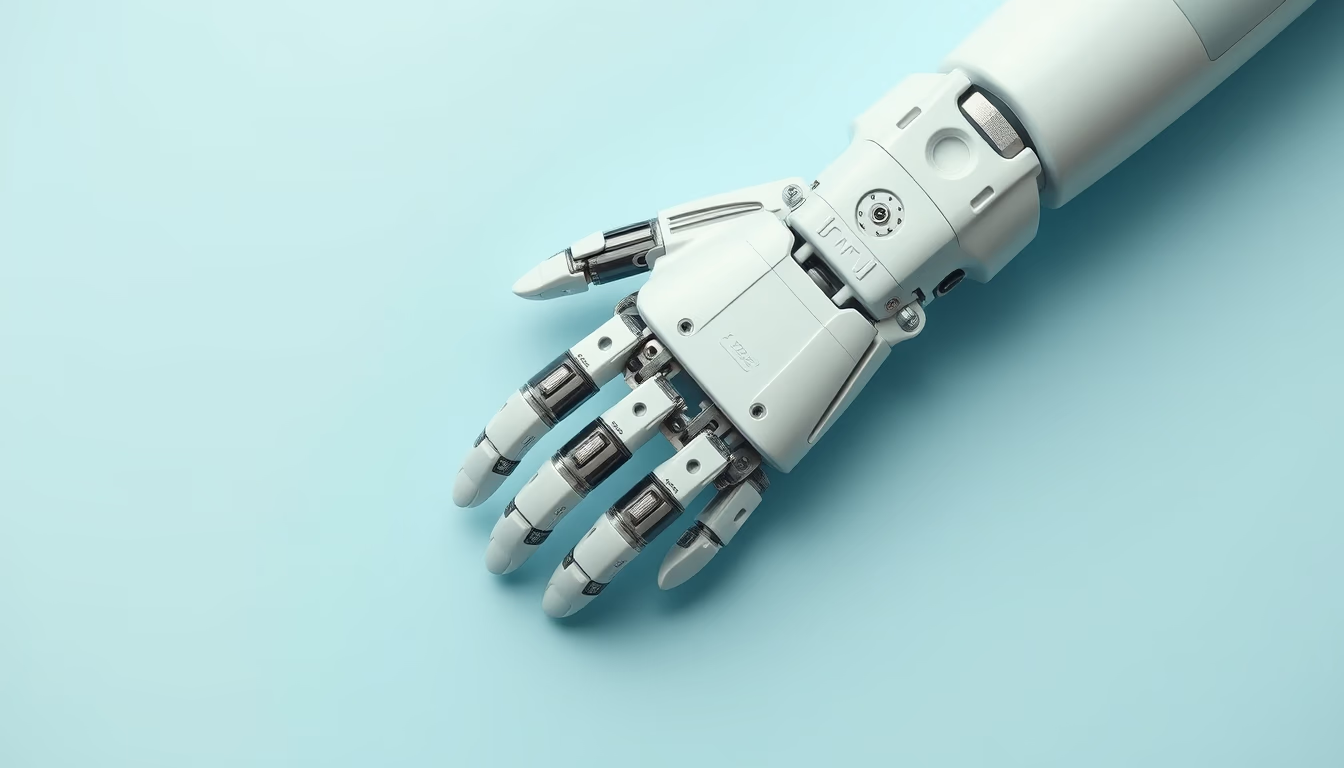
Robotic prosthetic hands represent the cutting edge of biomechatronics, restoring function and independence to amputees worldwide.
About this subject
Robotic prosthetic hands are biomechatronic devices that replace amputated upper limbs, combining sensors, actuators, and artificial intelligence to replicate natural movements. Unlike passive or purely mechanical prostheses, these systems use surface electrodes on the skin to capture myoelectric signals from remaining muscles, interpreted by machine learning algorithms. Users thereby achieve control over finger opening and closing, grip strength, and even individual digit motion with ever-decreasing response latencies. Pioneers such as Ottobock, Touch Bionics, and the University of Utah's integrated research team have driven innovations, with models reaching up to 18 degrees of freedom.
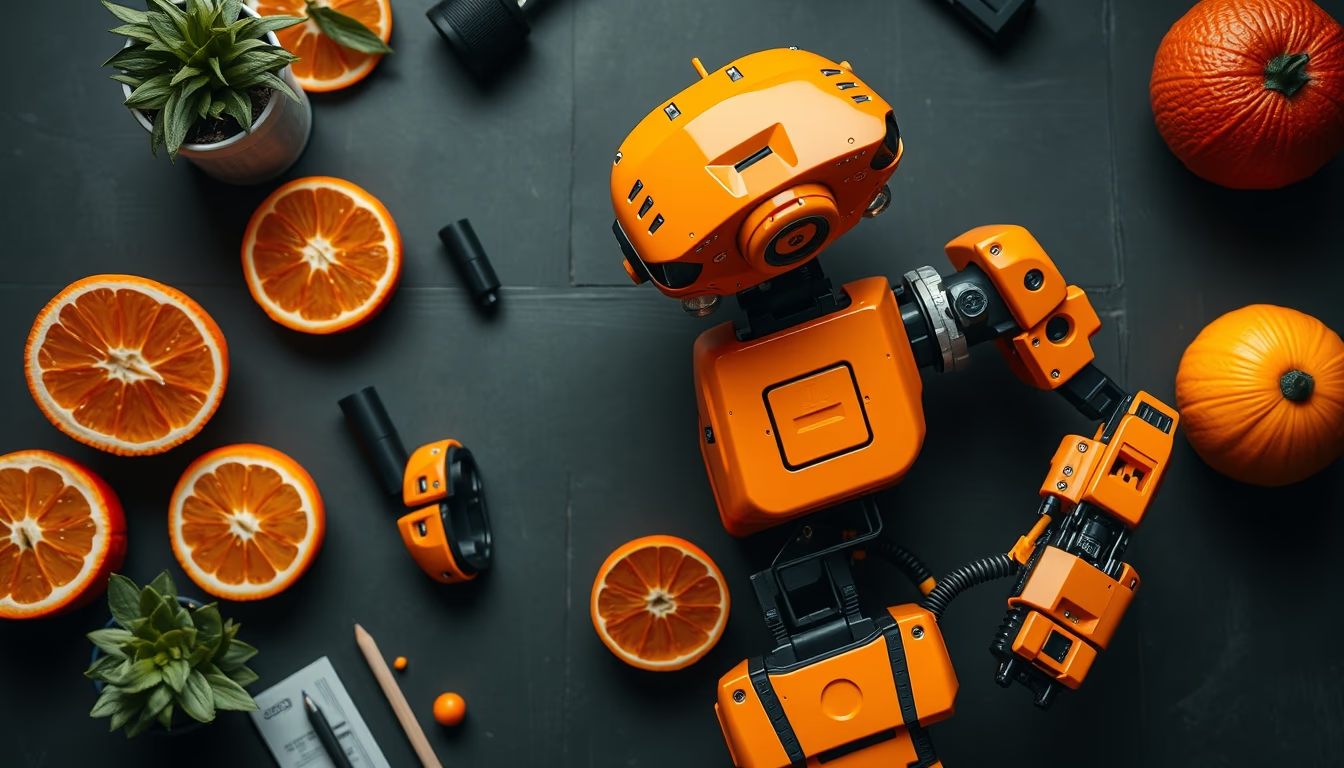
Culturally, the evolution of robotic prostheses surpasses engineering, representing a social and psychological reintegration for users. The isometric flat lay design of the image suggests a minimalist, modern aesthetic that aligns with contemporary industrial design. Globally, an estimated 30 million people need prostheses, yet fewer than 10% have access to high-tech devices, especially in low-income countries. Initiatives like the e-NABLE organization use 3D printing to produce low-cost mechanical hands, while open-source projects accelerate the dissemination of robotic designs.
Notably, the first robotic prostheses with sensory feedback were tested in the 1970s, but only with advancements in microprocessors and force sensors in the 2010s did they become commercially viable. Current research aims to integrate direct electrical nerve stimulation to provide tactile sensations such as touch and temperature, approaching natural limb sensitivity. Reliability has improved significantly, with modern models like the German bebionic brand requiring charging only once a week.
Frequently Asked Questions
How does a robotic prosthetic hand work?
It captures myoelectric signals from the residual limb muscles via surface electrodes, processes these signals with AI algorithms, and activates motors that move the fingers. Users learn to control grip strength and speed through training.
What are the main advantages of robotic prostheses over mechanical ones?
They offer a greater range of individual movements, adjustable grip force, sensory feedback in advanced models, and a more natural appearance. They also require less physical effort to operate.
What is the average cost of a robotic prosthetic hand?
It can range from $10,000 to $100,000 due to embedded technology. Simpler 3D-printed models cost under $1,000 but lack myoelectric control.
Direct URL
https://pub-c7d6a6ea828543ac903a74a341ccb2e1.r2.dev/imagens/robotic-prosthesis-hand-isometric-flat-lay-p6.avifHow to credit
Include a visible link back to UtilizAí. Copy one of the snippets below:
<a href="https://xn--utiliza-eza.com/en/midia/imagens/robotic-prosthesis-hand-isometric-flat-lay-p6">Robotic prosthesis hand</a> by <a href="https://xn--utiliza-eza.com">UtilizAí</a>, licensed under <a href="https://creativecommons.org/licenses/by/4.0/">CC BY 4.0</a>.
[Robotic prosthesis hand](https://xn--utiliza-eza.com/en/midia/imagens/robotic-prosthesis-hand-isometric-flat-lay-p6) by [UtilizAí](https://xn--utiliza-eza.com), CC BY 4.0
License: CC-BY-4.0