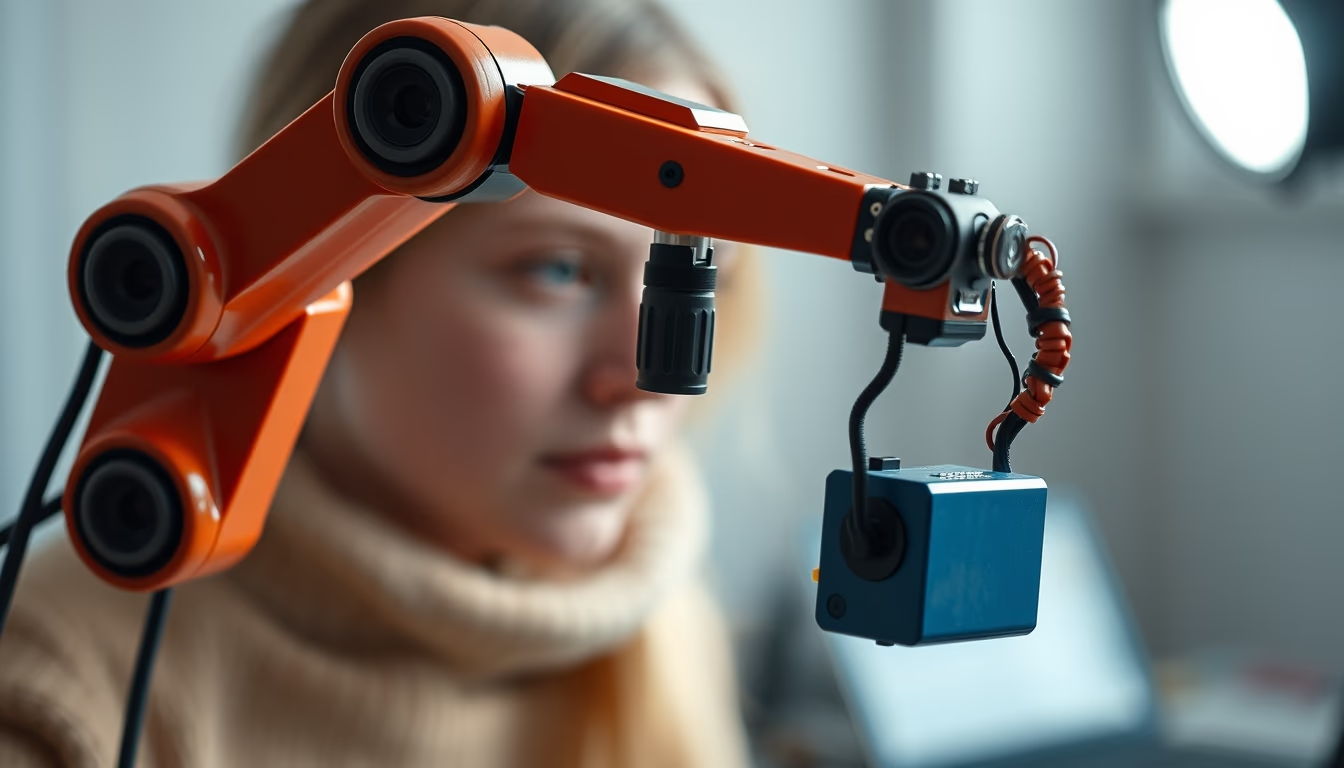
Robotic prosthesis hand
1344×768 · AVIF · CC BY 4.0
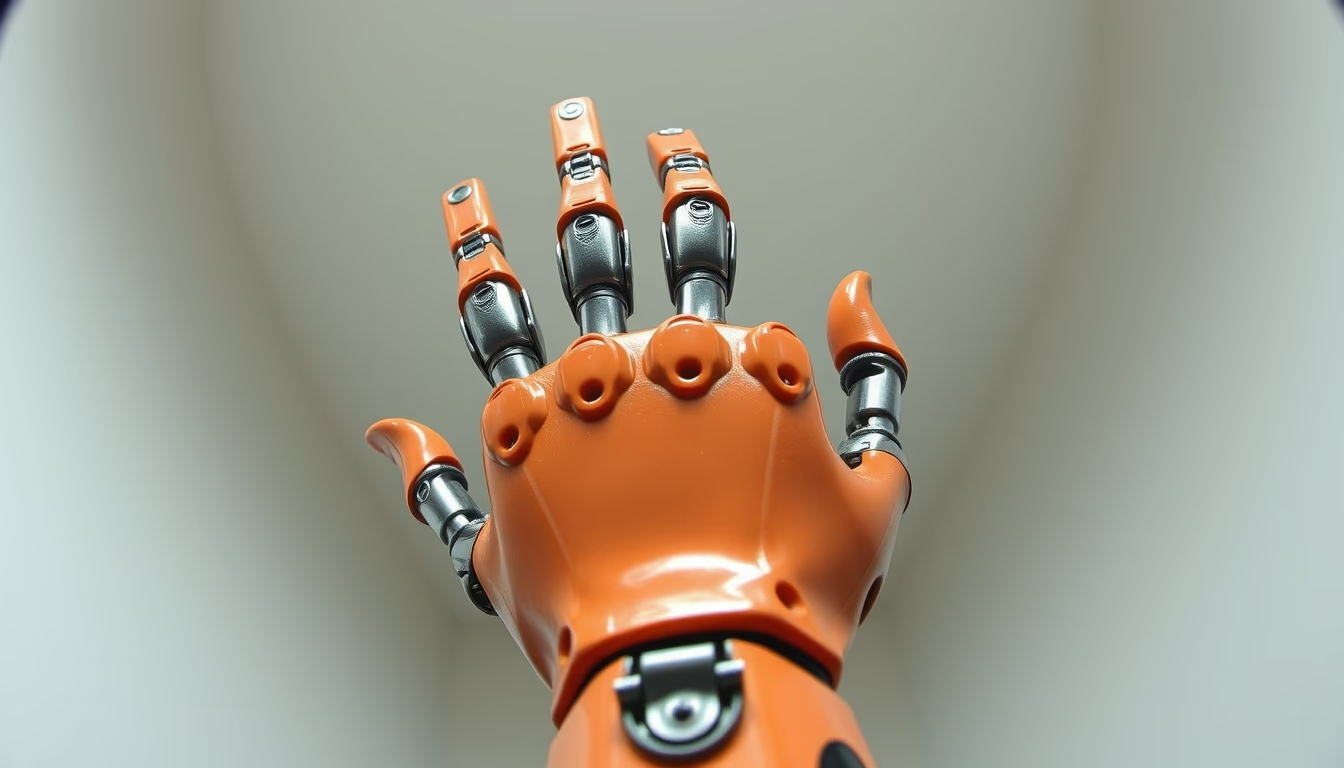
Robotic prosthetic hands represent a breakthrough in rehabilitation, combining precision engineering with biomimetic design to restore functionality.
About this subject
Robotic prosthetic hands are devices that replace missing upper limbs, using actuators, sensors, and control algorithms to replicate natural movements. Unlike passive prostheses, robotic versions enable pinch, grip, and even individual finger motions, thanks to myoelectric systems that capture electrical signals from residual muscles. Development of these technologies accelerated over the past two decades, with institutions like the Johns Hopkins University Applied Physics Laboratory creating the Modular Prosthetic Limb (MPL), which offers 26 degrees of freedom. In Brazil, the Institute of Technology of Paraná (TECPAR) and USP have projects for low-cost 3D-printed prostheses, expanding access. Culturally, acceptance varies: some users prefer realistic designs with silicone and artificial nails, while others opt for cybernetic styles, such as those from Open Bionics, reminiscent of sci-fi characters. A curious fact: the first thought-controlled robotic prosthesis was implanted in 2015, allowing a paralyzed patient to move a robotic hand solely through brain activity. Integration with artificial intelligence promises even smoother movements, with tactile feedback being developed at labs like MIT.
Frequently Asked Questions
How do robotic prosthetic hands work?
They capture electrical signals from remaining muscles via skin electrodes (myoelectric system), which are processed by a microcontroller to activate motors that move fingers and thumb.
What is the difference between robotic and mechanical prostheses?
Mechanical prostheses rely on cables and body movements to open and close the hand, while robotic ones use sensors and motors, allowing more precise movements and adjustable grip strength.
Are there affordable robotic prostheses in Brazil?
Yes, initiatives like TECPAR's Hand Talk project and 3D printing allow creation of functional prosthetic hands for around R$ 500, though advanced models can cost thousands of reais.
Direct URL
https://pub-c7d6a6ea828543ac903a74a341ccb2e1.r2.dev/imagens/robotic-prosthesis-hand-fish-eye-wide-angle-p7.avifHow to credit
Include a visible link back to UtilizAí. Copy one of the snippets below:
<a href="https://xn--utiliza-eza.com/en/midia/imagens/robotic-prosthesis-hand-fish-eye-wide-angle-p7">Robotic prosthesis hand</a> by <a href="https://xn--utiliza-eza.com">UtilizAí</a>, licensed under <a href="https://creativecommons.org/licenses/by/4.0/">CC BY 4.0</a>.
[Robotic prosthesis hand](https://xn--utiliza-eza.com/en/midia/imagens/robotic-prosthesis-hand-fish-eye-wide-angle-p7) by [UtilizAí](https://xn--utiliza-eza.com), CC BY 4.0
License: CC-BY-4.0