Robotic exoskeleton
1344×768 · AVIF · CC BY 4.0
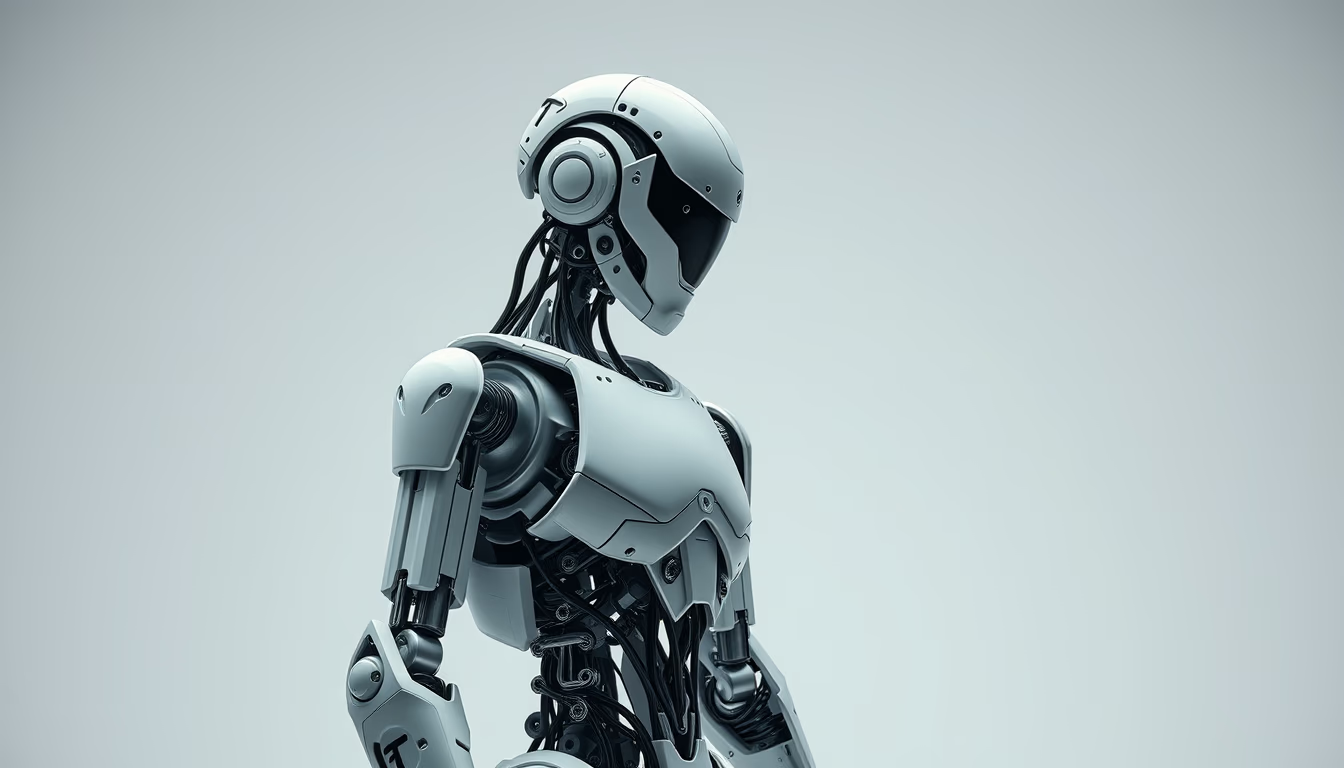
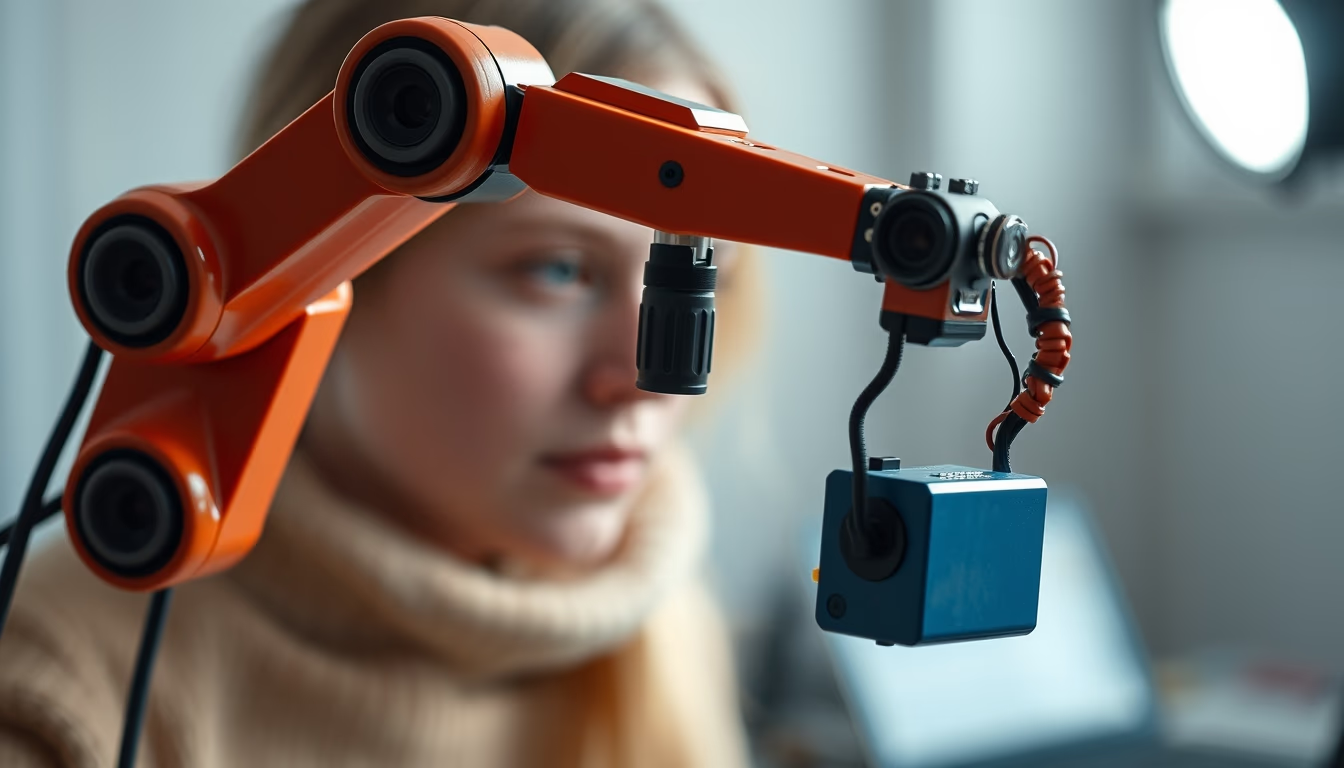
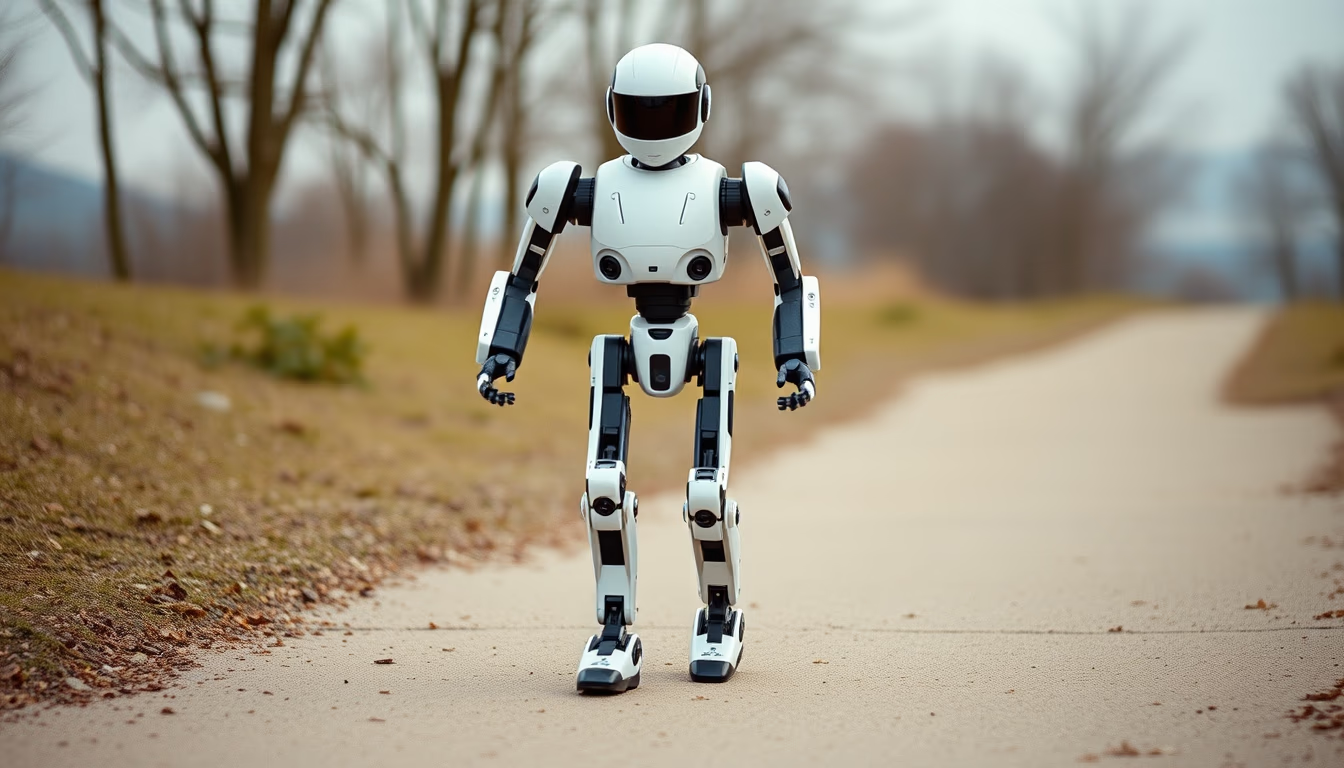
Robotic exoskeletons are wearable devices that enhance human strength and endurance, with applications in rehabilitation, industry, and defense.
About this subject
Robotic exoskeletons are motorized external structures that attach to the human body to amplify movements or restore lost capabilities. Originating from military research in the 1960s, such as General Electric's Hardiman, these devices have evolved into medical and industrial applications. In rehabilitation, models like ReWalk and Ekso GT enable paraplegics to walk again, using sensors and actuators that mimic natural joint motion. In industry, passive or active exoskeletons reduce physical strain in repetitive tasks, preventing musculoskeletal injuries in sectors like logistics and construction.
The basic principle involves electric, pneumatic, or hydraulic motors attached to an aluminum or carbon fiber chassis. Force and angle sensors detect the user's intention, while control algorithms adjust torque in real time. Companies like Ekso Bionics, ReWalk Robotics, and Hyundai lead the market, with prices ranging from $50,000 to $100,000 for medical models. Technical challenges include battery life, weight, and adaptation to different body types.
In Brazil, exoskeletons are increasingly used in rehabilitation clinics and research centers, such as the Biomedical Engineering Lab at USP. The military also tests prototypes to enhance soldiers' load-carrying capacity. Despite the potential, widespread adoption still faces high costs and the need for specialized training.
Frequently Asked Questions
What are robotic exoskeletons used for?
They are used to enhance human strength and endurance, aid in spinal cord injury rehabilitation, and reduce repetitive strain injuries in industry.
How much does a robotic exoskeleton cost?
Medical models like ReWalk cost between $50,000 and $100,000, while industrial versions may be cheaper.
Are exoskeletons safe for daily use?
Yes, but they require training and professional supervision to avoid falls or incorrect movements.
Direct URL
https://pub-c7d6a6ea828543ac903a74a341ccb2e1.r2.dev/imagens/robotic-exoskeleton-magazine-editorial-p9.avifHow to credit
Include a visible link back to UtilizAí. Copy one of the snippets below:
<a href="https://xn--utiliza-eza.com/en/midia/imagens/robotic-exoskeleton-magazine-editorial-p9">Robotic exoskeleton</a> by <a href="https://xn--utiliza-eza.com">UtilizAí</a>, licensed under <a href="https://creativecommons.org/licenses/by/4.0/">CC BY 4.0</a>.
[Robotic exoskeleton](https://xn--utiliza-eza.com/en/midia/imagens/robotic-exoskeleton-magazine-editorial-p9) by [UtilizAí](https://xn--utiliza-eza.com), CC BY 4.0
License: CC-BY-4.0