Robot arm assembling car
1344×768 · AVIF · CC BY 4.0
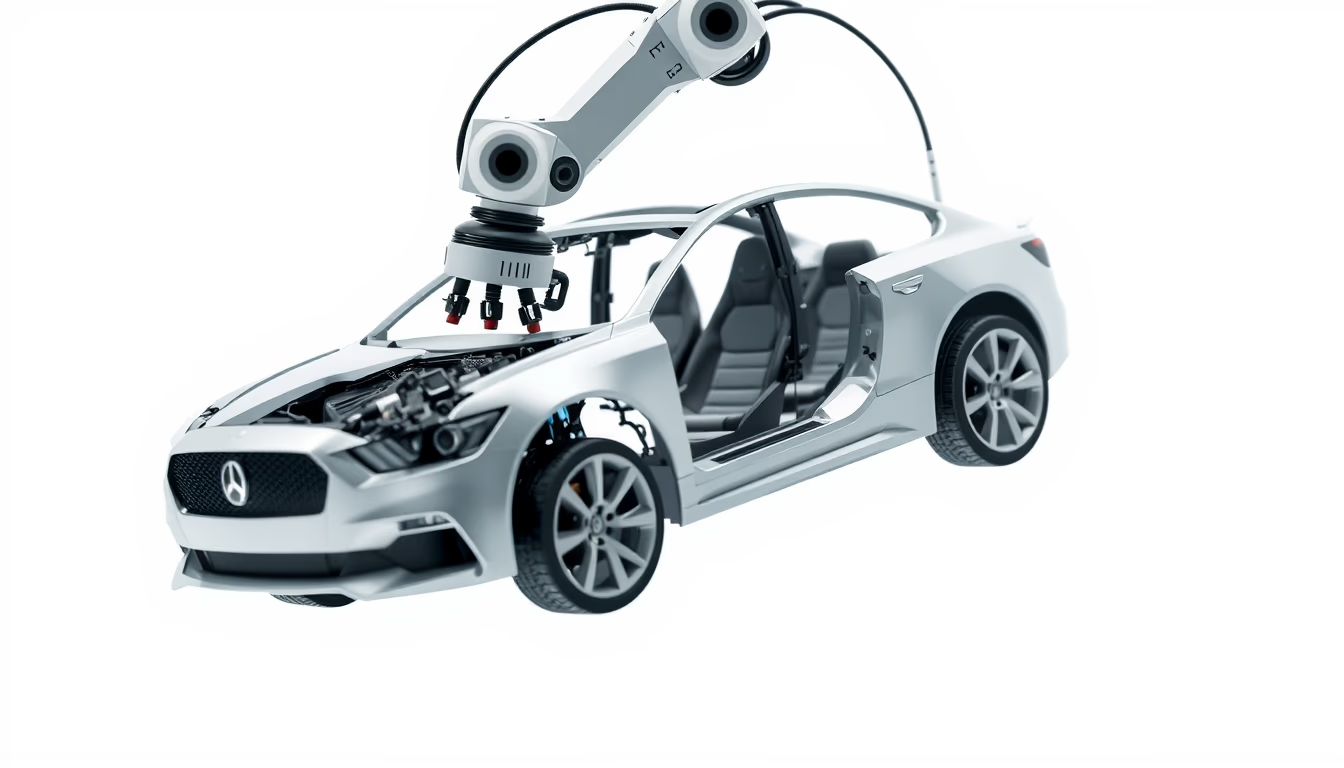
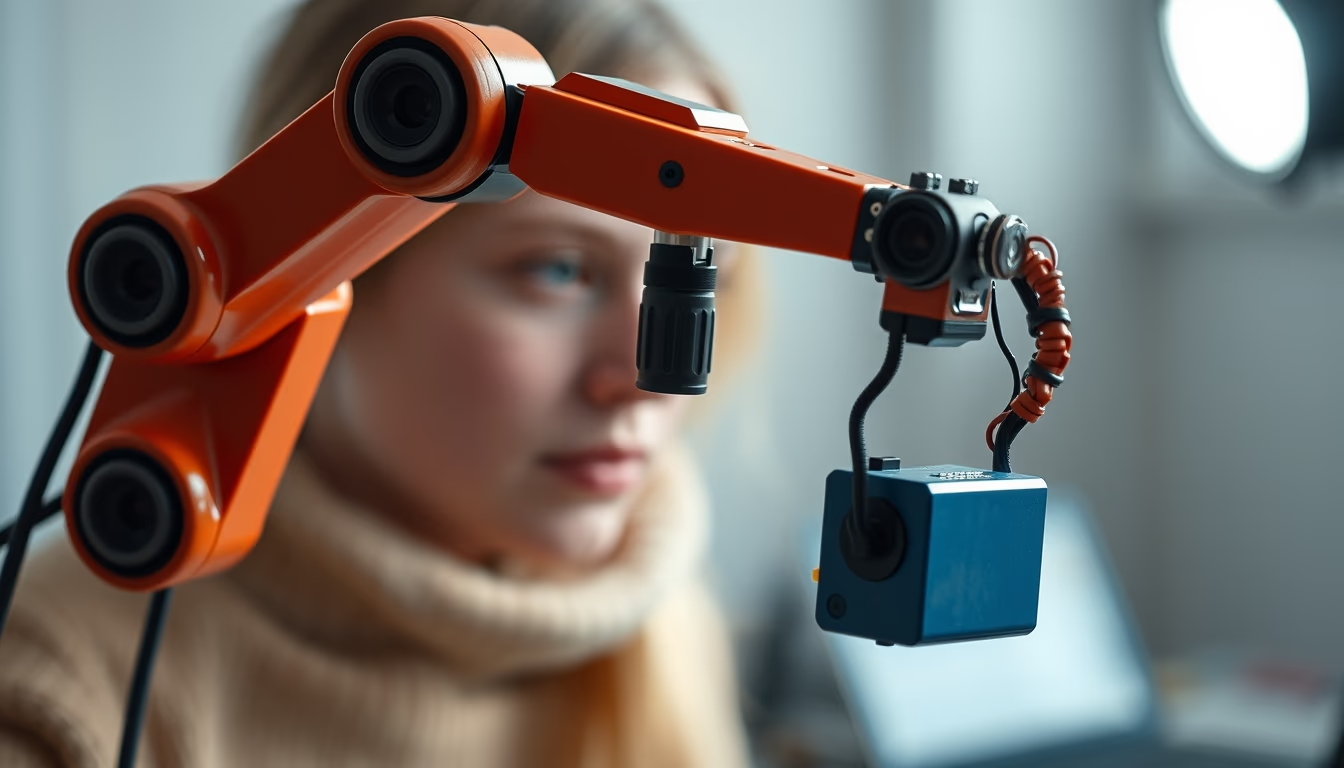
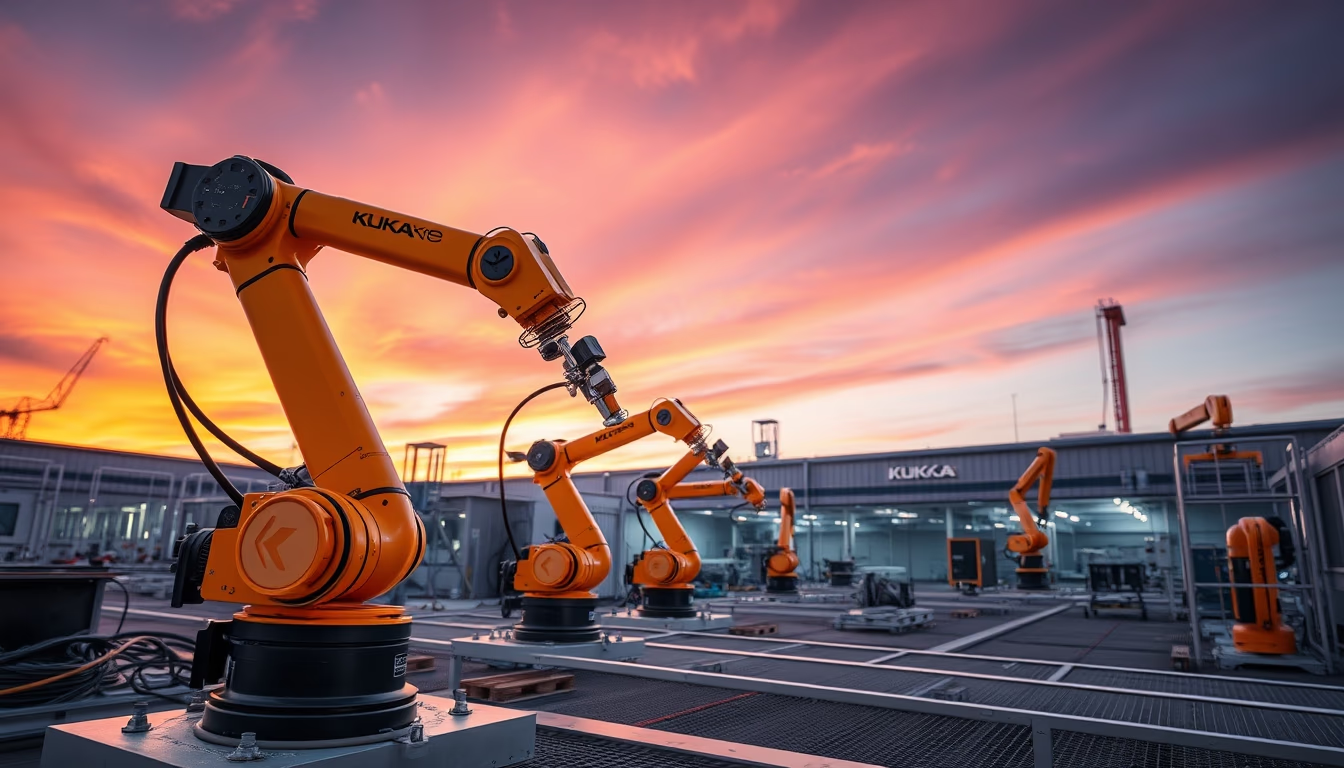
Robotic arms perform vehicle assembly with millimeter precision in automated production lines.
About this subject
Modern automobile assembly relies heavily on robotic arms, also known as industrial manipulators. These machines are designed for repetitive, high-precision tasks such as welding, painting, fastening components, and moving heavy parts. The use of robots in the automotive industry began in the 1960s with Unimate, a hydraulic arm used by General Motors to handle castings. Today, models such as the KUKA KR series or FANUC R-2000 are common in factories worldwide, capable of positioning a bumper or installing a dashboard with tolerances below 0.1 mm.
Assembly robots operate in work cells surrounded by safety fences and sensors. They follow computerized programs that coordinate movements across six axes, or more in advanced models. Speed and force are controlled to avoid damaging materials. In a typical production line, dozens of these arms work in sequence, each responsible for a specific step. Synchronization is critical: delays of seconds can halt the entire line.
The integration of computer vision and artificial intelligence has made these robots more adaptable. Camera systems allow the arm to identify parts, adjust positioning, and detect defects. This is crucial for complex assemblies such as cable routing or airbag installation. Additionally, the use of collaborative robots (cobots) is growing, enabling humans and robots to share the same space safely.
Economically, automation reduces costs and increases quality consistency. However, it requires high investment in installation and maintenance. Factories like Volkswagen's in Wolfsburg or Toyota's in Toyota City employ thousands of robots, each capable of hundreds of movements per hour. The trend is toward even more flexible robotic assembly with Industry 4.0, where robots communicate with each other and with management systems.
Frequently Asked Questions
What was the first robot used in car assembly?
The first industrial robot in automotive assembly was Unimate, installed by General Motors in 1961. It was a hydraulic arm used to handle hot castings.
How many axes does a typical robotic arm have?
Most industrial robotic arms have six axes of motion, allowing rotation, tilt, and reach in multiple directions. Advanced models may have seven or more axes.
How do assembly robots ensure precision?
They use sensors, encoders, and computer vision systems for feedback. Calibrated programs and constant checks maintain repeatability, often below 0.1 mm.
Direct URL
https://pub-c7d6a6ea828543ac903a74a341ccb2e1.r2.dev/imagens/robot-arm-assembling-car-commercial-product-photography-p1.avifHow to credit
Include a visible link back to UtilizAí. Copy one of the snippets below:
<a href="https://xn--utiliza-eza.com/en/midia/imagens/robot-arm-assembling-car-commercial-product-photography-p1">Robot arm assembling car</a> by <a href="https://xn--utiliza-eza.com">UtilizAí</a>, licensed under <a href="https://creativecommons.org/licenses/by/4.0/">CC BY 4.0</a>.
[Robot arm assembling car](https://xn--utiliza-eza.com/en/midia/imagens/robot-arm-assembling-car-commercial-product-photography-p1) by [UtilizAí](https://xn--utiliza-eza.com), CC BY 4.0
License: CC-BY-4.0