Robot arm assembling car
1344×768 · AVIF · CC BY 4.0
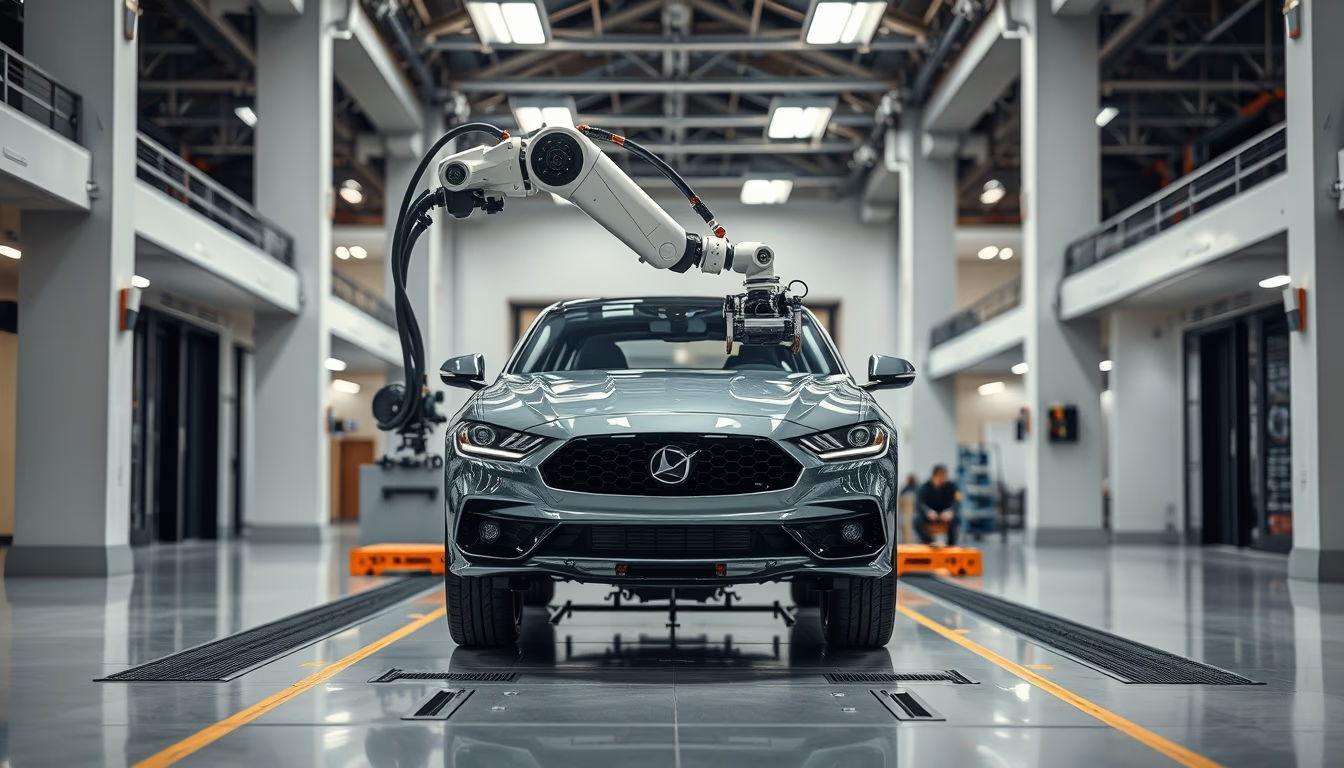
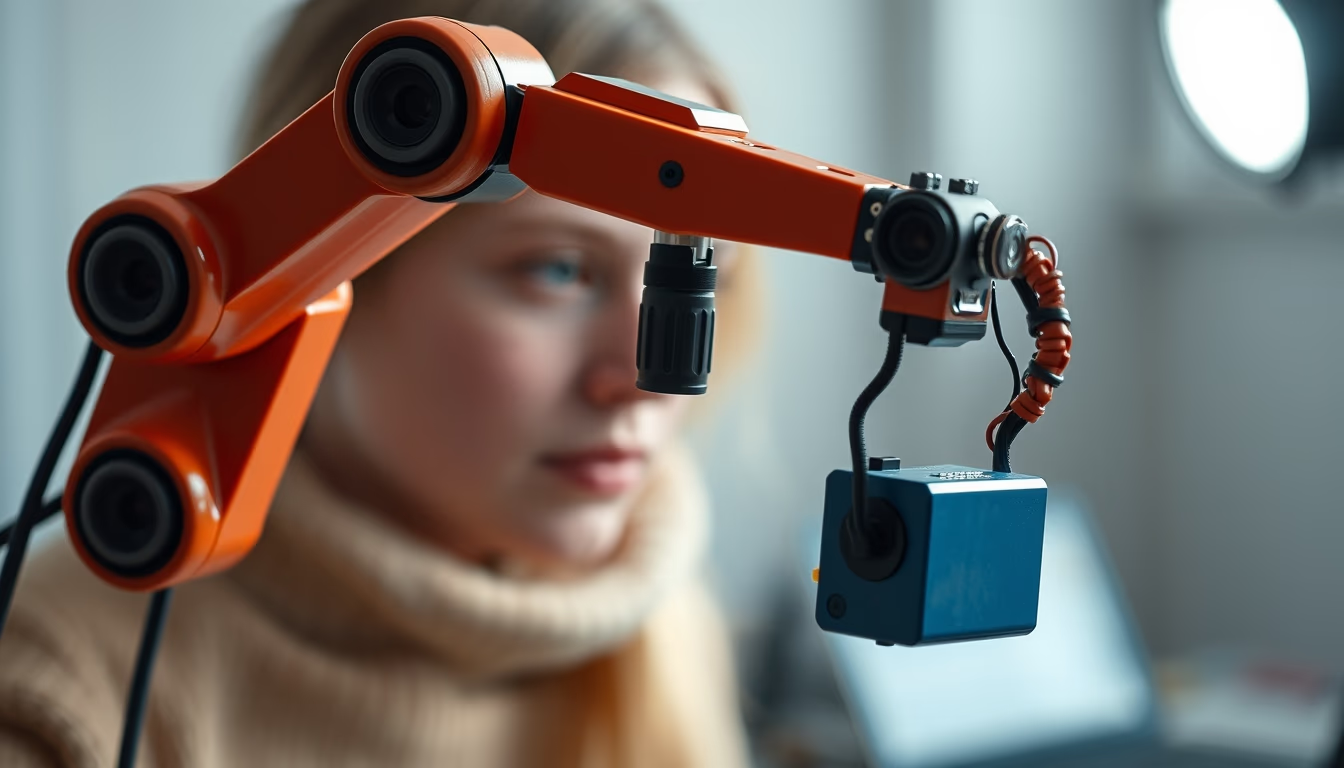
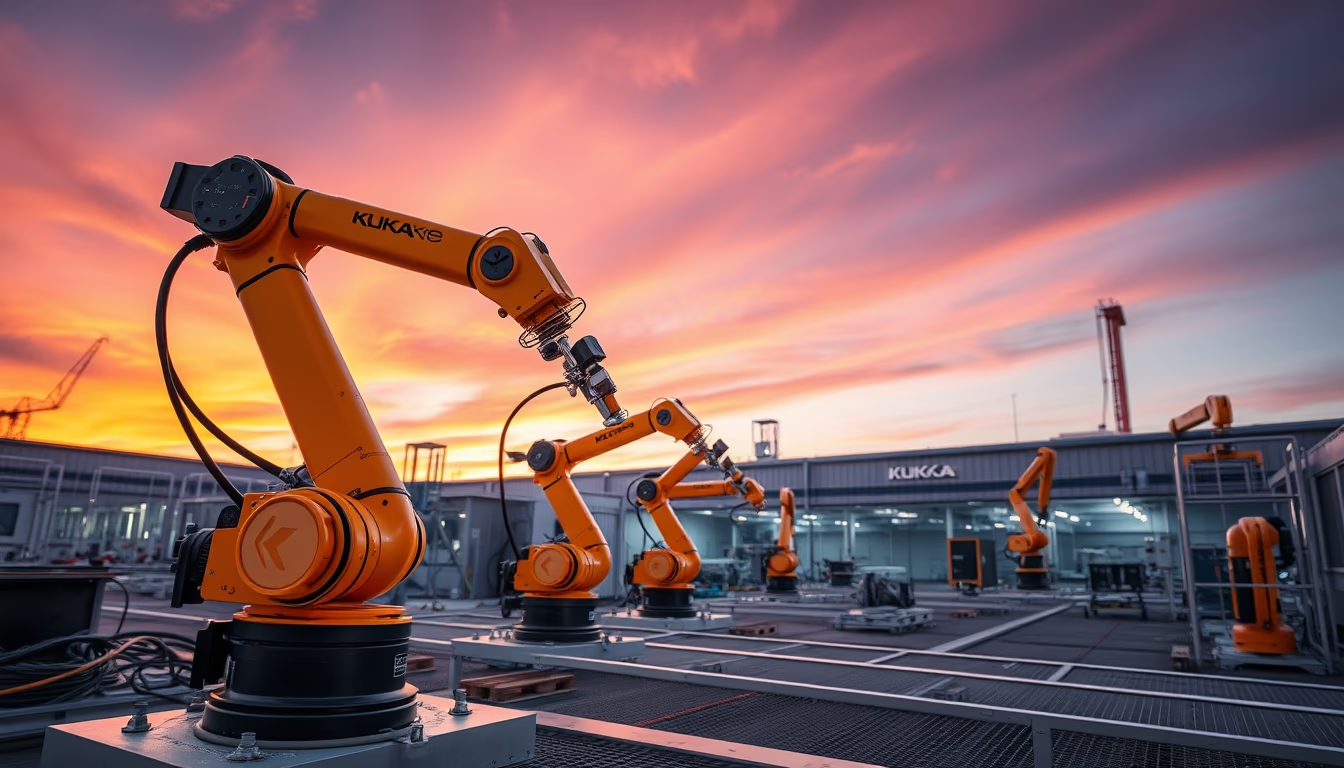
Robotic arms on the automotive assembly line revolutionized production: precision, speed, and safety define this industrial process.
About this subject
In modern automotive industry, robotic arms are essential components on assembly lines. Since the 1960s, when the Unimate was introduced by General Motors, industrial robotics transformed vehicle manufacturing. These robots perform repetitive and high-precision tasks such as welding, painting, and, of course, car assembly. A typical robotic arm has six degrees of freedom, allowing complex movements and exact positioning within millimeter tolerances.
Car assembly involves hundreds of steps, from engine mounting to interior component installation. Robots like those from KUKA or FANUC are programmed to execute specific sequences, using vision and force sensors to adjust their actions. Collaboration between robotic arms and humans also grew with collaborative robots (cobots), which work alongside workers, increasing efficiency without compromising safety.
The importance of robots in automotive assembly goes beyond productivity. They reduce errors, ensure quality consistency, and enable mass production of high-standard vehicles. Companies like Tesla and Toyota use highly automated lines, where robots perform tasks from body welding to battery assembly. The use of artificial intelligence and machine learning makes these systems even more adaptable, capable of adjusting movements in real time.
Interesting fact: the first industrial robot, Unimate, weighed about two tons and could only move along one axis. Today, robotic arms are lightweight, fast, and precise. The automotive industry remains the largest market for industrial robotics, with millions of units installed globally.
Frequently Asked Questions
How precise are robotic arms in car assembly?
Modern robotic arms achieve precision up to 0.02 mm, essential for tightening screws or fitting components with minimal tolerances. This precision ensures the structural and functional quality of the vehicle.
Have robots completely replaced humans in automotive assembly?
Not entirely. While robots handle repetitive and heavy tasks, humans are still needed for supervision, maintenance, and operations requiring cognitive flexibility. Collaborative robots (cobots) work alongside employees.
How are robotic arms programmed to assemble cars?
They are programmed via teach pendants or offline simulation. Engineers define motion sequences and operation points. Vision and force sensors allow automatic adjustments during execution.
Direct URL
https://pub-c7d6a6ea828543ac903a74a341ccb2e1.r2.dev/imagens/robot-arm-assembling-car-architectural-photography-p5.avifHow to credit
Include a visible link back to UtilizAí. Copy one of the snippets below:
<a href="https://xn--utiliza-eza.com/en/midia/imagens/robot-arm-assembling-car-architectural-photography-p5">Robot arm assembling car</a> by <a href="https://xn--utiliza-eza.com">UtilizAí</a>, licensed under <a href="https://creativecommons.org/licenses/by/4.0/">CC BY 4.0</a>.
[Robot arm assembling car](https://xn--utiliza-eza.com/en/midia/imagens/robot-arm-assembling-car-architectural-photography-p5) by [UtilizAí](https://xn--utiliza-eza.com), CC BY 4.0
License: CC-BY-4.0