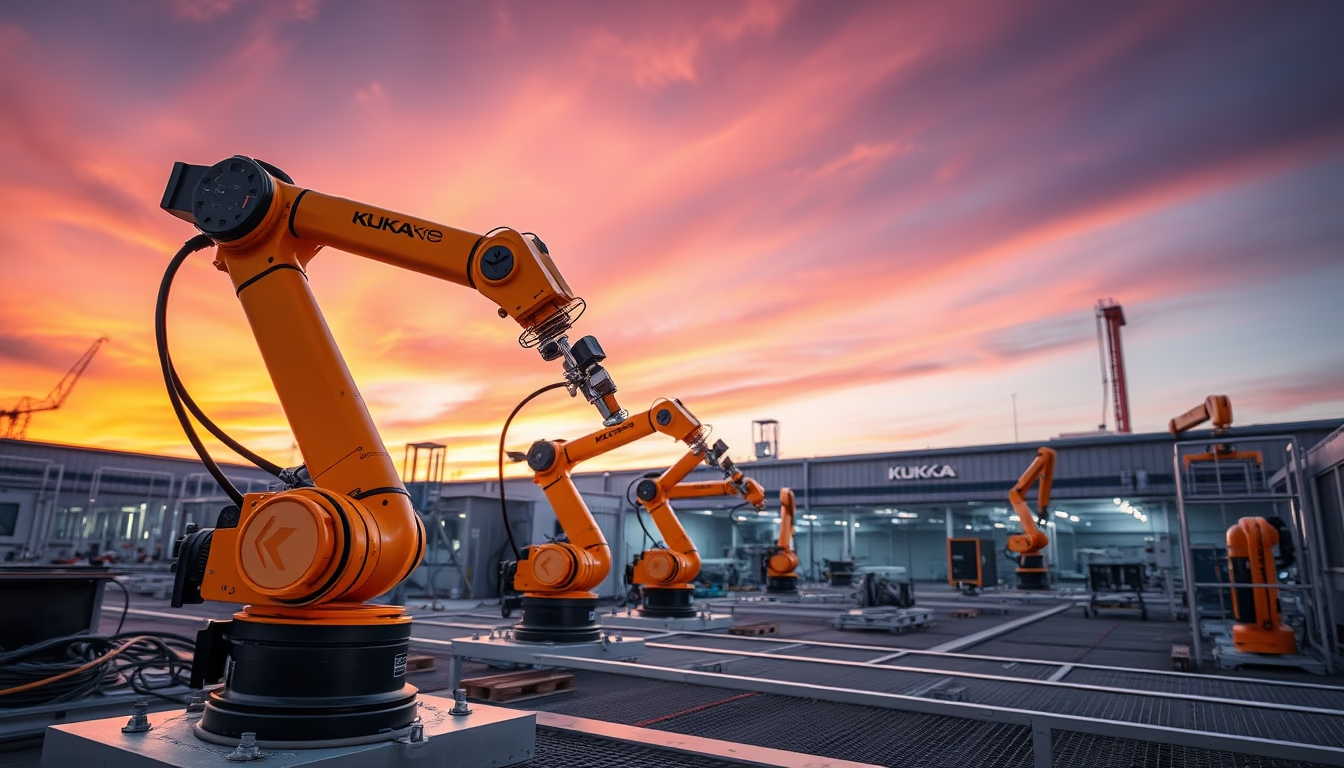
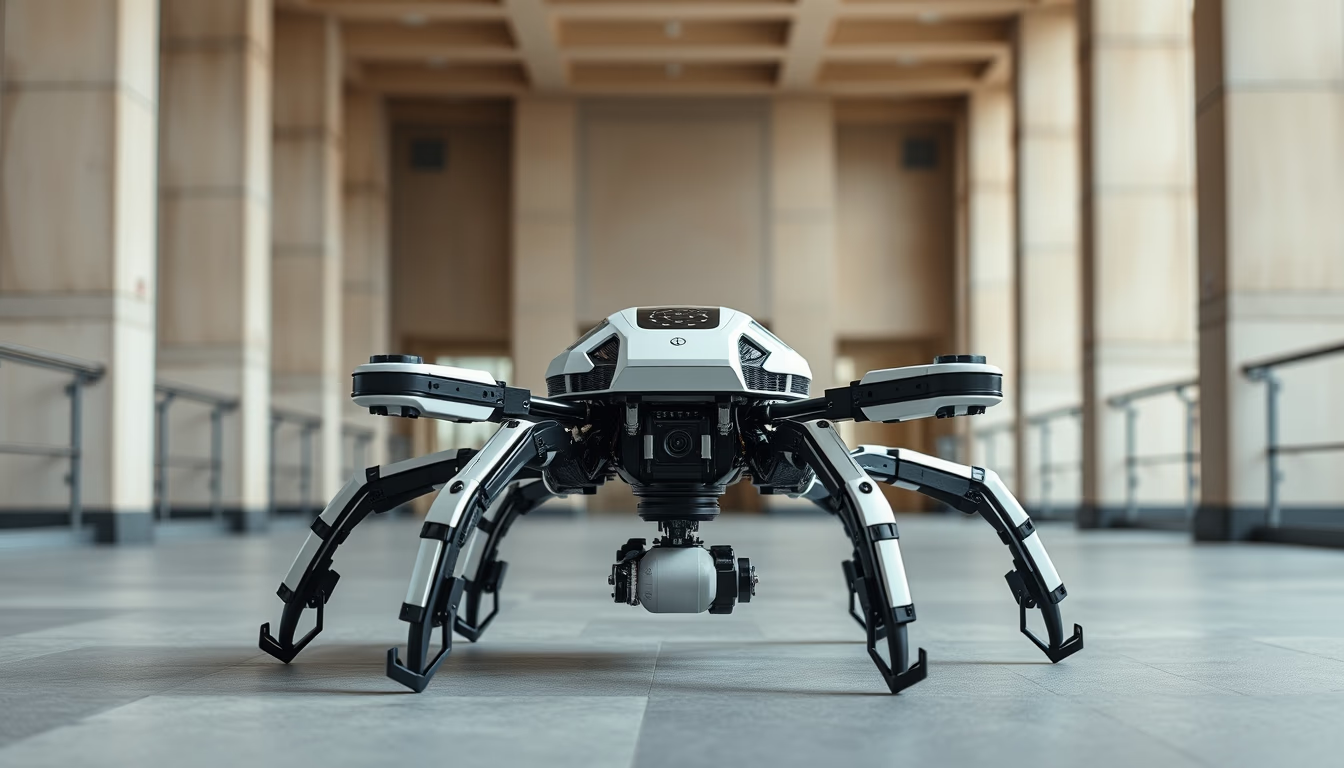
Robot arm 3d printer
1344×768 · AVIF · CC BY 4.0
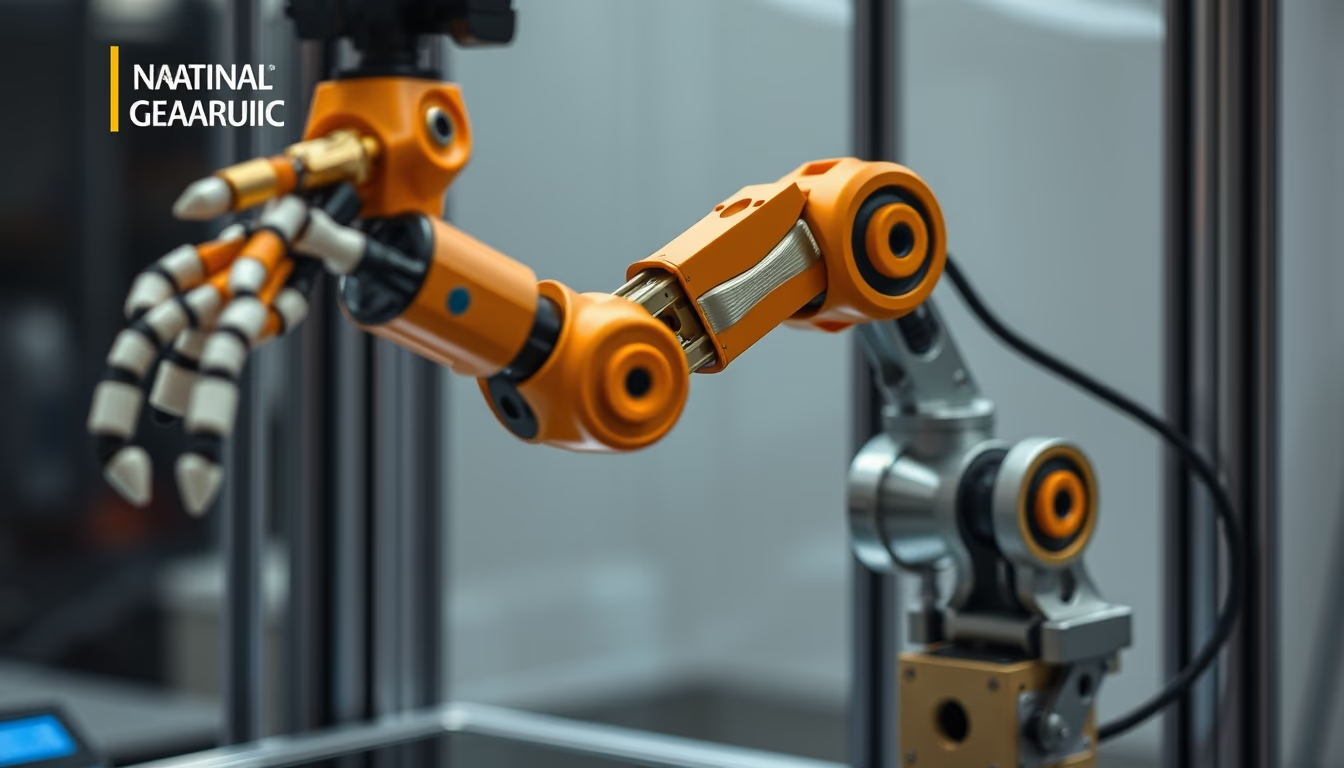
Robotic arms equipped with 3D printers are revolutionizing manufacturing, enabling the creation of complex, large-scale structures with millimeter precision.
About this subject
The combination of robotic arms with 3D printing technology represents a major leap in additive manufacturing. Unlike conventional 3D printers that operate on limited Cartesian axes, articulated robots offer six or more degrees of freedom, allowing material deposition in any orientation. This flexibility enables printing complex geometries, such as curved ducts or lattice structures, without additional supports.
Companies like MX3D in the Netherlands and RAMLAB at the Port of Rotterdam already use robotic arms to fabricate steel bridges and ship propellers. In construction, robots print concrete layers to build curved walls or customized architectural elements. In aerospace, robotic precision allows producing lightweight alloy components that reduce aircraft weight.
A milestone occurred in 2021, when NASA tested a robotic arm capable of printing parts in space vacuum, aiming at future Mars missions. Moreover, robotic 3D printing reduces material waste by up to 70% compared to subtractive manufacturing, contributing to more sustainable processes. Integration with artificial intelligence enables real-time error correction, adjusting deposition rates according to part geometry.
Interestingly, the concept of 3D printing with robotic arms was inspired by Fused Deposition Modeling (FDM), adapted for industrial robots such as those from KUKA or ABB. The democratization of this technology is directly linked to declining costs of robotic arms and the development of simulation software that generates optimized paths. With advances in cloud computing, multiple robots can be controlled remotely in a factory, increasing production scale.
Frequently Asked Questions
What are the main advantages of robotic arm 3D printing over traditional 3D printers?
Robotic arms provide greater freedom of movement, enabling printing from multiple angles and creating complex geometries without supports. They also operate on larger scales and can integrate into automated production lines.
What materials can be used in robotic 3D printing?
Materials range from polymers and concrete to metals like stainless steel, aluminum, and titanium. The choice depends on application: construction uses concrete, while aerospace prefers lightweight alloys.
Is robotic arm 3D printing viable for small businesses?
Although initial costs are high, the growth of on-demand printing services and decreasing robot prices make the technology accessible to medium-sized businesses. Startups like Voodoo Manufacturing offer low-cost solutions.
Direct URL
https://pub-c7d6a6ea828543ac903a74a341ccb2e1.r2.dev/imagens/robot-arm-3d-printer-national-geographic-style-p8.avifHow to credit
Include a visible link back to UtilizAí. Copy one of the snippets below:
<a href="https://xn--utiliza-eza.com/en/midia/imagens/robot-arm-3d-printer-national-geographic-style-p8">Robot arm 3d printer</a> by <a href="https://xn--utiliza-eza.com">UtilizAí</a>, licensed under <a href="https://creativecommons.org/licenses/by/4.0/">CC BY 4.0</a>.
[Robot arm 3d printer](https://xn--utiliza-eza.com/en/midia/imagens/robot-arm-3d-printer-national-geographic-style-p8) by [UtilizAí](https://xn--utiliza-eza.com), CC BY 4.0
License: CC-BY-4.0