Robot arm 3d printer
1344×768 · AVIF · CC BY 4.0
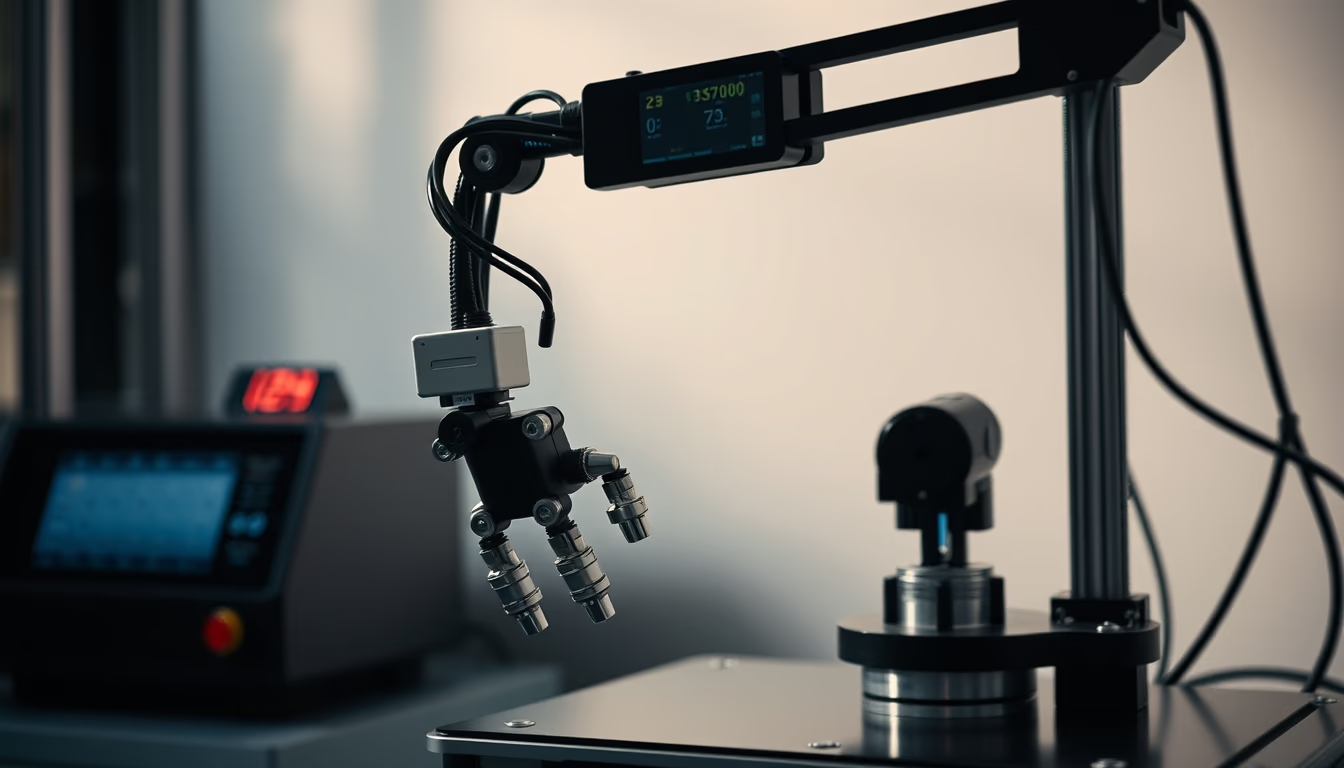
Robotic arm 3D printers combine multi-axis motion and material deposition to manufacture large-scale objects, such as houses and aerospace components.
About this subject
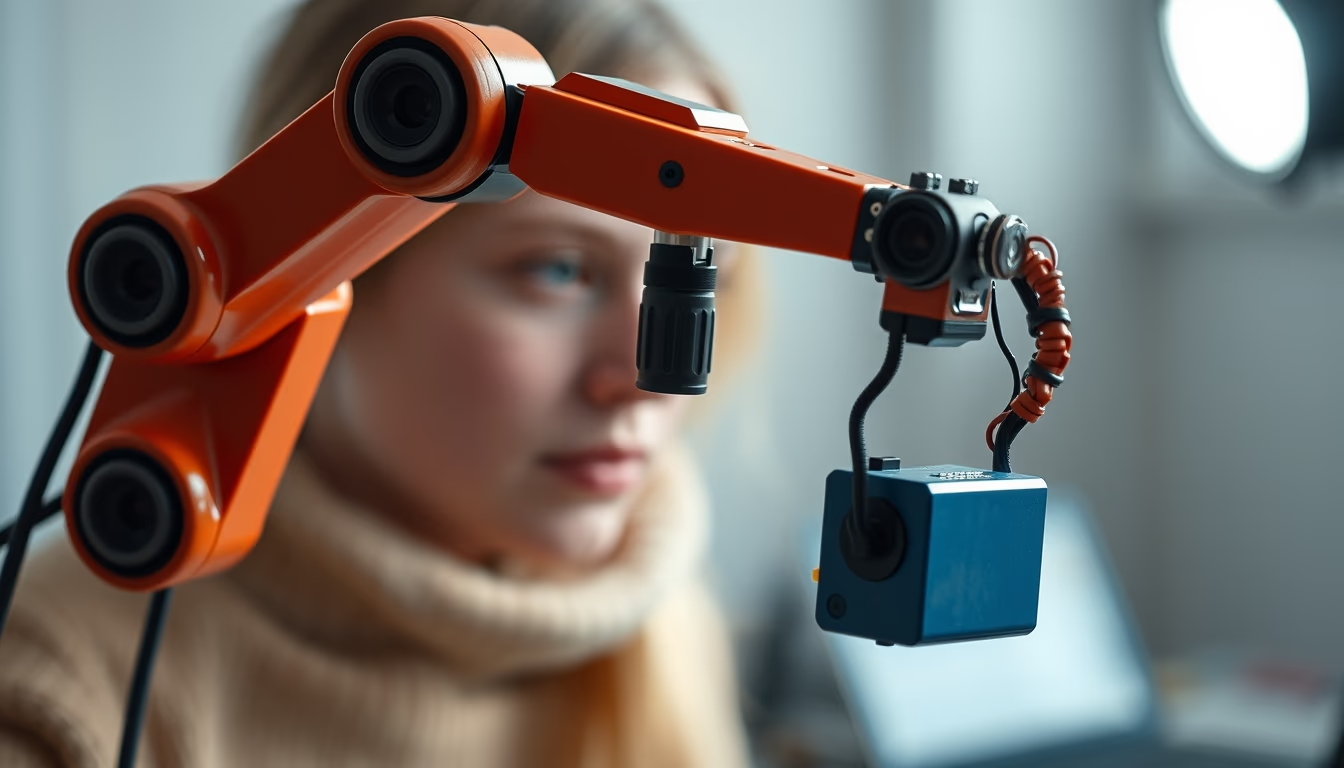
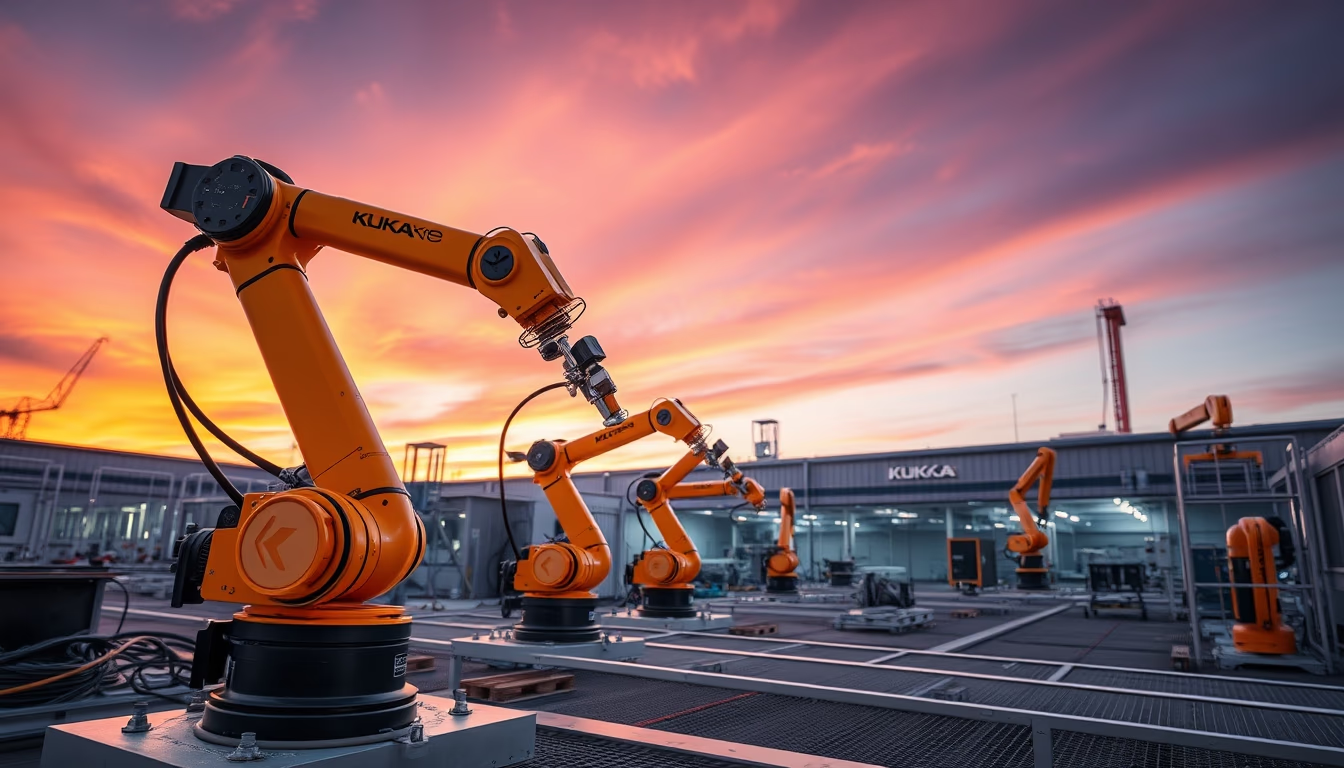
Robotic arm 3D printers represent a significant evolution in additive manufacturing. Unlike traditional desktop printers that operate on three linear axes, these systems use articulated arms with up to six degrees of freedom, enabling material deposition on curved, tilted, or complex angled surfaces without additional supports. This flexibility expands design possibilities and reduces raw material waste.
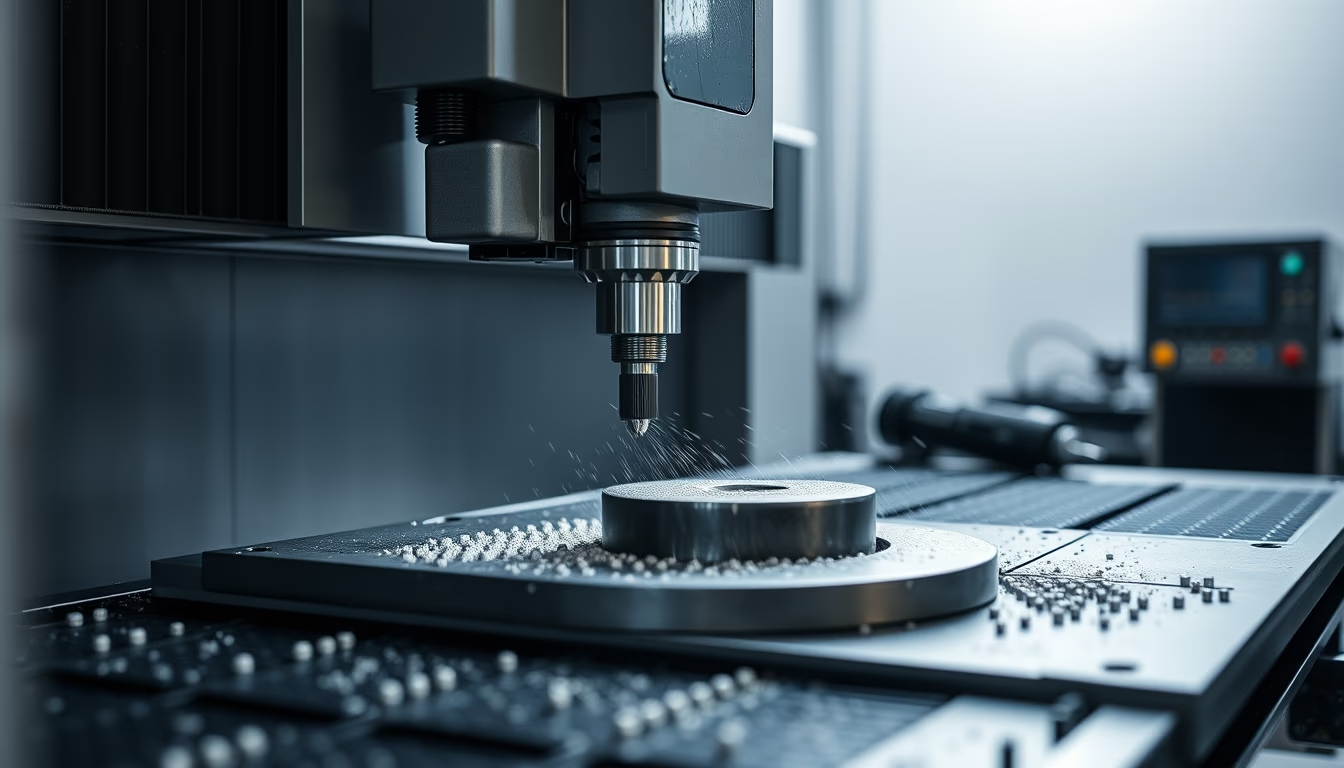
One of the most notable applications is in construction. Companies like ICON and Apis Cor have already printed complete houses using robotic arms that extrude concrete layer by layer. The process is faster, generates less waste, and can reduce costs by up to 30% compared to conventional methods. In aerospace, NASA and SpaceX are exploring robots to manufacture rocket components from metal alloys, leveraging the ability to print complex internal geometries impossible with machining.
Another promising field is on-demand spare part manufacturing for machinery and vehicles. With a robotic arm, it is possible to print directly onto existing structures, performing repairs or adding functionalities. The technology also advances in creating custom prosthetics and orthoses, where the arm can scan the patient and print a tailored piece on-site.
The precision of robotic arms depends on real-time control systems and sensors that correct temperature and speed variations. Newer models integrate computer vision to inspect the part during printing, adjusting parameters automatically. This level of automation makes robotic additive manufacturing a key tool for Industry 4.0, combining flexibility, speed, and mass customization.
Frequently Asked Questions
What is a robotic arm 3D printer?
It is an additive manufacturing system that uses an articulated robotic arm to deposit material, such as plastic, concrete, or metal, along multiple axes. Unlike standard 3D printers, it can create large objects and complex geometries without supports.
What are the main advantages of this type of printer?
Advantages include greater design freedom, ability to print on non-flat surfaces, reduced waste, large-part fabrication (e.g., houses), and integration with robotic systems for repairs or on-site customization.
Which industries most commonly use robotic arm 3D printing?
Construction, aerospace, automotive, medical (prosthetics and orthoses), and industrial manufacturing are the primary sectors. Companies like ICON, NASA, and SpaceX already apply the technology in real-world projects.
Direct URL
https://pub-c7d6a6ea828543ac903a74a341ccb2e1.r2.dev/imagens/robot-arm-3d-printer-magazine-editorial-p5.avifHow to credit
Include a visible link back to UtilizAí. Copy one of the snippets below:
<a href="https://xn--utiliza-eza.com/en/midia/imagens/robot-arm-3d-printer-magazine-editorial-p5">Robot arm 3d printer</a> by <a href="https://xn--utiliza-eza.com">UtilizAí</a>, licensed under <a href="https://creativecommons.org/licenses/by/4.0/">CC BY 4.0</a>.
[Robot arm 3d printer](https://xn--utiliza-eza.com/en/midia/imagens/robot-arm-3d-printer-magazine-editorial-p5) by [UtilizAí](https://xn--utiliza-eza.com), CC BY 4.0
License: CC-BY-4.0