Robot arm 3d printer
1344×768 · AVIF · CC BY 4.0
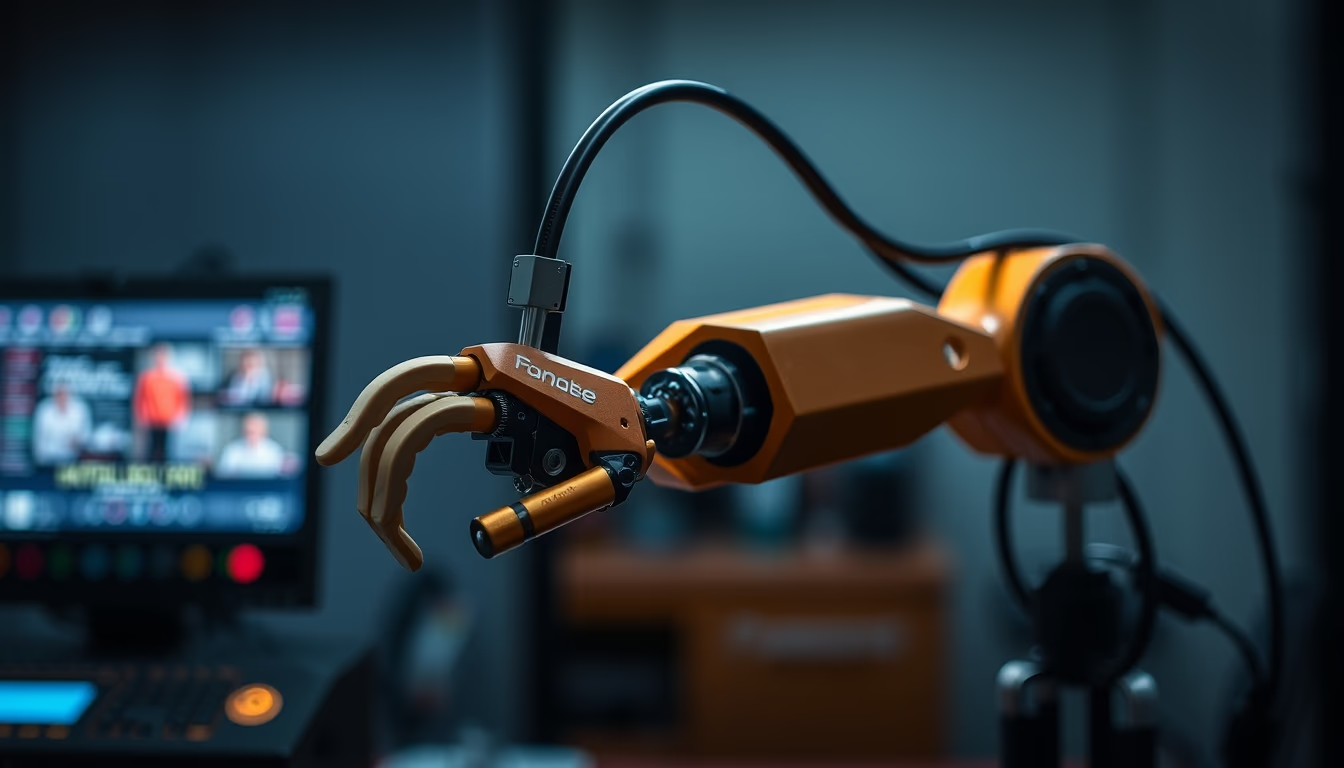
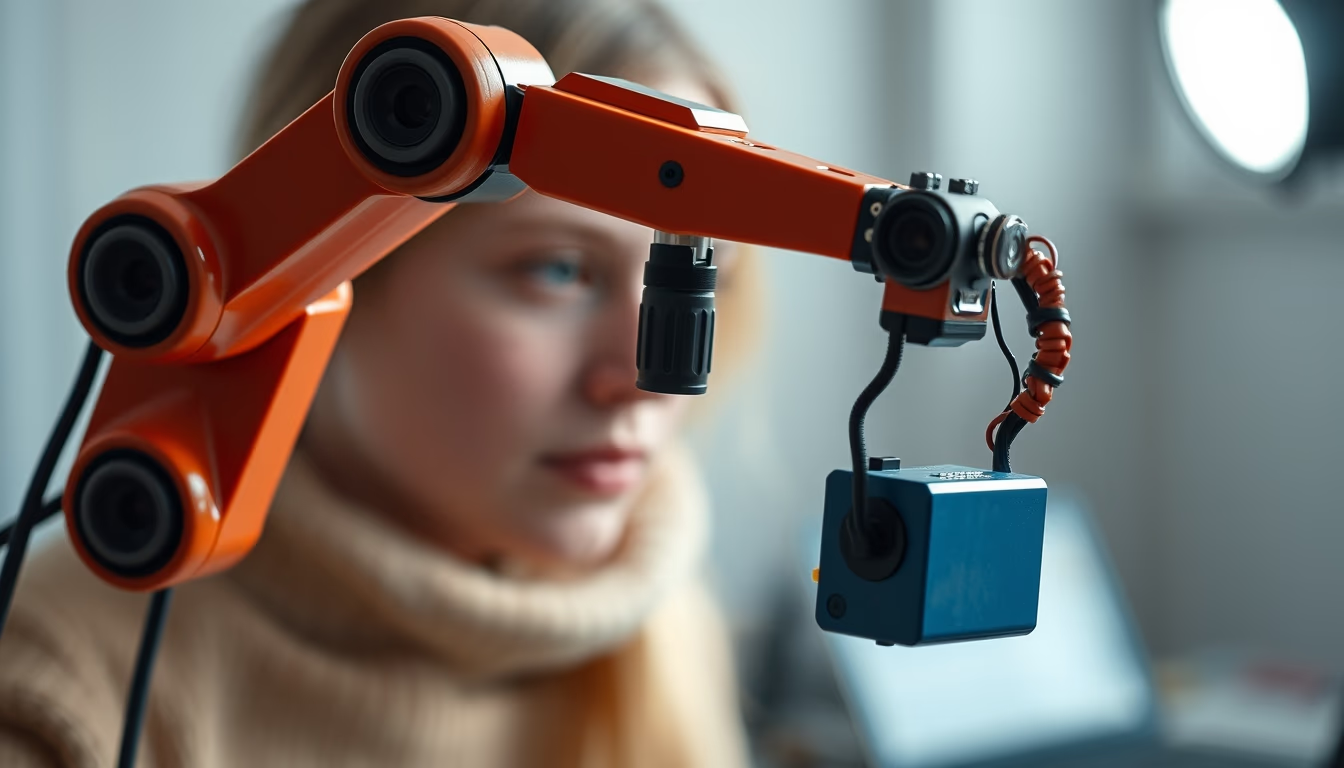
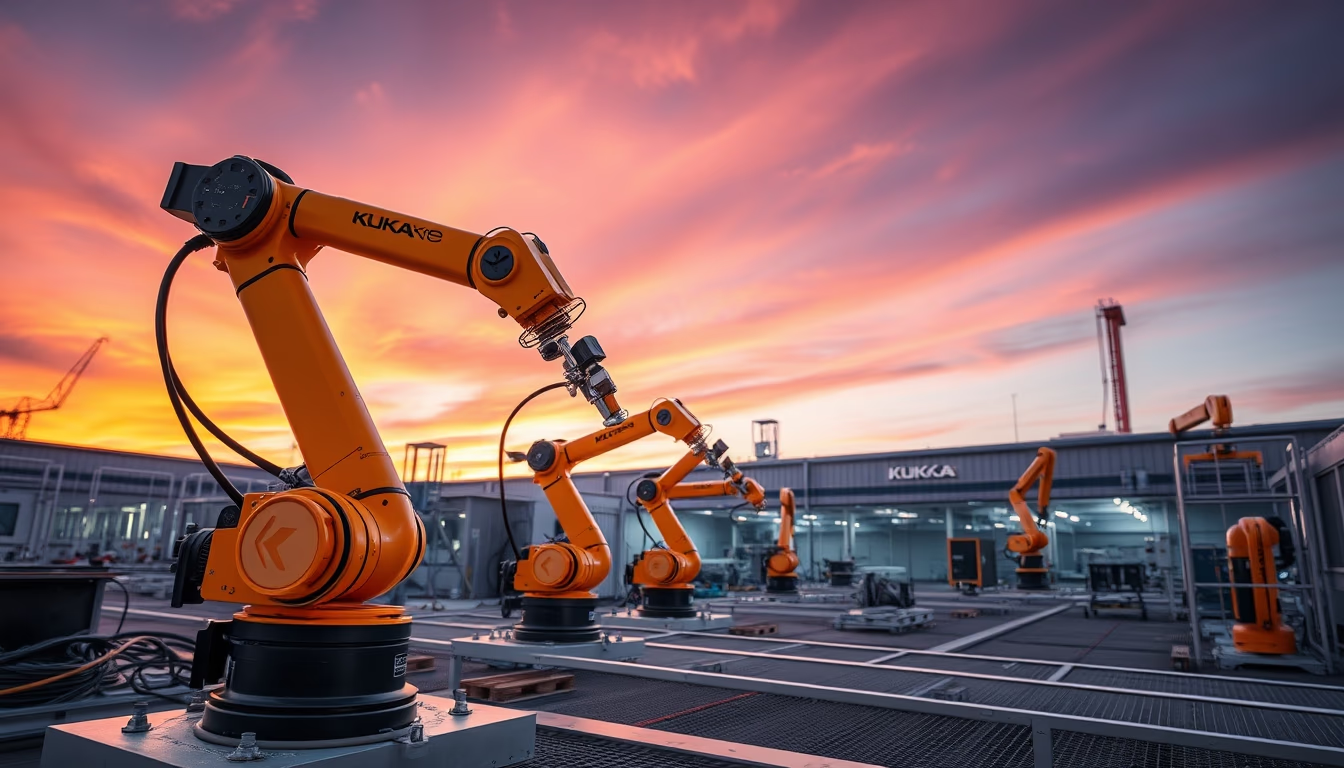
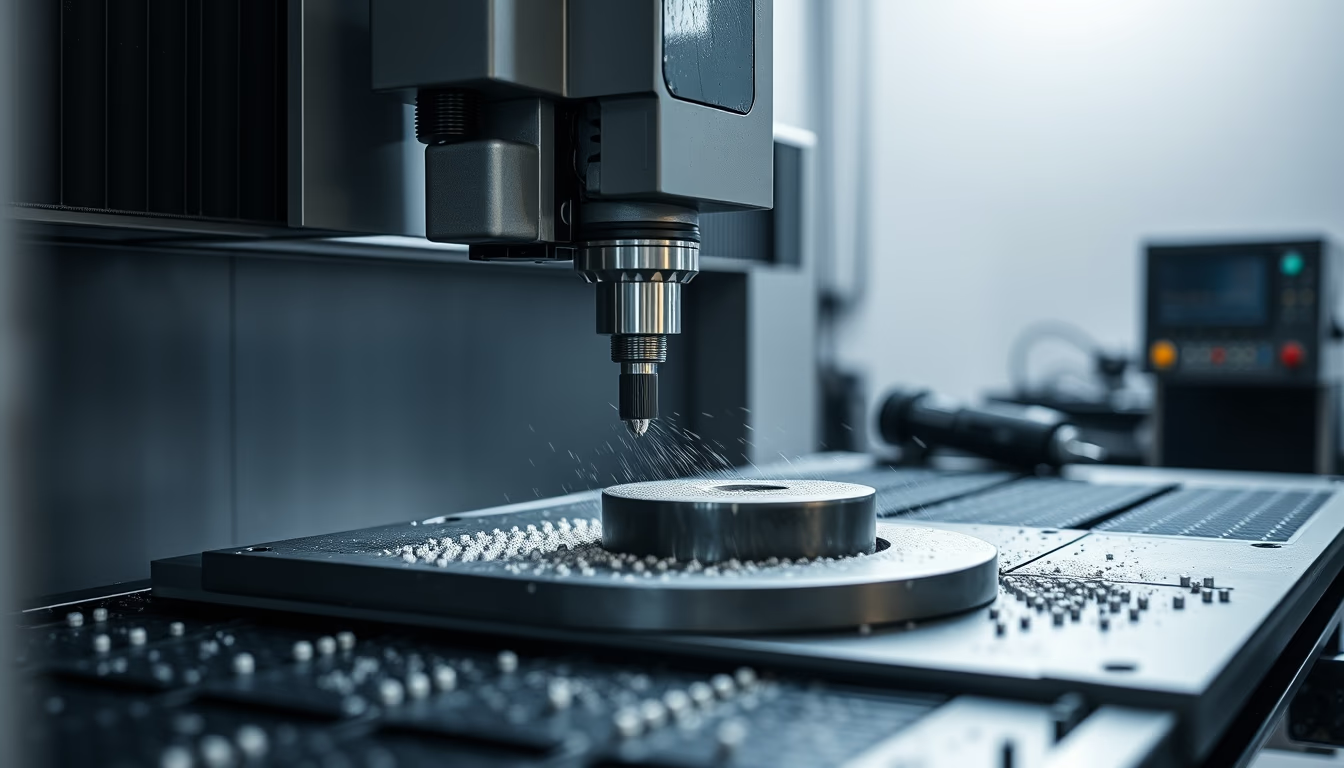
Robot arm 3D printers combine the versatility of industrial manipulators with additive manufacturing, enabling large-scale structures and complex geometries.
About this subject
Robot arm 3D printers represent a significant evolution over conventional Cartesian printers. Instead of moving along fixed X, Y, and Z axes, these articulated robots use multiple degrees of freedom to deposit material in any orientation. This technology emerged in the early 2000s, driven by research at universities and robotics labs, and quickly gained traction in sectors like construction, aerospace, and art. Companies such as KUKA and ABB adapted their industrial arms to extrude concrete, polymers, and even metals, enabling possibilities previously unfeasible.
In construction, these robots can print entire houses layer by layer, reducing waste and accelerating timelines. Projects like MX3D's steel bridge in Amsterdam demonstrated the viability of large-scale 3D-printed structures. In industry, they allow the fabrication of large molds and prototypes without expensive tooling. In the art world, sculptors and designers use robotic arms to create unique pieces with organic, complex shapes, later captured in fine art photography.
Key challenges include precise calibration, complex path programming, and high equipment costs. However, advances in software and sensors are making these systems more accessible. The future points to in situ printing on construction sites, repairs on existing structures, and even manufacturing in extreme environments like space stations. The intersection of robotics and 3D printing continues to push the boundaries of digital fabrication, promising to revolutionize how we build and create.
Frequently Asked Questions
What is the difference between a traditional 3D printer and a robot arm 3D printer?
Traditional 3D printers are usually Cartesian with movement limited to three axes. Robot arms offer multiple degrees of freedom, enabling printing in any orientation and on curved surfaces, while also supporting larger scales and diverse materials.
What materials can be used in robot arm 3D printers?
These robots can extrude a wide range of materials, including concrete, clay, thermoplastic polymers, metals (via welding or direct energy deposition), and even biological materials. The choice depends on the extruder nozzle and the application.
What are the main current applications of this technology?
Key applications include construction (printing houses and bridges), large-scale prototyping and mold making, aerospace part production, and creation of art and design pieces. It is also used in research for in-situ printing and advanced digital fabrication.
Direct URL
https://pub-c7d6a6ea828543ac903a74a341ccb2e1.r2.dev/imagens/robot-arm-3d-printer-fine-art-photography-p4.avifHow to credit
Include a visible link back to UtilizAí. Copy one of the snippets below:
<a href="https://xn--utiliza-eza.com/en/midia/imagens/robot-arm-3d-printer-fine-art-photography-p4">Robot arm 3d printer</a> by <a href="https://xn--utiliza-eza.com">UtilizAí</a>, licensed under <a href="https://creativecommons.org/licenses/by/4.0/">CC BY 4.0</a>.
[Robot arm 3d printer](https://xn--utiliza-eza.com/en/midia/imagens/robot-arm-3d-printer-fine-art-photography-p4) by [UtilizAí](https://xn--utiliza-eza.com), CC BY 4.0
License: CC-BY-4.0