Port of Santos with cargo containers and cranes at sunset
1344×768 · AVIF · CC BY 4.0
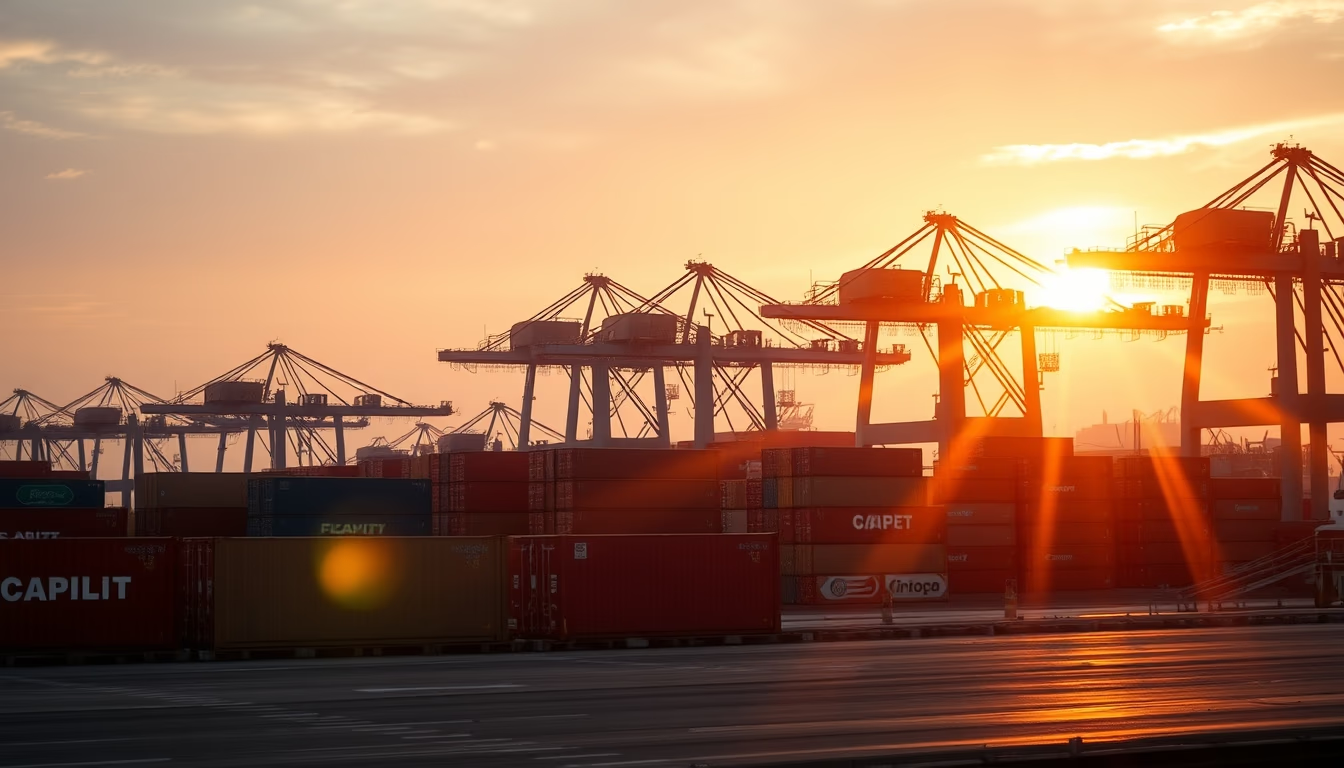
The Port of Santos is the largest port complex in Latin America, handling about 30% of Brazil's foreign trade.
About this subject
The Port of Santos, located on the coast of São Paulo state, is the largest and busiest port in Latin America. Its infrastructure handles approximately 30% of Brazil's foreign trade value, notably exporting commodities such as soybeans, coffee, sugar, meat, and iron ore, while importing fertilizers, machinery, and chemicals. The port complex stretches over 15 km along the Santos estuary channel, encompassing specialized terminals for containers, bulk solids and liquids, and general cargo.
The port's history dates back to the 16th century, when the settlement of Santos became a shipping point for gold and sugar from the interior. In the 19th century, with the expansion of coffee cultivation, the port underwent modernization, and in 1892, the first masonry wharf was inaugurated. Today, the port is managed by the Santos Port Authority (APS) and features over 60 private and public terminals. In 2023, it handled more than 170 million tons of cargo, solidifying its strategic role in the national economy.
The cranes and containers visible in the landscape belong to container terminals such as the Santos Container Terminal (Tecon), operated by Santos Brasil, and the Right Bank Container Terminal (TCMD), operated by DP World. These terminals use state-of-the-art gantry cranes capable of moving up to 40 containers per hour. The port also invests in sustainability, with projects to reduce emissions and improve energy efficiency, such as using electric power for equipment and installing solar panels.
The sunset over the Port of Santos is a remarkable sight, with the lights of cranes and ships contrasting against the orange sky. The port area also attracts tourists interested in watching large vessels maneuver and the beauty of the channel. The city of Santos, with its historic center and famous orchid garden, complements the visit, offering an experience that combines logistics, history, and leisure.
Frequently Asked Questions
What is the importance of the Port of Santos for the Brazilian economy?
The Port of Santos handles about 30% of Brazil's foreign trade value, being crucial for exporting commodities like soybeans, coffee, and iron ore, and importing fertilizers and machinery.
What are the main container terminals at the Port of Santos?
The main terminals are Tecon (Santos Brasil) and TCMD (DP World), which operate high-capacity gantry cranes and handle millions of containers annually.
Does the Port of Santos have sustainability projects?
Yes, the port invests in electric power for equipment, solar panels, and emission reduction programs to minimize environmental impact.
Direct URL
https://pub-c7d6a6ea828543ac903a74a341ccb2e1.r2.dev/imagens/port-of-santos-with-cargo-containers-and-cranes-at-sunset-editorial-overcast-daytime-6.avifHow to credit
Include a visible link back to UtilizAí. Copy one of the snippets below:
<a href="https://xn--utiliza-eza.com/en/midia/imagens/port-of-santos-with-cargo-containers-and-cranes-at-sunset-editorial-overcast-daytime-6">Port of Santos with cargo containers and cranes at sunset</a> by <a href="https://xn--utiliza-eza.com">UtilizAí</a>, licensed under <a href="https://creativecommons.org/licenses/by/4.0/">CC BY 4.0</a>.
[Port of Santos with cargo containers and cranes at sunset](https://xn--utiliza-eza.com/en/midia/imagens/port-of-santos-with-cargo-containers-and-cranes-at-sunset-editorial-overcast-daytime-6) by [UtilizAí](https://xn--utiliza-eza.com), CC BY 4.0
License: CC-BY-4.0