Port of Santos with cargo containers and cranes at sunset
1344×768 · AVIF · CC BY 4.0
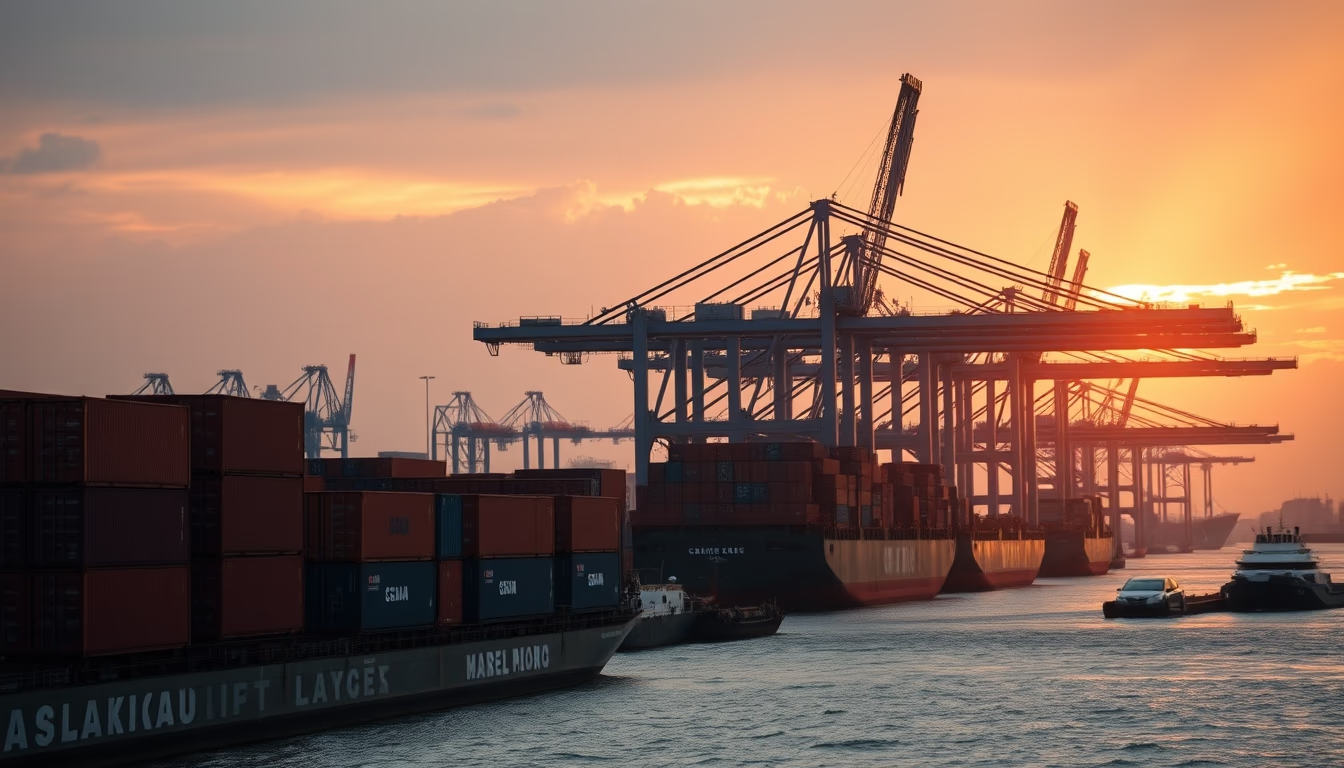
The Port of Santos, the largest port complex in Latin America, handles about 30% of all Brazilian foreign trade, with emphasis on containers and bulk cargo.
About this subject
The Port of Santos, located on the coast of São Paulo state, is Brazil's main logistics hub and the largest port in Latin America in terms of cargo volume. With approximately 13 km of continuous quay and 60 specialized terminals, it handles about 30% of Brazil's total foreign trade value, exporting commodities such as soybeans, iron ore, coffee, sugar, and meat, as well as manufactured goods in containers. In 2023, the port achieved a record 162 million tons handled, solidifying its strategic role in the national economy.
The port's history dates back to the 16th century, when the settlement of Santos began serving as a shipping point for gold and sugar. However, it was from the 19th century onward, with the expansion of coffee cultivation in the Paraíba Valley, that the port gained international relevance. The first section of the quay was inaugurated in 1892, and throughout the 20th century successive modernization projects expanded its capacity. Today, the port features state-of-the-art technology, including automated gantry cranes and integrated management systems, allowing simultaneous berthing of dozens of vessels.
The sunset scene at the Port of Santos reveals a striking industrial landscape: stacks of colorful containers, imposing cranes, and the constant movement of trucks and trains. The bay of Santos, sheltered by São Vicente Island, provides favorable natural conditions for navigation, although constant dredging is required to maintain channel depth. Port activity generates about 50,000 direct and indirect jobs in the region, serving as an economic engine for the Baixada Santista area.
Interestingly, the Port of Santos also houses the largest container terminal in South America, the Santos Container Terminal (Tecon), operated by Santos Brasil. On peak days, over 10,000 containers are moved within 24 hours. Despite its efficiency, the port faces logistical challenges, such as bottlenecks in road and rail access, which have been targeted by public and private investments to expand capacity and reduce costs.
Frequently Asked Questions
What is the importance of the Port of Santos for Brazil?
The Port of Santos is the largest port in Latin America and handles about 30% of Brazil's foreign trade value, moving commodities such as soybeans, iron ore, and coffee, as well as manufactured goods.
How many containers does the Port of Santos move per day?
On peak days, the Port of Santos moves over 10,000 containers in 24 hours, housing the largest container terminal in South America.
What are the main logistical challenges of the Port of Santos?
The main challenges include bottlenecks in road and rail access, as well as the constant need for dredging to maintain navigation channel depth.
Direct URL
https://pub-c7d6a6ea828543ac903a74a341ccb2e1.r2.dev/imagens/port-of-santos-with-cargo-containers-and-cranes-at-sunset-editorial-overcast-daytime-2.avifHow to credit
Include a visible link back to UtilizAí. Copy one of the snippets below:
<a href="https://xn--utiliza-eza.com/en/midia/imagens/port-of-santos-with-cargo-containers-and-cranes-at-sunset-editorial-overcast-daytime-2">Port of Santos with cargo containers and cranes at sunset</a> by <a href="https://xn--utiliza-eza.com">UtilizAí</a>, licensed under <a href="https://creativecommons.org/licenses/by/4.0/">CC BY 4.0</a>.
[Port of Santos with cargo containers and cranes at sunset](https://xn--utiliza-eza.com/en/midia/imagens/port-of-santos-with-cargo-containers-and-cranes-at-sunset-editorial-overcast-daytime-2) by [UtilizAí](https://xn--utiliza-eza.com), CC BY 4.0
License: CC-BY-4.0