Pocket watch antique
1344×768 · AVIF · CC BY 4.0
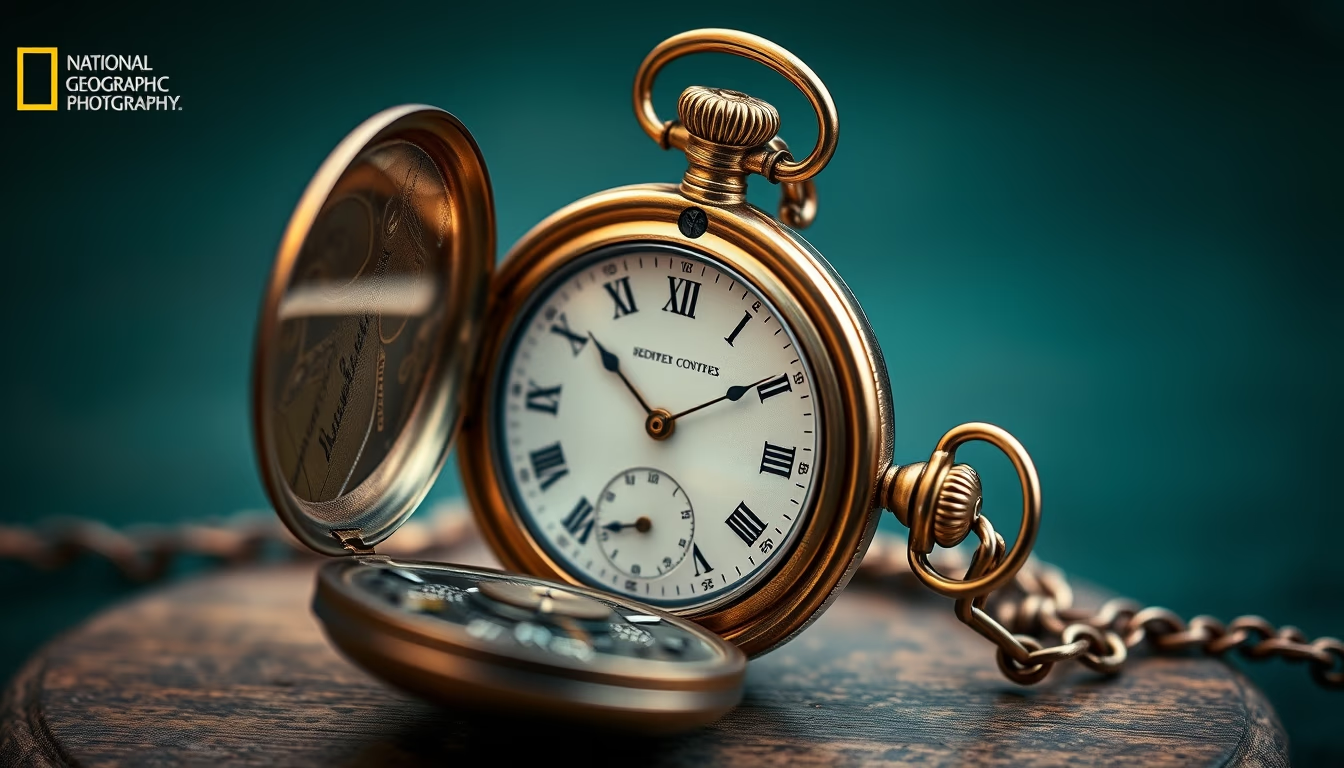
Antique pocket watches combine mechanical precision and decorative artistry, serving as status symbols and innovations from the 16th to the 20th century.
About this subject
Pocket watches originated in the 16th century, driven by the invention of the mainspring that made portable timekeeping possible. While German locksmith Peter Henlein is often credited as the first maker, historical records suggest other European craftsmen produced similar pieces. Initially called 'Nuremberg eggs,' these objects were luxury items for the nobility, often adorned with enamel and precious stones. Over the centuries, Swiss and French watchmakers, such as Abraham-Louis Breguet, refined precision with innovations like the anchor escapement and the tourbillon, which compensated for gravity's effects.
Each antique pocket watch reflects the skill of its creator, combining meticulous engineering and artistry. Cases were made of gold, silver, or base metals, often decorated with enameling, engraving, or miniature paintings. Complications ranged from simple hour displays to complex features like perpetual calendars, moon phases, minute repeaters, and chronographs. Dials typically featured Roman or Arabic numerals with handcrafted hands. These objects not only measured time but also demonstrated the owner's wealth and taste.
The decline of the pocket watch began with World War I, when soldiers found wristwatches more practical, adapting mechanisms to straps. However, the tradition persisted among collectors and in formal settings, such as pocket watches worn with waistcoats. Brands like Patek Philippe, Longines, Waltham, and Vacheron Constantin produced iconic examples. Today, a well-preserved antique pocket watch can be worth thousands of dollars, and historic pieces like the Breguet No. 160 (commissioned by Queen Marie Antoinette) fetch astronomical prices at auction. These objects are testaments to the evolution of horology and decorative art.
Frequently Asked Questions
How does an antique pocket watch work?
An antique mechanical pocket watch uses a mainspring wound manually that releases energy gradually through a gear train. The escapement controls the energy release, and the balance wheel with its hairspring oscillates at a constant frequency, determining accuracy. Hands are moved by gears connected to the train.
What is the most valuable pocket watch in the world?
The most famous and valuable pocket watch is the Breguet No. 160, also known as the 'Marie Antoinette', commissioned in 1783 for the French queen. Extremely complicated, it took 44 years to complete and was stolen from the Israel Museum in 1983 but recovered in 2007. Similar pieces have sold for over $30 million at auction.
How to identify an original antique pocket watch?
Check the manufacturer's mark and serial number on the movement and case. Original watches have hand-finished details like polished bridges and blued screws. The dial should be enamel, with natural aging or cracks. Consult specialists and reference databases like the Pocket Watch Database or horological books.
Direct URL
https://pub-c7d6a6ea828543ac903a74a341ccb2e1.r2.dev/imagens/pocket-watch-antique-national-geographic-style-p5.avifHow to credit
Include a visible link back to UtilizAí. Copy one of the snippets below:
<a href="https://xn--utiliza-eza.com/en/midia/imagens/pocket-watch-antique-national-geographic-style-p5">Pocket watch antique</a> by <a href="https://xn--utiliza-eza.com">UtilizAí</a>, licensed under <a href="https://creativecommons.org/licenses/by/4.0/">CC BY 4.0</a>.
[Pocket watch antique](https://xn--utiliza-eza.com/en/midia/imagens/pocket-watch-antique-national-geographic-style-p5) by [UtilizAí](https://xn--utiliza-eza.com), CC BY 4.0
License: CC-BY-4.0