Pliers macro detail
1344×768 · AVIF · CC BY 4.0
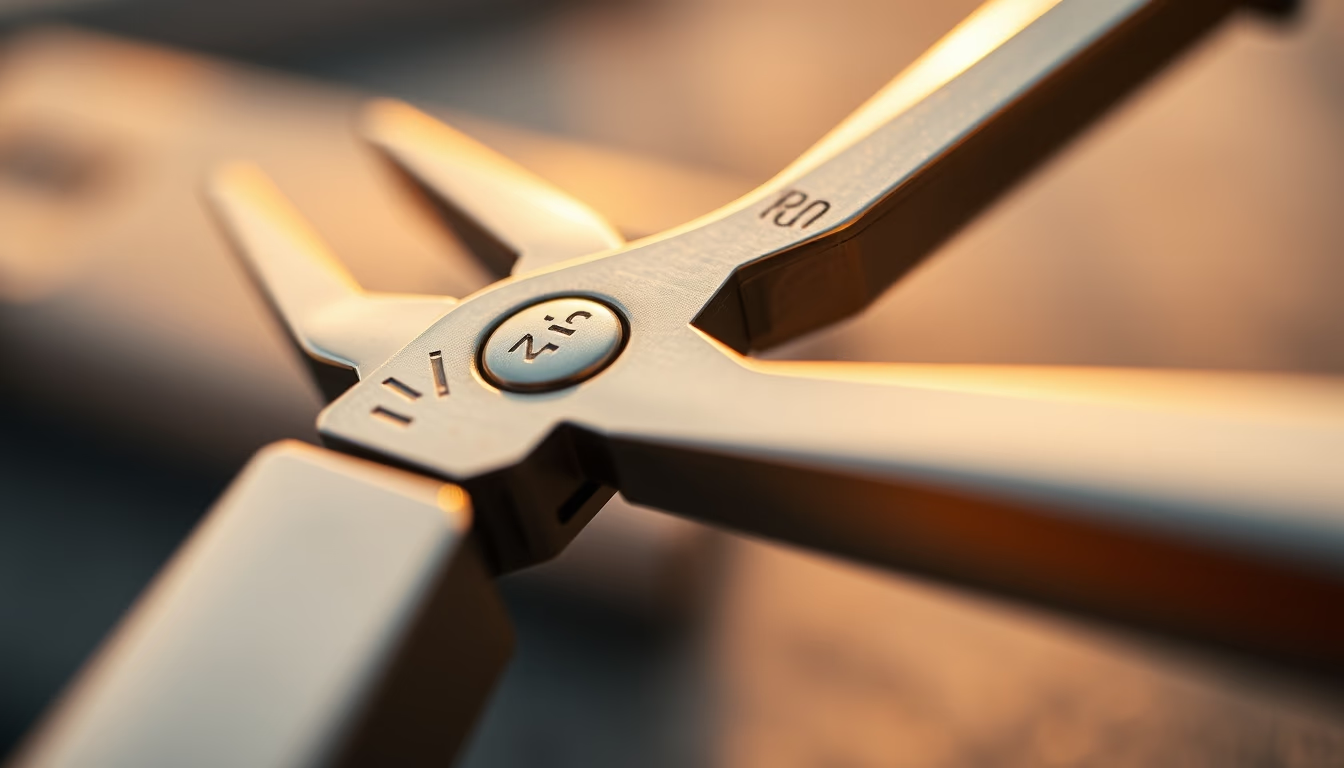
A macro detail of pliers reveals the engineering behind this essential hand tool, used in various everyday activities.
About this subject
Pliers are a hand tool consisting of two levers crossing at a pivot, enabling gripping, cutting, twisting, or holding objects with precision. Their origin dates back to the Iron Age, with primitive examples found at archaeological sites. The modern design, with rubber or plastic coated handles for electrical insulation, was refined during the Industrial Revolution when demand for precision tools grew in factories and workshops. There are dozens of variations, such as needle-nose pliers, diagonal cutters, locking pliers, and combination pliers, each designed for specific tasks in electrical work, mechanics, jewelry making, and even surgery. In macro photography, the details of the serrated jaws, the beveled cutting edge, and the pivot joint reveal the complexity of the piece: the heat treatment of carbon steel ensures hardness and durability, while the riveting of the pivot must be precise to avoid play. For travel photographers, a compact pair of pliers is a constant item in the repair kit, especially on expeditions to remote areas where improvisation is common. The rough texture of the metal, the wear marks, and the controlled reflections of macro lighting transform the tool into a visual study object, highlighting the functionality that often goes unnoticed in everyday use.
Frequently Asked Questions
What is the difference between needle-nose pliers and combination pliers?
Needle-nose pliers have long, narrow jaws for reaching tight spaces and holding wires. Combination pliers have shorter, sturdier jaws with a cutting edge near the pivot, making them more versatile for general gripping and cutting tasks.
Do insulated pliers protect against electric shocks?
Yes, pliers with insulated handles (VDE or ASTM certified) can withstand up to 1000 V AC, provided the insulation is intact. Always check the condition before electrical work.
What steel is used in professional pliers?
Professional pliers are typically forged from chrome-vanadium (Cr-V) steel or carbon steel with selective hardening. The process includes hot forging, heat treatment to harden the jaws, and shot blasting for finish. The pivot is riveted or machined precisely for smooth motion without play.
Direct URL
https://pub-c7d6a6ea828543ac903a74a341ccb2e1.r2.dev/imagens/pliers-macro-detail-travel-photography-p3.avifHow to credit
Include a visible link back to UtilizAí. Copy one of the snippets below:
<a href="https://xn--utiliza-eza.com/en/midia/imagens/pliers-macro-detail-travel-photography-p3">Pliers macro detail</a> by <a href="https://xn--utiliza-eza.com">UtilizAí</a>, licensed under <a href="https://creativecommons.org/licenses/by/4.0/">CC BY 4.0</a>.
[Pliers macro detail](https://xn--utiliza-eza.com/en/midia/imagens/pliers-macro-detail-travel-photography-p3) by [UtilizAí](https://xn--utiliza-eza.com), CC BY 4.0
License: CC-BY-4.0