Pliers macro detail
1344×768 · AVIF · CC BY 4.0
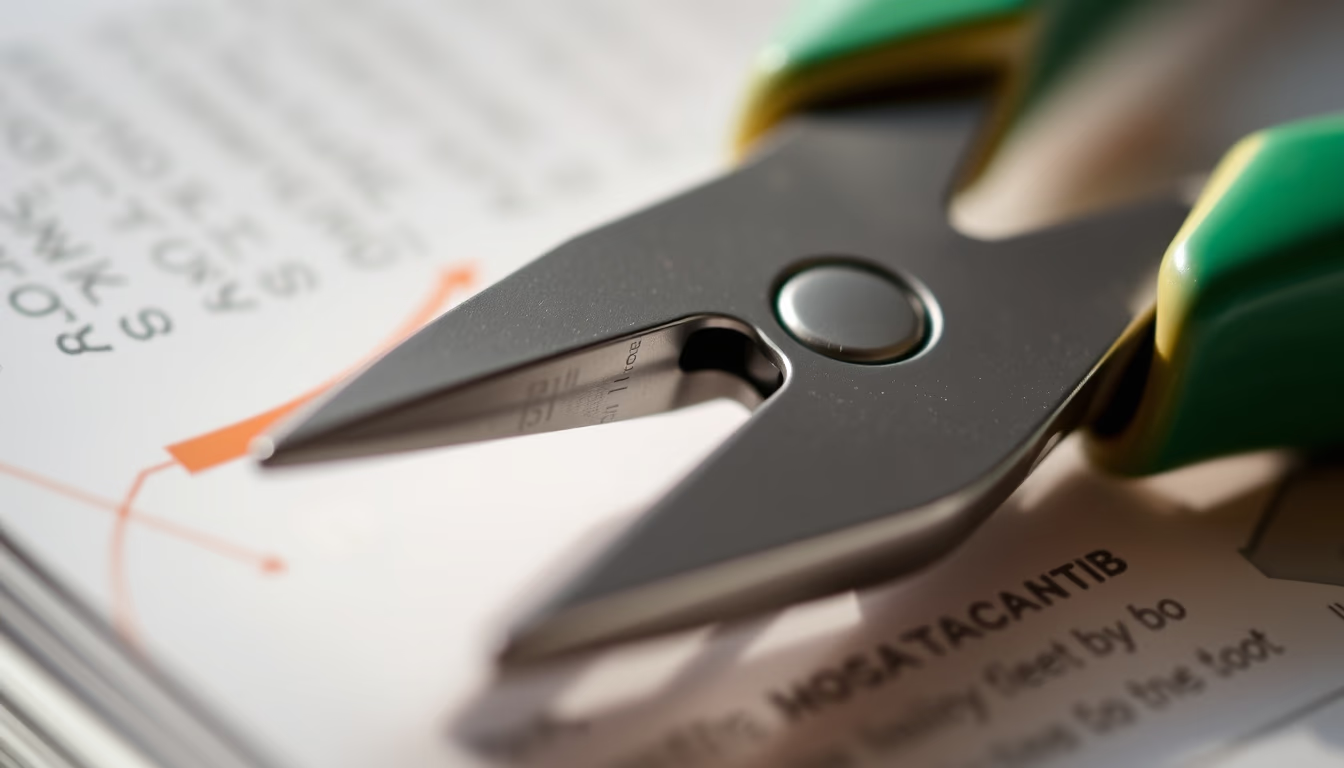
Macro detail of a standard pair of pliers, revealing metal texture, serrated teeth, and pivot mechanism in extreme close-up.
About this subject
Pliers are a versatile hand tool whose origins date back to ancient civilizations, with evidence of use in forging and metalworking since the Iron Age. Their basic mechanism consists of first-class levers pivoted at a fulcrum, amplifying applied force to grip, cut, twist, or hold objects. Macro detail highlights features like serrated teeth designed to increase friction and prevent slipping, and a textured surface for better grip. Modern pliers are typically made from carbon steel or chrome-vanadium steel, heat-treated and tempered for hardness and resistance to deformation. Dozens of variations exist: combination pliers (with side cutter and flat/rounded jaws), locking pliers (with adjustable clamp), needle-nose pliers (for precision work), diagonal cutting pliers, snap-ring pliers, and electronics pliers. The popularity of pliers in everyday life reflects their versatility in home improvement, automotive repairs, gardening, and crafts. Interestingly, locking pliers, invented by William Petersen in 1924, became synonymous with quick-adjust clamping tools. In macro, the sharpness of the teeth and the riveted joint reveal the engineering behind an apparently simple but essential tool in any professional or amateur toolkit.
Frequently Asked Questions
What is the difference between combination pliers and needle-nose pliers?
Combination pliers have flat, serrated jaws and a side cutter, suitable for general gripping, bending, and cutting. Needle-nose pliers have long, tapered jaws for reaching tight spaces and holding small objects, common in electronics and jewelry work.
How does the lever mechanism of pliers amplify force?
As a first-class lever, the pivot lies between the applied force (on the handle) and the load (at the jaws). The longer the distance from pivot to force point, the greater the mechanical advantage, allowing the user to exert a much stronger gripping force than manual effort.
What is the historical origin of pliers?
Tools similar to pliers have been found in Iron Age archaeological sites (around 1000 BCE), used by blacksmiths and goldsmiths. Modern pliers evolved from medieval pincers, with the current design solidified during the 19th century industrialization.
Direct URL
https://pub-c7d6a6ea828543ac903a74a341ccb2e1.r2.dev/imagens/pliers-macro-detail-magazine-editorial-p1.avifHow to credit
Include a visible link back to UtilizAí. Copy one of the snippets below:
<a href="https://xn--utiliza-eza.com/en/midia/imagens/pliers-macro-detail-magazine-editorial-p1">Pliers macro detail</a> by <a href="https://xn--utiliza-eza.com">UtilizAí</a>, licensed under <a href="https://creativecommons.org/licenses/by/4.0/">CC BY 4.0</a>.
[Pliers macro detail](https://xn--utiliza-eza.com/en/midia/imagens/pliers-macro-detail-magazine-editorial-p1) by [UtilizAí](https://xn--utiliza-eza.com), CC BY 4.0
License: CC-BY-4.0