Pliers macro detail
1344×768 · AVIF · CC BY 4.0
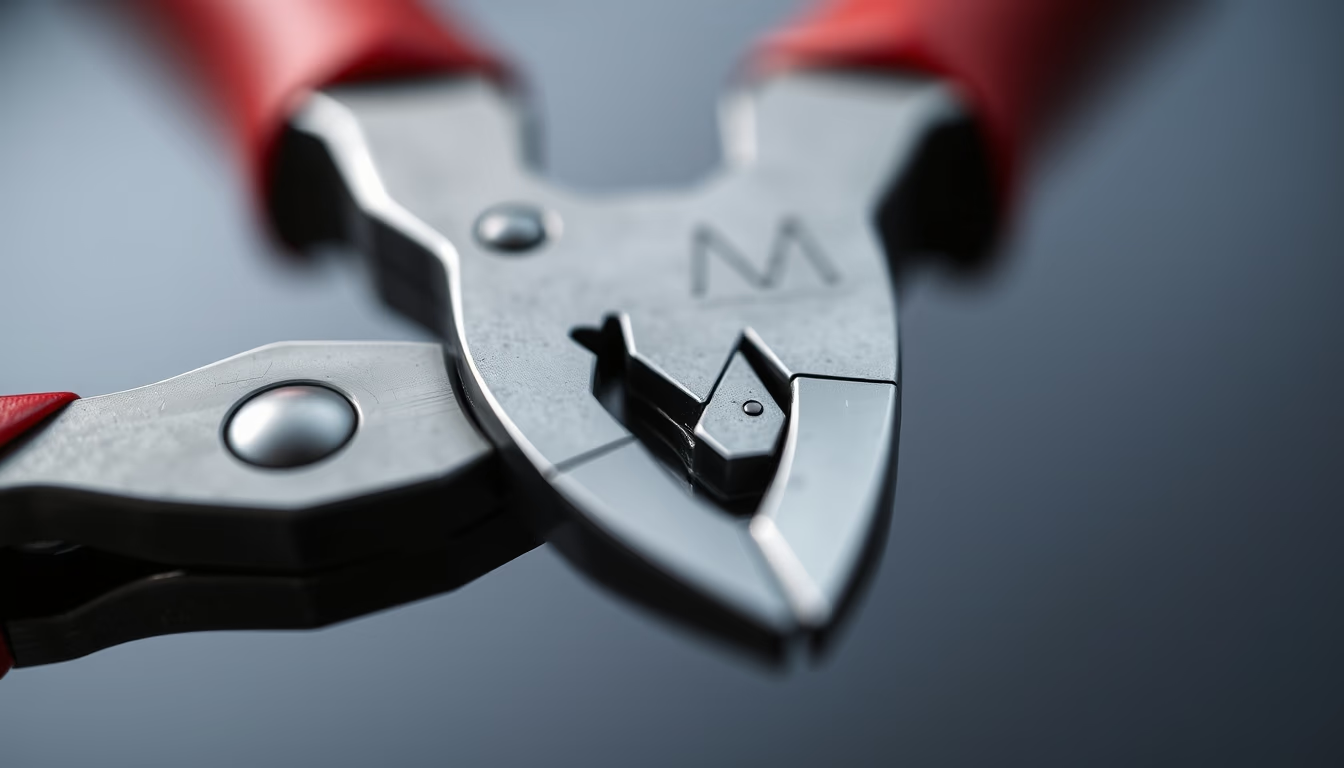
Macro detail of pliers reveals metallic textures and precise gears in a fine art photography composition.
About this subject
Pliers are essential hand tools used across trades, from electronics to heavy machinery. Originating from rudimentary iron-age models, they evolved into dozens of variations like cutting pliers, needle-nose pliers, slip-joint pliers, and locking pliers. Each type features specific jaw and pivot designs to grip, bend, or cut materials using mechanical leverage. In macro detail, one can see the precision of locking teeth on a pair of locking pliers, a tool developed in the early 20th century by William Petersen in the United States.
The surface of carbon steel or chrome-vanadium shows machining marks and heat treatment indicators, crucial for wear resistance. The eccentric pivot allows adjustment of jaw opening, a mechanism patented in 1924. In industrial settings, diagonal cutting pliers can cut steel wire up to 2 mm in diameter, while needle-nose pliers are used in jewelry and electronics for manipulating tiny components.
In Brazil, plier manufacturing has important hubs in São Paulo and Rio Grande do Sul, with brands like Tramontina and Vonder. Modern ergonomic design incorporates rubber or PVC coated handles for electrical insulation, following ABNT standards. Macro photography of tools like this highlights the intersection of function and industrial aesthetics, appreciating the engineering behind everyday objects.
Interestingly, the word "plier" comes from Latin "plicare" (to fold), and similar tools were found in Roman archaeological sites. There are over 50 different plier models on the market today, each optimized for a specific task, demonstrating the specialization in manual work.
Frequently Asked Questions
What is the difference between locking pliers and slip-joint pliers?
Locking pliers have a clamping mechanism that holds the workpiece without continuous hand force, while slip-joint pliers operate directly, requiring sustained manual pressure.
How to choose the right pliers for electrical work?
For electrical tasks, use pliers with insulated handles rated up to 1000V. Common types are needle-nose and diagonal cutting pliers. Look for certification from standards like VDE or IEC.
What materials are used in plier manufacturing?
Carbon steel, chrome-vanadium steel, and in professional versions, tool steel. Handles may be coated with PVC, rubber, or silicone for comfort and insulation.
Direct URL
https://pub-c7d6a6ea828543ac903a74a341ccb2e1.r2.dev/imagens/pliers-macro-detail-fine-art-photography-p0.avifHow to credit
Include a visible link back to UtilizAí. Copy one of the snippets below:
<a href="https://xn--utiliza-eza.com/en/midia/imagens/pliers-macro-detail-fine-art-photography-p0">Pliers macro detail</a> by <a href="https://xn--utiliza-eza.com">UtilizAí</a>, licensed under <a href="https://creativecommons.org/licenses/by/4.0/">CC BY 4.0</a>.
[Pliers macro detail](https://xn--utiliza-eza.com/en/midia/imagens/pliers-macro-detail-fine-art-photography-p0) by [UtilizAí](https://xn--utiliza-eza.com), CC BY 4.0
License: CC-BY-4.0