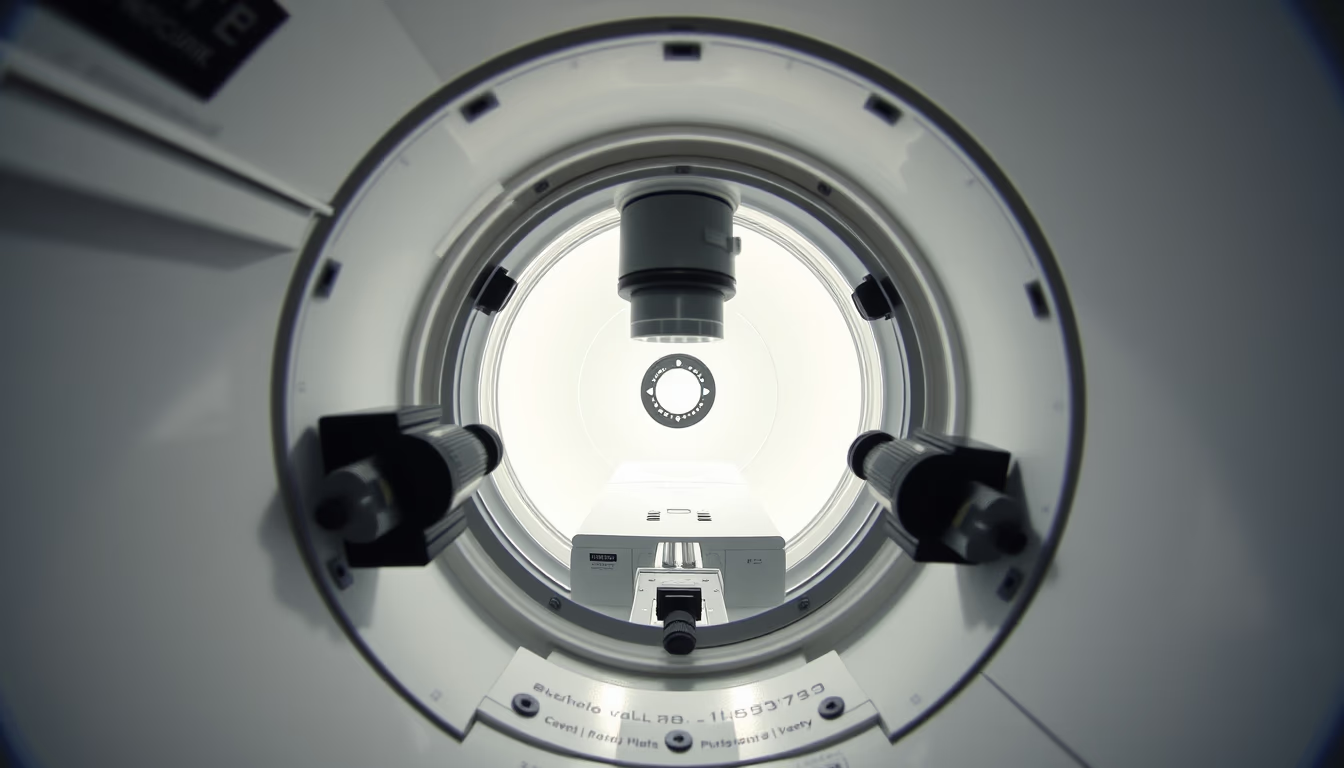
Particle physics detector
1344×768 · AVIF · CC BY 4.0
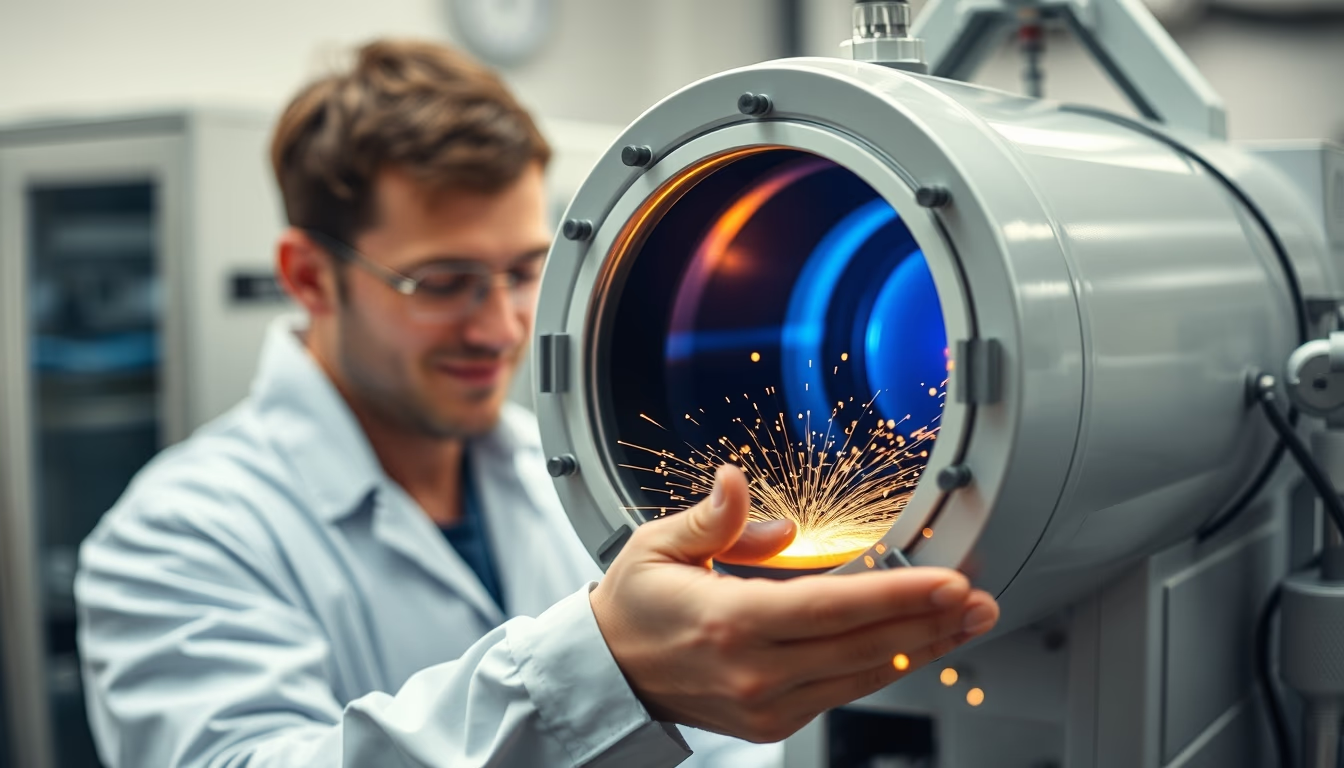
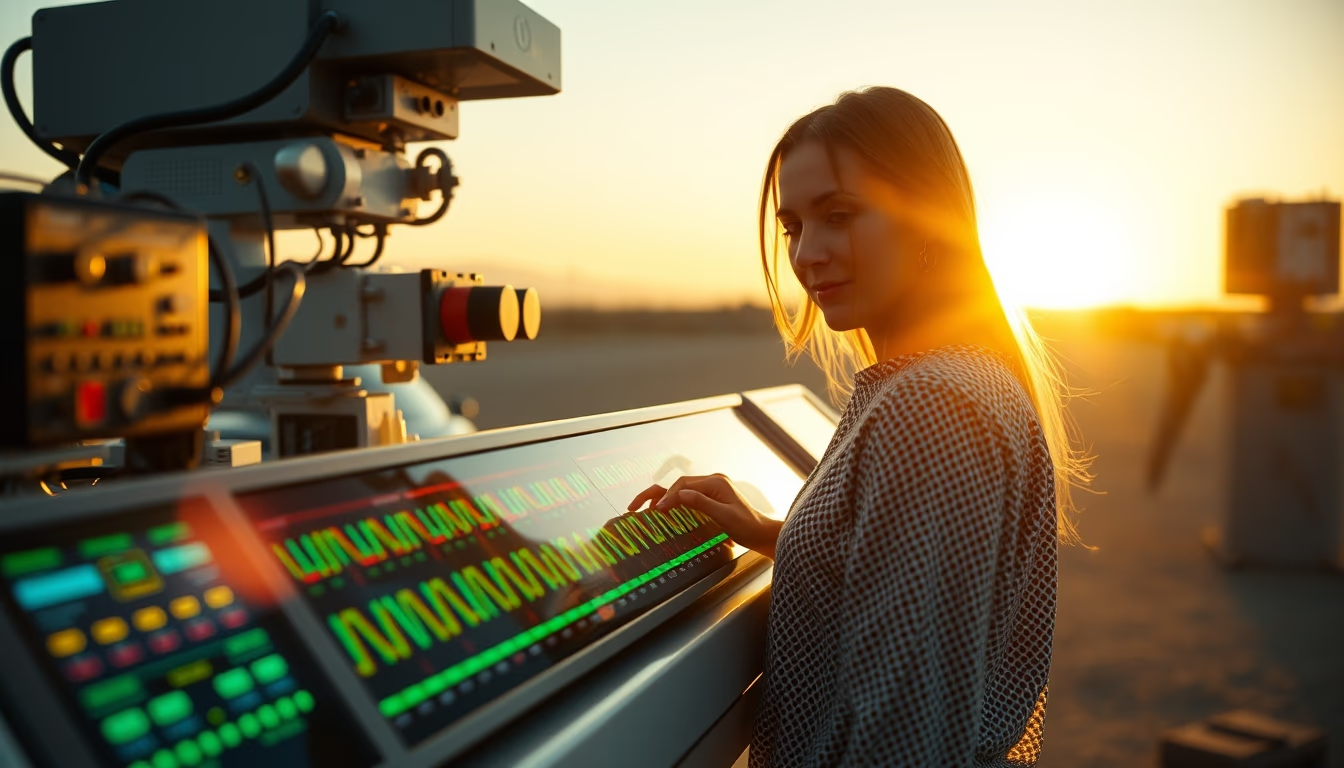
Particle detectors are scientific instruments used to observe and measure subatomic particles generated in accelerators or cosmic rays.
About this subject
Particle detectors are essential instruments in high-energy physics, designed to record the trajectories, energies, and identities of elementary particles. They function as ultra-fast cameras that capture interactions resulting from collisions in accelerators like the Large Hadron Collider (LHC) at CERN, straddling the Swiss-French border. Each detector consists of multiple specialized layers: tracking detectors (e.g., wire chambers or silicon sensors), calorimeters (for energy measurement), and muon chambers.
These instruments enabled discoveries such as the Higgs boson in 2012 by the ATLAS and CMS collaborations. Beyond large accelerators, compact detectors are used in astrophysics to study cosmic rays or neutrinos, such as the IceCube Observatory at the South Pole, which uses Antarctic ice as a detection medium. The technology also has medical applications, such as in positron emission tomography (PET-CT).
The sophistication of modern detectors contrasts with historical methods like Charles Wilson's cloud chamber (1911), which visualized particle tracks in supersaturated vapor. Today, detectors like LHCb employ pixel sensors with micrometer resolution and readout rates of billions of events per second. Ongoing development aims to explore mysteries such as dark matter and matter-antimatter asymmetry.
Frequently Asked Questions
How does a particle detector work?
It detects particles by their interaction with sensitive materials that produce electrical or light signals. Specialized layers identify type, energy, and trajectory.
What is the largest particle detector in the world?
The ATLAS detector at CERN's LHC, measuring 46 meters long and 25 meters in diameter, weighing 7,000 tons.
What are particle detectors used for outside physics?
They are used in medicine (PET-CT), security (baggage scanners), and radiation monitoring at nuclear plants.
Direct URL
https://pub-c7d6a6ea828543ac903a74a341ccb2e1.r2.dev/imagens/particle-physics-detector-lo-fi-disposable-camera-fresh10.avifHow to credit
Include a visible link back to UtilizAí. Copy one of the snippets below:
<a href="https://xn--utiliza-eza.com/en/midia/imagens/particle-physics-detector-lo-fi-disposable-camera-fresh10">Particle physics detector</a> by <a href="https://xn--utiliza-eza.com">UtilizAí</a>, licensed under <a href="https://creativecommons.org/licenses/by/4.0/">CC BY 4.0</a>.
[Particle physics detector](https://xn--utiliza-eza.com/en/midia/imagens/particle-physics-detector-lo-fi-disposable-camera-fresh10) by [UtilizAí](https://xn--utiliza-eza.com), CC BY 4.0
License: CC-BY-4.0