Particle physics detector
1344×768 · AVIF · CC BY 4.0
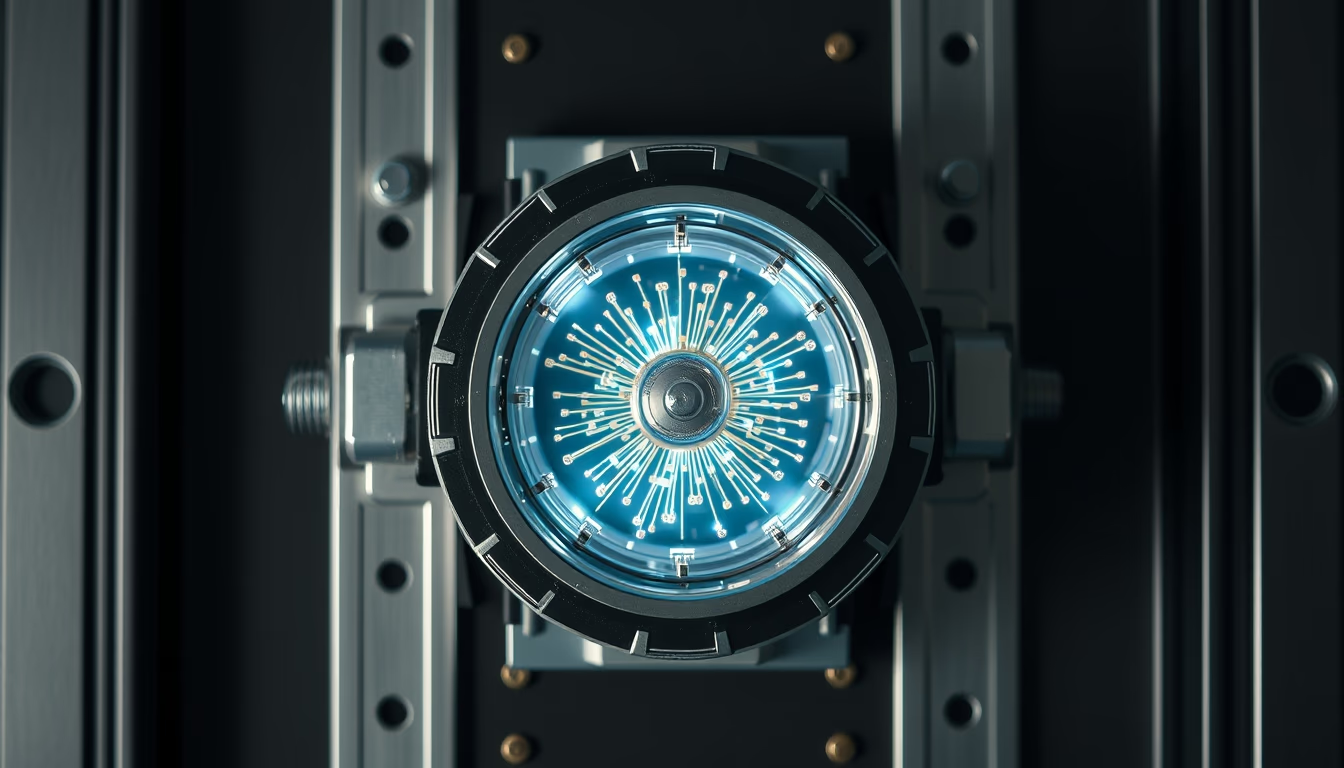
Particle physics detectors are scientific instruments crucial for observing collisions in accelerators like the LHC, revealing the nature of matter.
About this subject
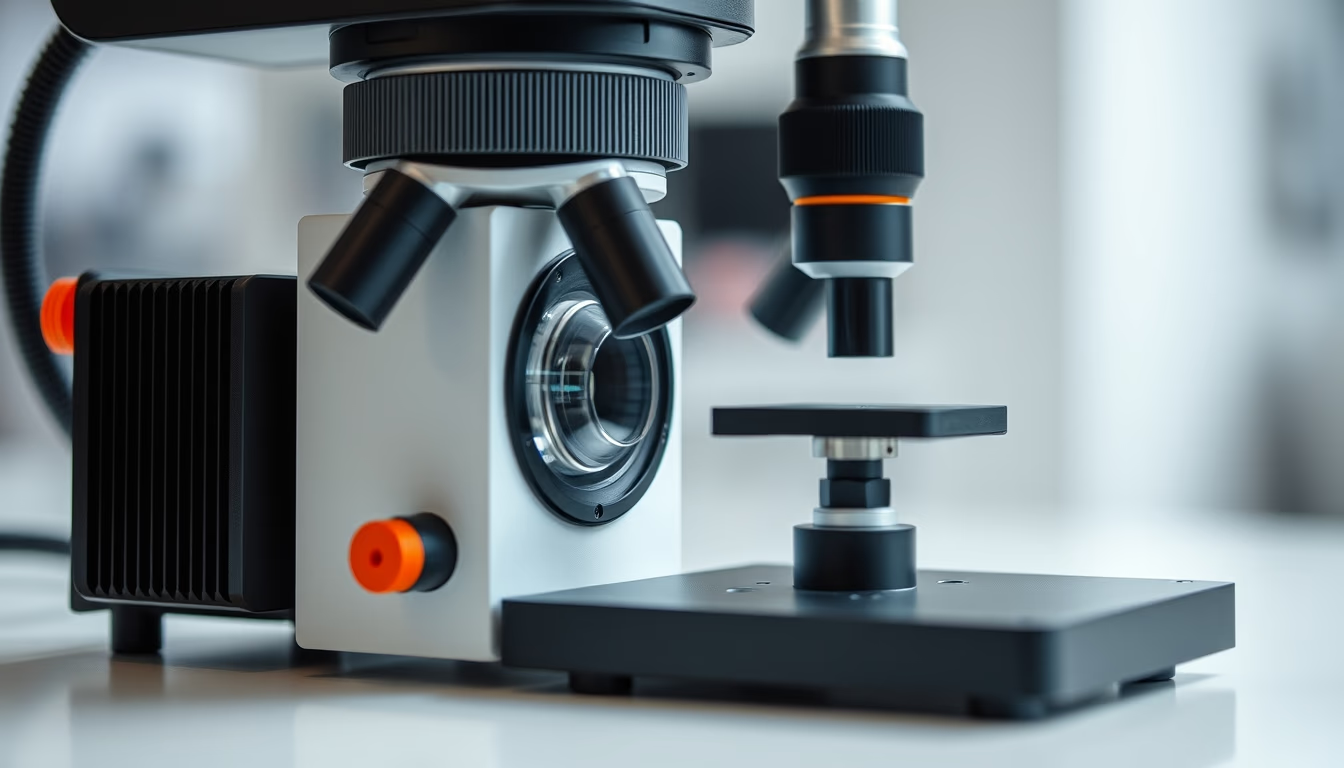
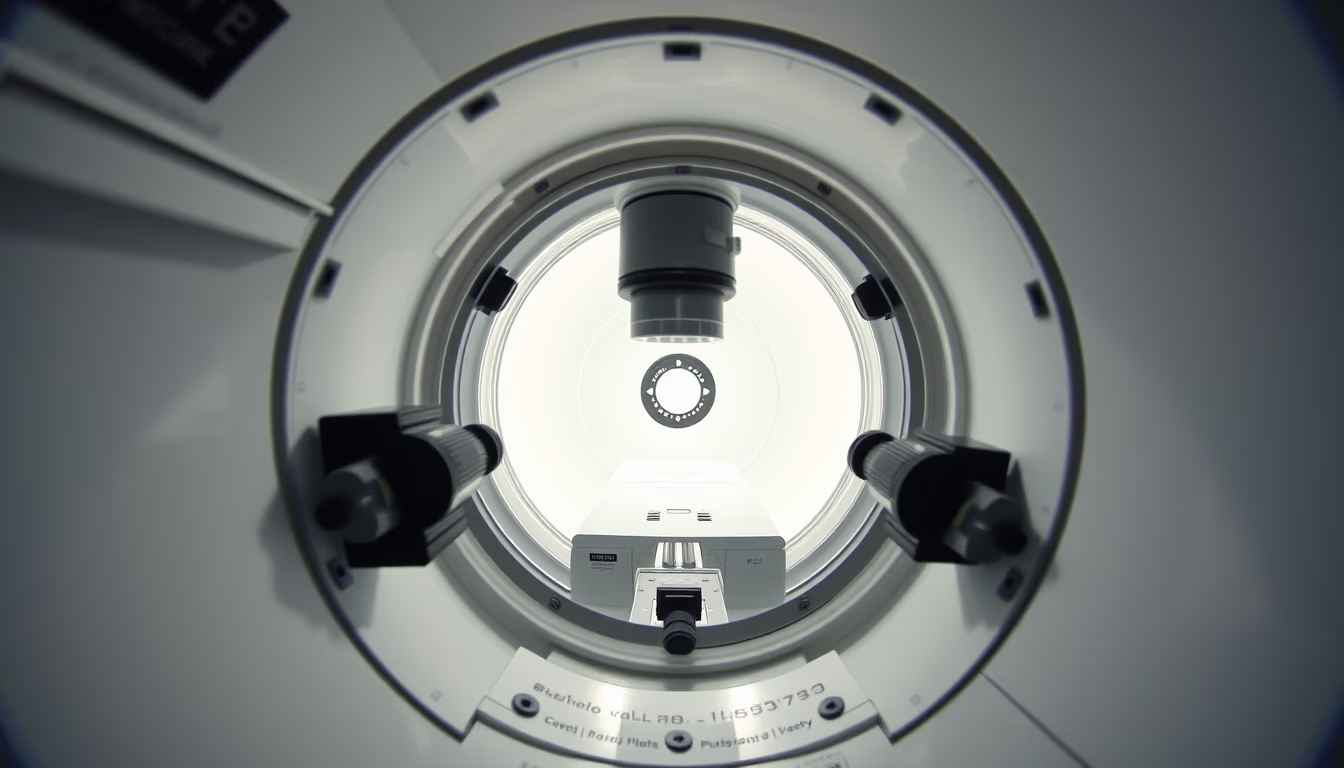
Particle physics detectors are devices that record and identify subatomic particles produced in high-energy collisions, such as those at the Large Hadron Collider (LHC) at CERN. Each detector comprises multiple subsystems layered concentrically, each designed to measure different particle properties: trajectory, momentum, energy, and type. Major types include tracking detectors (e.g., wire chambers or silicon sensors), calorimeters (electromagnetic and hadronic), and muon chambers. Iconic detectors like ATLAS and CMS are technological behemoths, with tens of thousands of readout channels and strong magnetic fields to bend charged particles. The isometric flat lay schematic in the image represents the typical concentric layers, illustrating the modular complexity. Building a detector requires international collaboration and years of planning, as well as cooling and shielding systems to minimize noise. The collected data enabled discoveries such as the Higgs boson in 2012, validating the Standard Model. Current upgrades for the High-Luminosity LHC demand even faster, radiation-hard detectors.
Frequently Asked Questions
What are the different subsystems of a particle detector for?
Each subsystem captures a distinct feature: tracking detectors map trajectories, calorimeters measure energy, muon chambers identify muons, and magnetic fields allow momentum calculation from track curvature.
How can a particle detector record events at millions of collisions per second?
They use trigger systems that select only promising events, combining fast electronics and real-time algorithms to discard irrelevant data.
What is the largest operating particle detector?
The ATLAS detector at the LHC is one of the largest, measuring 46 meters in length, 25 meters in diameter, and weighing 7,000 tons, enclosed by a superconducting solenoid magnet.
Direct URL
https://pub-c7d6a6ea828543ac903a74a341ccb2e1.r2.dev/imagens/particle-physics-detector-isometric-flat-lay-fresh13.avifHow to credit
Include a visible link back to UtilizAí. Copy one of the snippets below:
<a href="https://xn--utiliza-eza.com/en/midia/imagens/particle-physics-detector-isometric-flat-lay-fresh13">Particle physics detector</a> by <a href="https://xn--utiliza-eza.com">UtilizAí</a>, licensed under <a href="https://creativecommons.org/licenses/by/4.0/">CC BY 4.0</a>.
[Particle physics detector](https://xn--utiliza-eza.com/en/midia/imagens/particle-physics-detector-isometric-flat-lay-fresh13) by [UtilizAí](https://xn--utiliza-eza.com), CC BY 4.0
License: CC-BY-4.0