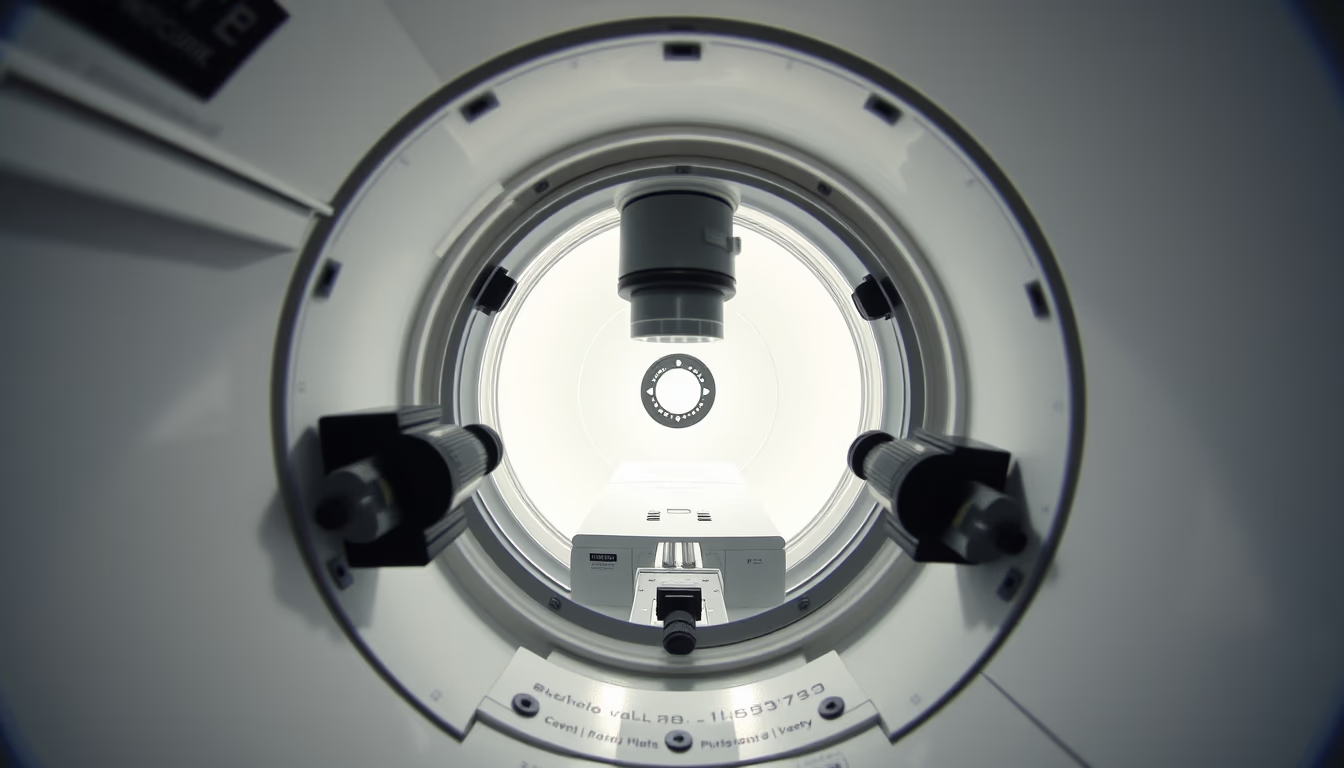
Particle physics detector
1344×768 · AVIF · CC BY 4.0
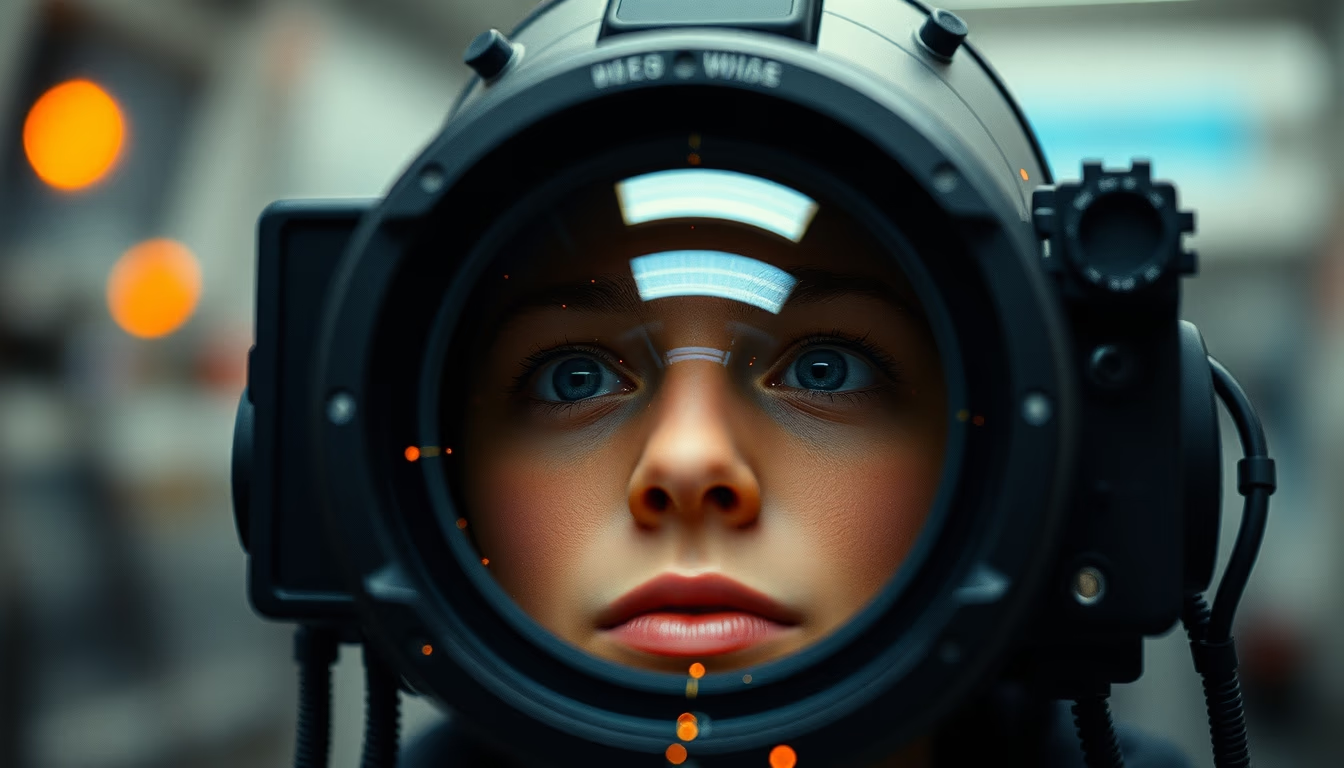
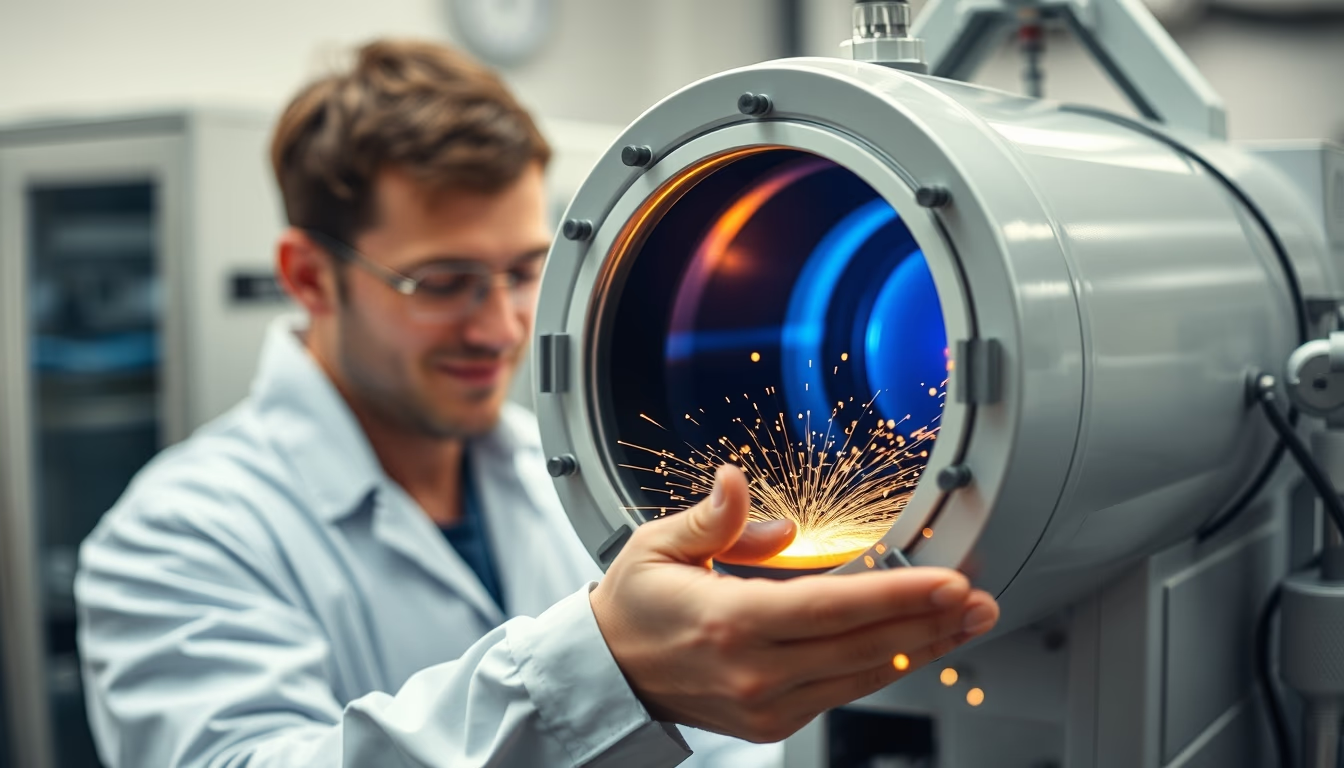
Particle detectors are essential instruments in modern physics, enabling observation of subatomic collisions in accelerators like the LHC.
About this subject
Particle detectors are sophisticated instruments that record the trajectories and energies of elementary particles produced in high-energy collisions. They function as three-dimensional cameras capable of capturing events that last fractions of a second. Various types exist, such as silicon detectors, vacuum chambers, and calorimeters, each specialized in measuring specific properties. The Large Hadron Collider (LHC) at CERN uses detectors like ATLAS and CMS, which weigh thousands of tons and contain millions of readout channels. These detectors were crucial for the discovery of the Higgs boson in 2012. Particle detection technology also has medical applications, such as in positron emission tomography (PET) and magnetic resonance imaging. The development of these instruments requires precision engineering and advances in materials and electronics. In Brazil, the Brazilian Synchrotron Light Laboratory (LNLS) operates detectors for condensed matter studies. Particle physics continues to evolve, with new detectors being designed for future colliders, such as the International Linear Collider (ILC). These devices allow testing fundamental theories, like the Standard Model, and searching for new physics beyond it. Calibration and data analysis are complex tasks involving artificial intelligence algorithms. With each new experiment, detectors become more sensitive and precise, opening windows to understand the most basic constituents of the universe.
Frequently Asked Questions
How does a particle detector work?
It records products of subatomic collisions by measuring trajectories, energies, and identities of particles. Uses magnetic fields to bend paths and scintillating materials to convert energy into light.
What is the importance of the LHC in particle physics?
The LHC is the world's largest accelerator, enabling collisions at record energies. Detectors like ATLAS and CMS confirmed the Higgs boson and are searching for new particles to explain dark matter.
Do particle detectors have practical applications?
Yes, the technology is used in medicine (PET scans, radiotherapy), security imaging, and even geology for carbon-14 dating.
Direct URL
https://pub-c7d6a6ea828543ac903a74a341ccb2e1.r2.dev/imagens/particle-physics-detector-film-grain-authentic-fresh9.avifHow to credit
Include a visible link back to UtilizAí. Copy one of the snippets below:
<a href="https://xn--utiliza-eza.com/en/midia/imagens/particle-physics-detector-film-grain-authentic-fresh9">Particle physics detector</a> by <a href="https://xn--utiliza-eza.com">UtilizAí</a>, licensed under <a href="https://creativecommons.org/licenses/by/4.0/">CC BY 4.0</a>.
[Particle physics detector](https://xn--utiliza-eza.com/en/midia/imagens/particle-physics-detector-film-grain-authentic-fresh9) by [UtilizAí](https://xn--utiliza-eza.com), CC BY 4.0
License: CC-BY-4.0