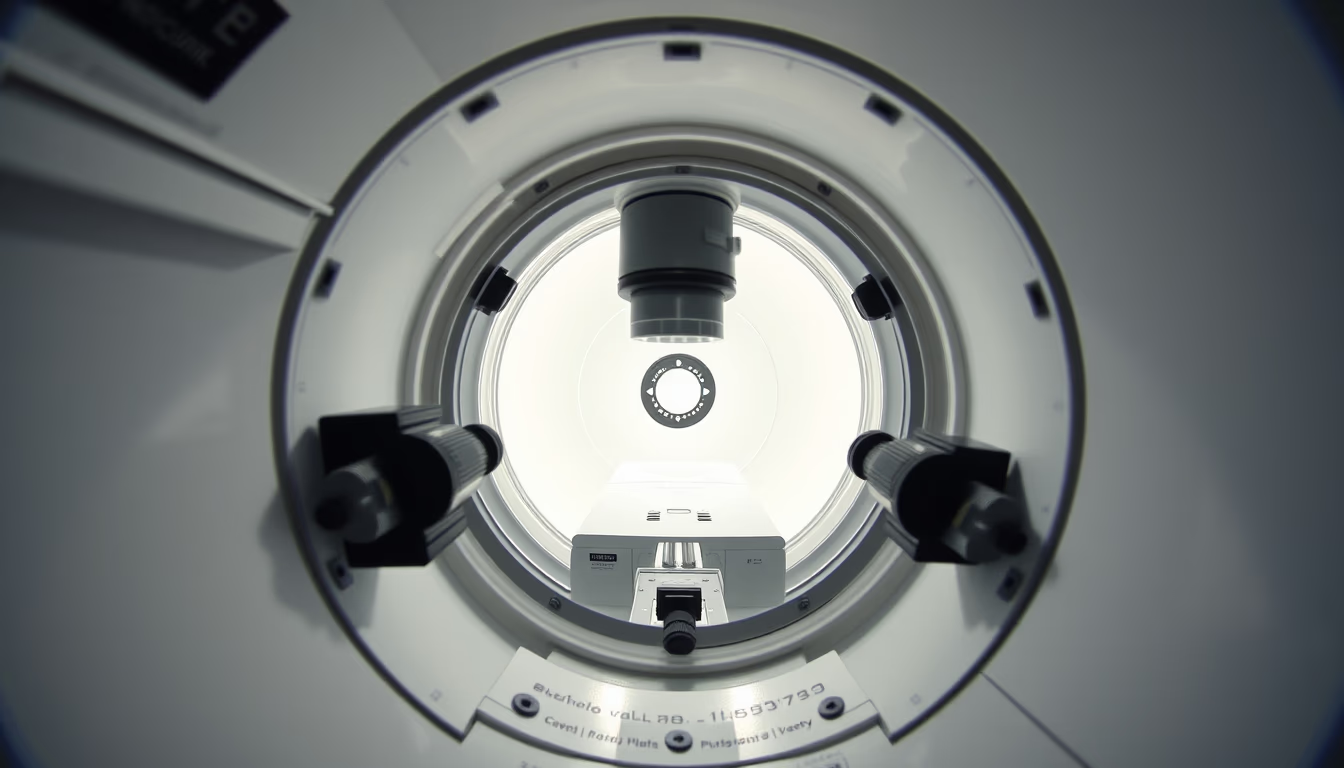
Particle physics detector
1344×768 · AVIF · CC BY 4.0
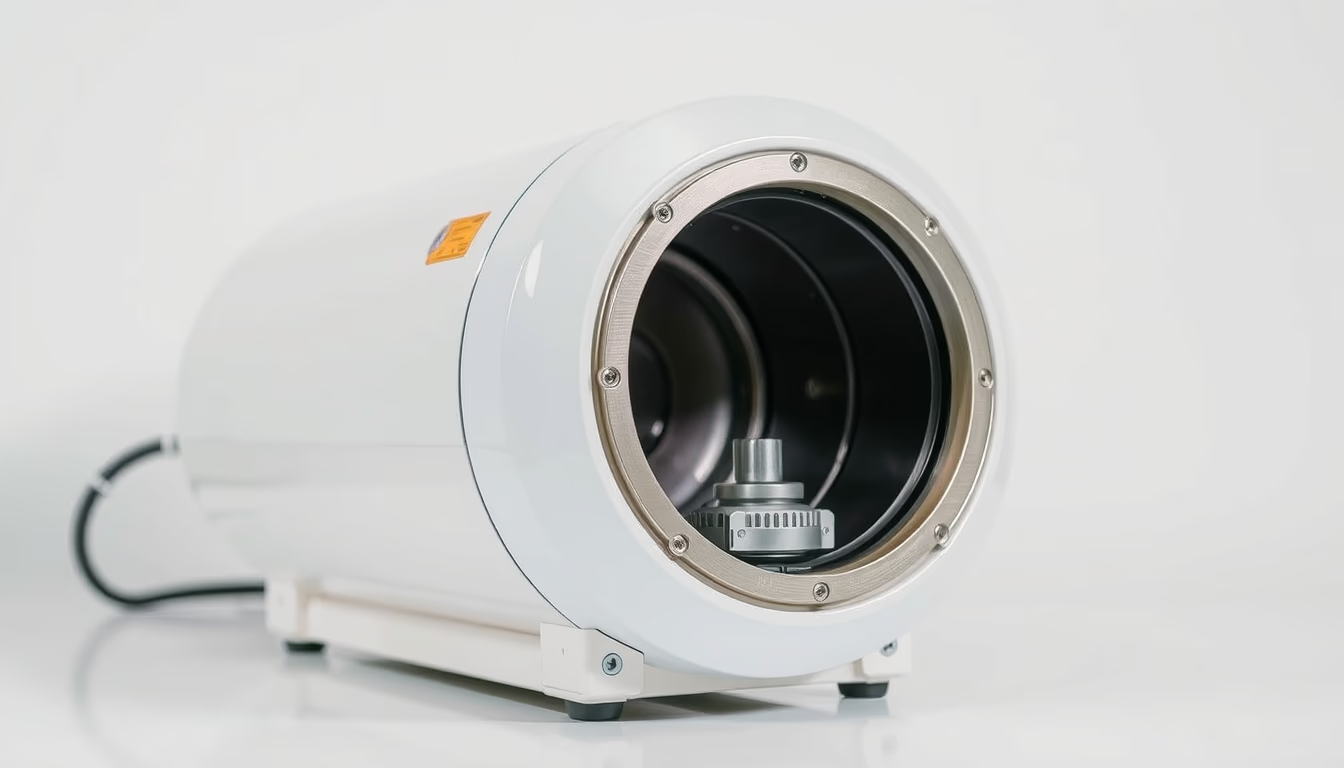
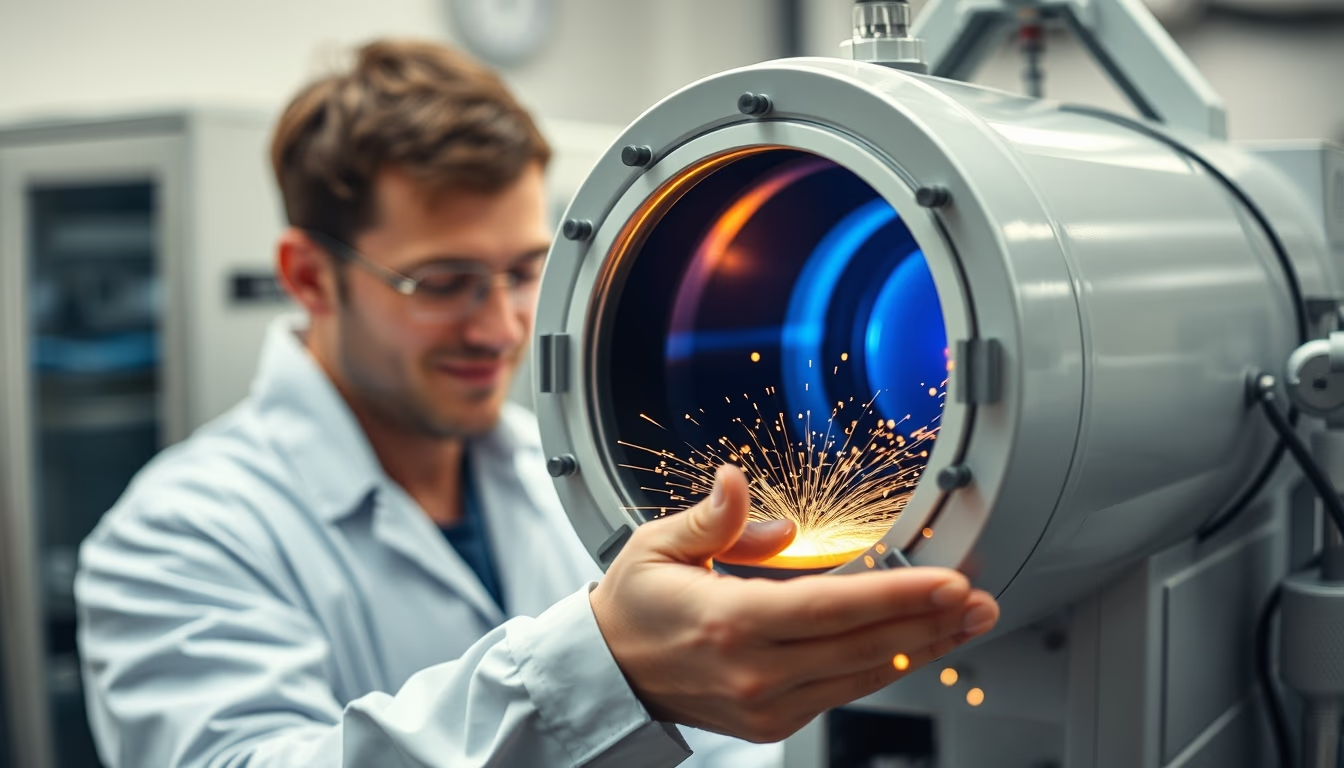
Particle detectors are essential scientific instruments used to observe and measure subatomic particles produced in accelerators like the LHC.
About this subject
Particle detectors are complex systems that record the passage, energy, and momentum of subatomic particles, allowing the reconstruction of high-energy events. They are fundamental to particle physics experiments, such as those conducted at the Large Hadron Collider (LHC) at CERN. Modern detectors like ATLAS and CMS are technological cathedrals, with millions of readout channels and weights exceeding 7,000 tons. Each detector is designed for a specific purpose: some identify muons, while others measure hadronic or electromagnetic showers.
Detector technology has evolved rapidly since the cloud chambers of the early 20th century. Today, silicon detectors provide micrometer precision for tracking particle trajectories, while calorimeters absorb and measure the total energy of particles. Cherenkov radiation detectors identify particles by their speed, and time projection chambers (TPC) map three-dimensional complex events. The joint operation of these subsystems is coordinated by ultrafast data acquisition systems capable of processing billions of collisions per second.
The importance of particle detectors extends beyond fundamental research. They have generated innovations such as positron emission tomography (PET) in medicine, radiation detectors for security, and sensors used in industry. Developing more sensitive and radiation-resistant detectors remains an active field of research, with applications in astroparticle physics, such as the Pierre Auger Observatory, which studies ultrahigh-energy cosmic rays.
Interestingly, some particle detectors operate in extreme locations: on the ocean floor, like ANTARES, or under kilometers of ice in Antarctica, like IceCube. These environments shield the detector from background radiation, enabling the detection of cosmic neutrinos. The complexity and cost of these instruments often require international collaborations of thousands of scientists and engineers, representing one of the largest cooperative efforts in science.
Frequently Asked Questions
What is the main function of a particle detector?
The main function is to record and measure the properties (position, energy, momentum, charge) of subatomic particles produced in collisions or natural sources, allowing reconstruction of physical events and testing of theories.
What are the most common types of particle detectors?
Main types include tracking detectors (wire chambers, silicon detectors), calorimeters (electromagnetic and hadronic), Cherenkov detectors, time projection chambers, and radiation detectors (scintillators, Geiger-Müller).
How is a particle detector used in medicine?
Particle detector technology is applied in equipment like PET scanners (positron emission tomography) and radiotherapy, where sensors detect photons or particles for imaging and tumor treatment.
Direct URL
https://pub-c7d6a6ea828543ac903a74a341ccb2e1.r2.dev/imagens/particle-physics-detector-commercial-product-photography-fresh5.avifHow to credit
Include a visible link back to UtilizAí. Copy one of the snippets below:
<a href="https://xn--utiliza-eza.com/en/midia/imagens/particle-physics-detector-commercial-product-photography-fresh5">Particle physics detector</a> by <a href="https://xn--utiliza-eza.com">UtilizAí</a>, licensed under <a href="https://creativecommons.org/licenses/by/4.0/">CC BY 4.0</a>.
[Particle physics detector](https://xn--utiliza-eza.com/en/midia/imagens/particle-physics-detector-commercial-product-photography-fresh5) by [UtilizAí](https://xn--utiliza-eza.com), CC BY 4.0
License: CC-BY-4.0