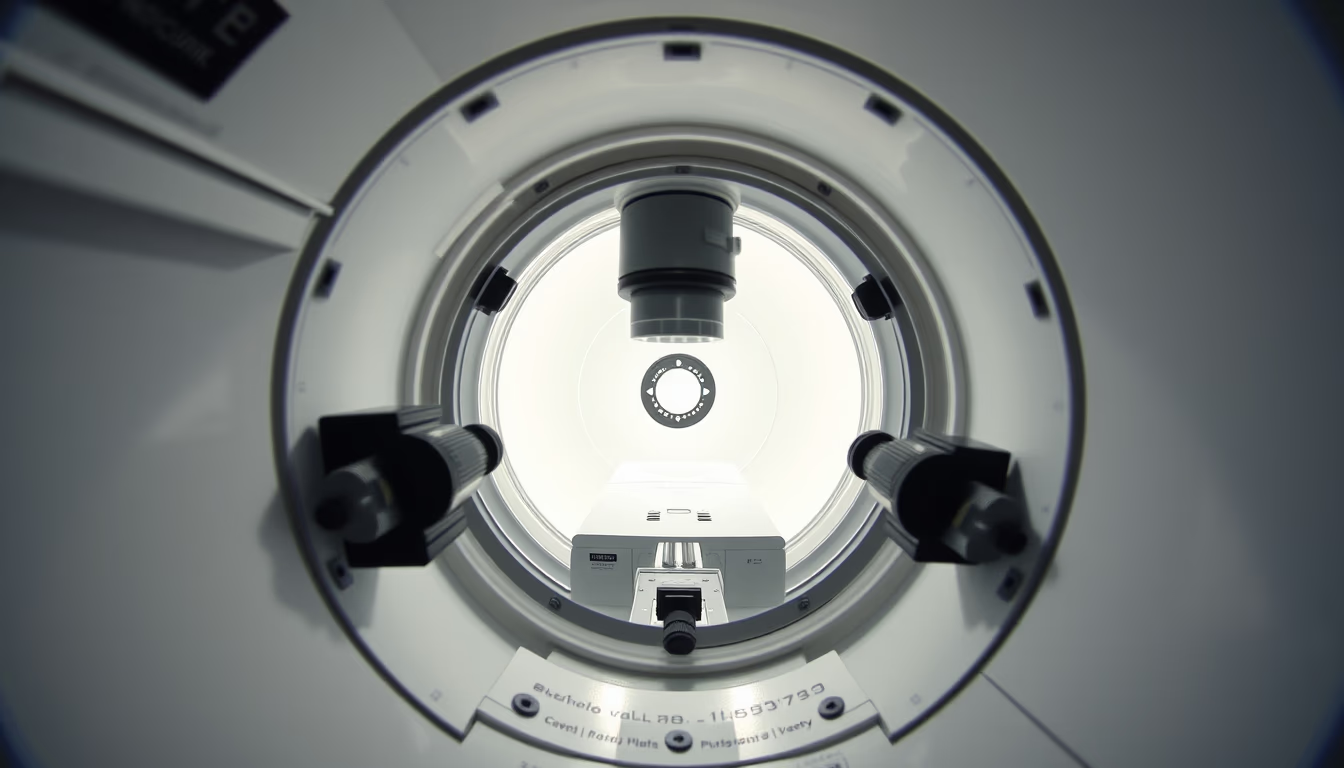
Particle physics detector
1344×768 · AVIF · CC BY 4.0
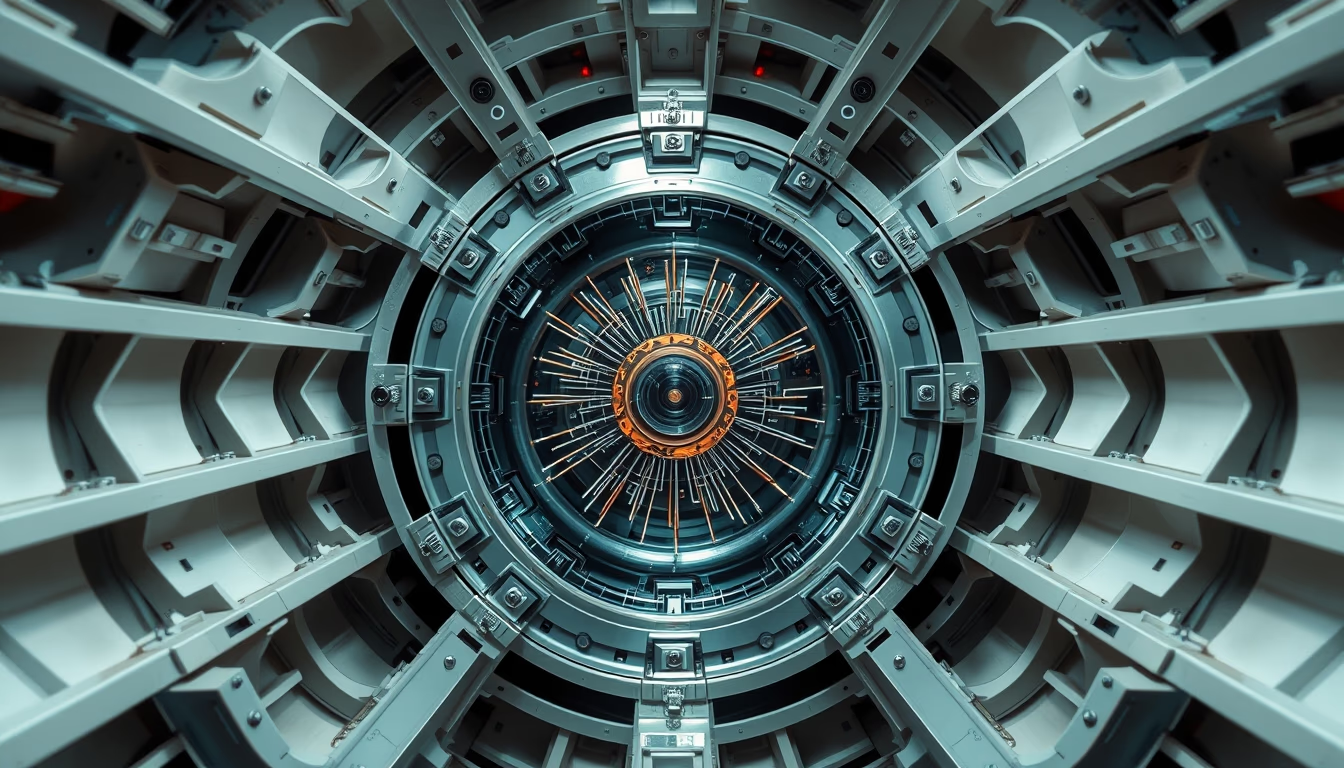
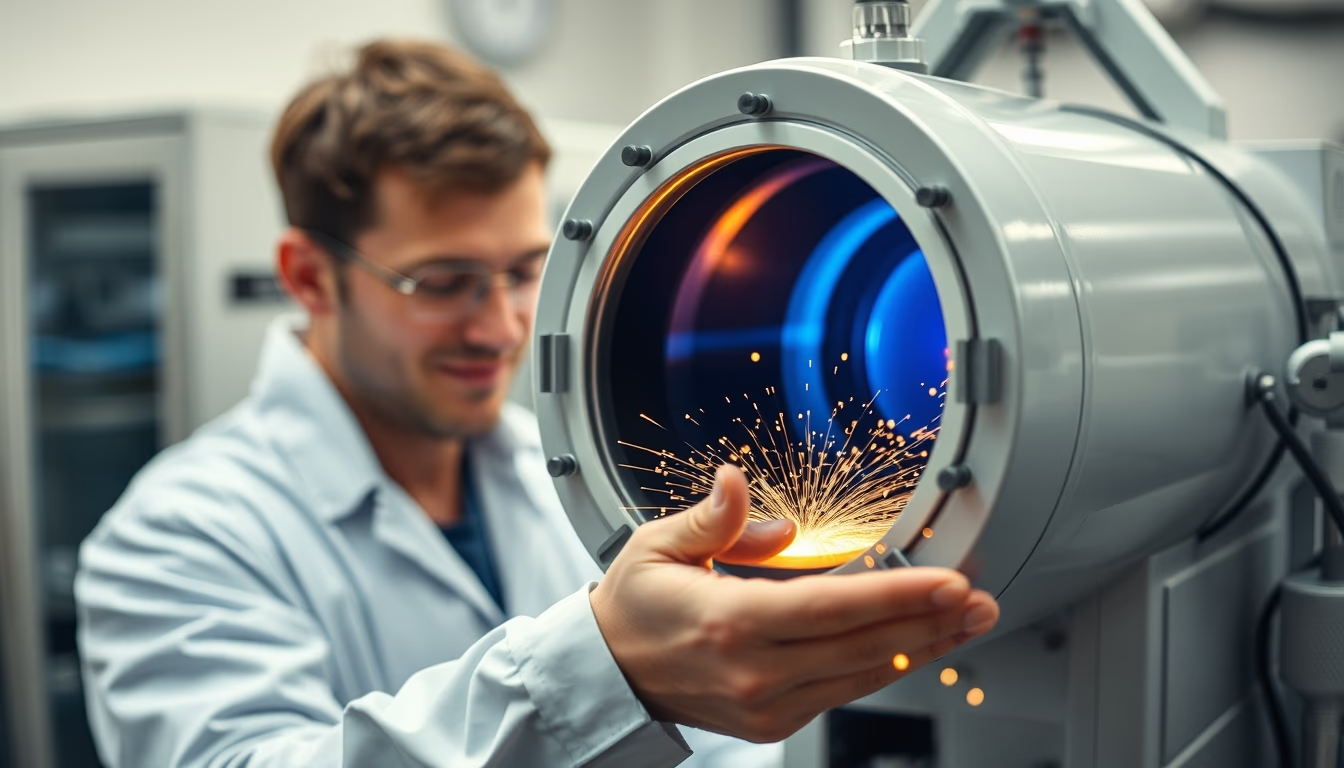
Particle detectors are essential instruments for observing and measuring subatomic particles in accelerators like the LHC, revealing the fundamental nature of matter.
About this subject
Particle detectors are sophisticated devices that record and analyze the products of high-energy collisions, allowing physicists to study elementary particles and their interactions. These instruments are central to experiments at major accelerators, such as the Large Hadron Collider (LHC) at CERN in Switzerland. Each detector is designed to measure different properties: energy, momentum, electric charge, and trajectory of particles produced in collisions.
There are various types of detectors, including cloud chambers, bubble chambers, scintillation detectors, and solid-state detectors. Modern detectors are enormous and multi-layered, composed of specialized subsystems such as calorimeters, trackers, and muon chambers. Iconic examples include ATLAS and CMS at the LHC, which weigh thousands of tons and have millions of readout channels. The construction and operation of these detectors involve international collaborations with thousands of scientists and engineers.
The importance of particle detectors extends beyond fundamental physics. Techniques developed for these devices, such as positron emission tomography (PET) and radiation detectors, are applied in medicine, security, and industry. The development of more sensitive and faster detectors drives innovations in electronics, materials science, and data processing. The search for particles like the Higgs boson, discovered in 2012, was only possible thanks to detectors capable of identifying extremely rare events among billions of collisions.
Frequently Asked Questions
How does a particle detector work?
A particle detector records the properties of particles produced in collisions. It uses different layers to measure trajectory, energy, and particle type, converting these signals into digital data for analysis.
What is the largest particle detector in the world?
The largest detector is ATLAS at CERN's LHC, measuring 46 meters in length and 25 meters in height, weighing about 7,000 tons.
What are particle detectors used for beyond physics?
Derived technologies are used in PET scans, airport security scanners, and radiation monitors in nuclear power plants.
Direct URL
https://pub-c7d6a6ea828543ac903a74a341ccb2e1.r2.dev/imagens/particle-physics-detector-architectural-photography-fresh8.avifHow to credit
Include a visible link back to UtilizAí. Copy one of the snippets below:
<a href="https://xn--utiliza-eza.com/en/midia/imagens/particle-physics-detector-architectural-photography-fresh8">Particle physics detector</a> by <a href="https://xn--utiliza-eza.com">UtilizAí</a>, licensed under <a href="https://creativecommons.org/licenses/by/4.0/">CC BY 4.0</a>.
[Particle physics detector](https://xn--utiliza-eza.com/en/midia/imagens/particle-physics-detector-architectural-photography-fresh8) by [UtilizAí](https://xn--utiliza-eza.com), CC BY 4.0
License: CC-BY-4.0