Particle physics detector
1344×768 · AVIF · CC BY 4.0
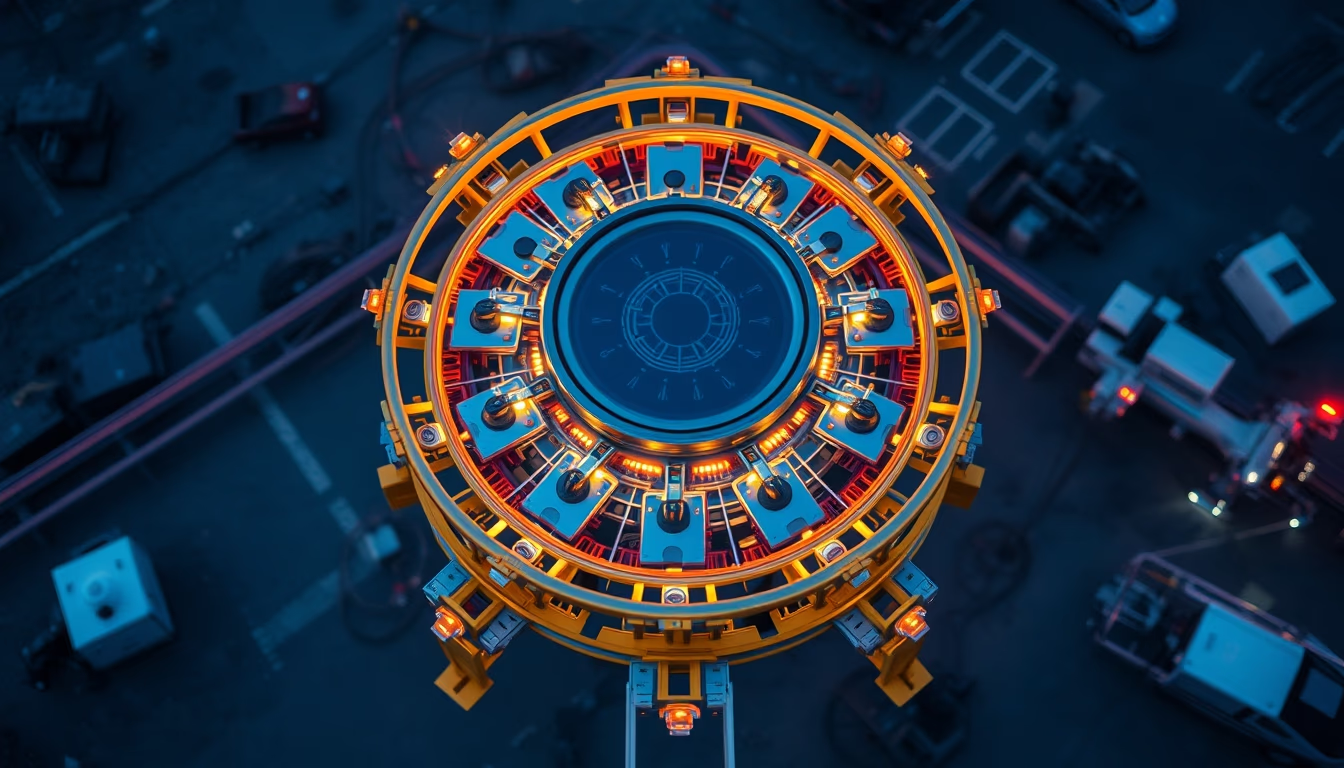
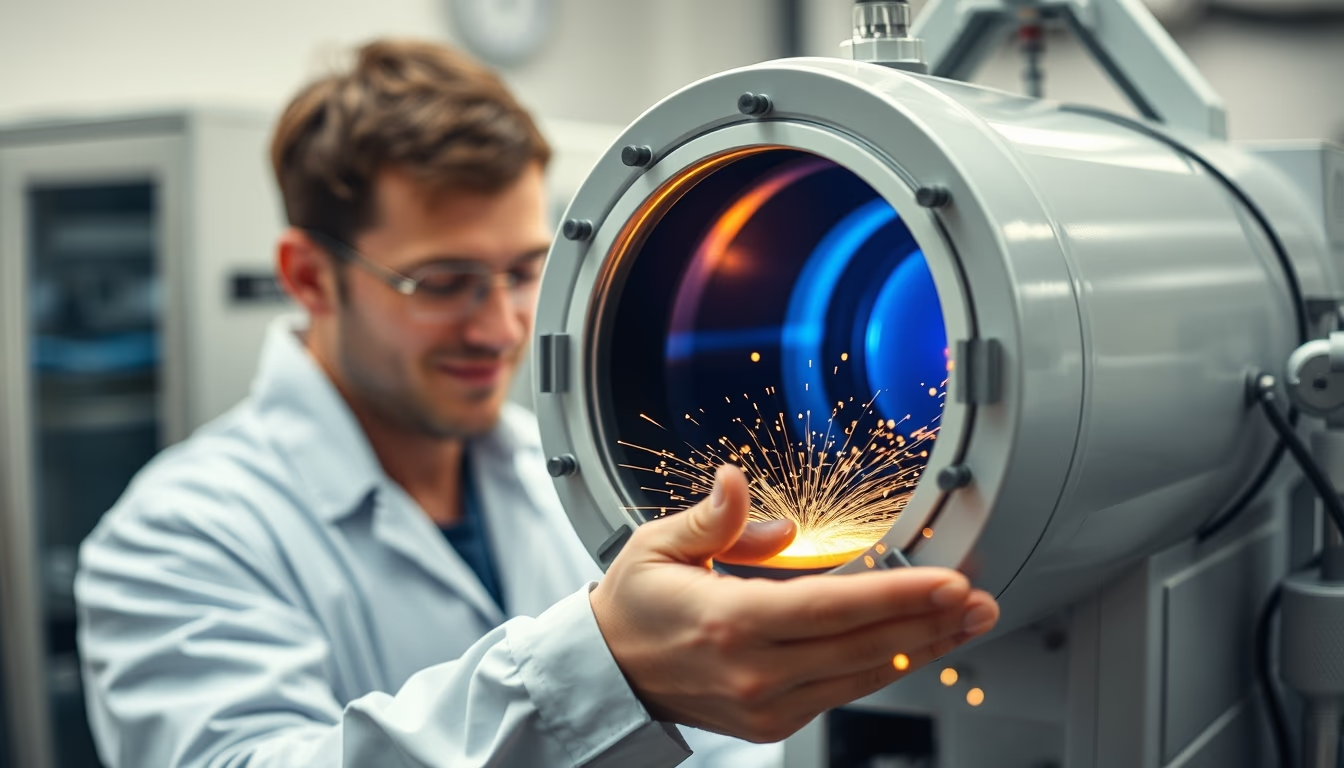
Particle physics detectors are massive instruments that record high-energy collisions, revealing the fundamental constituents of matter.
About this subject
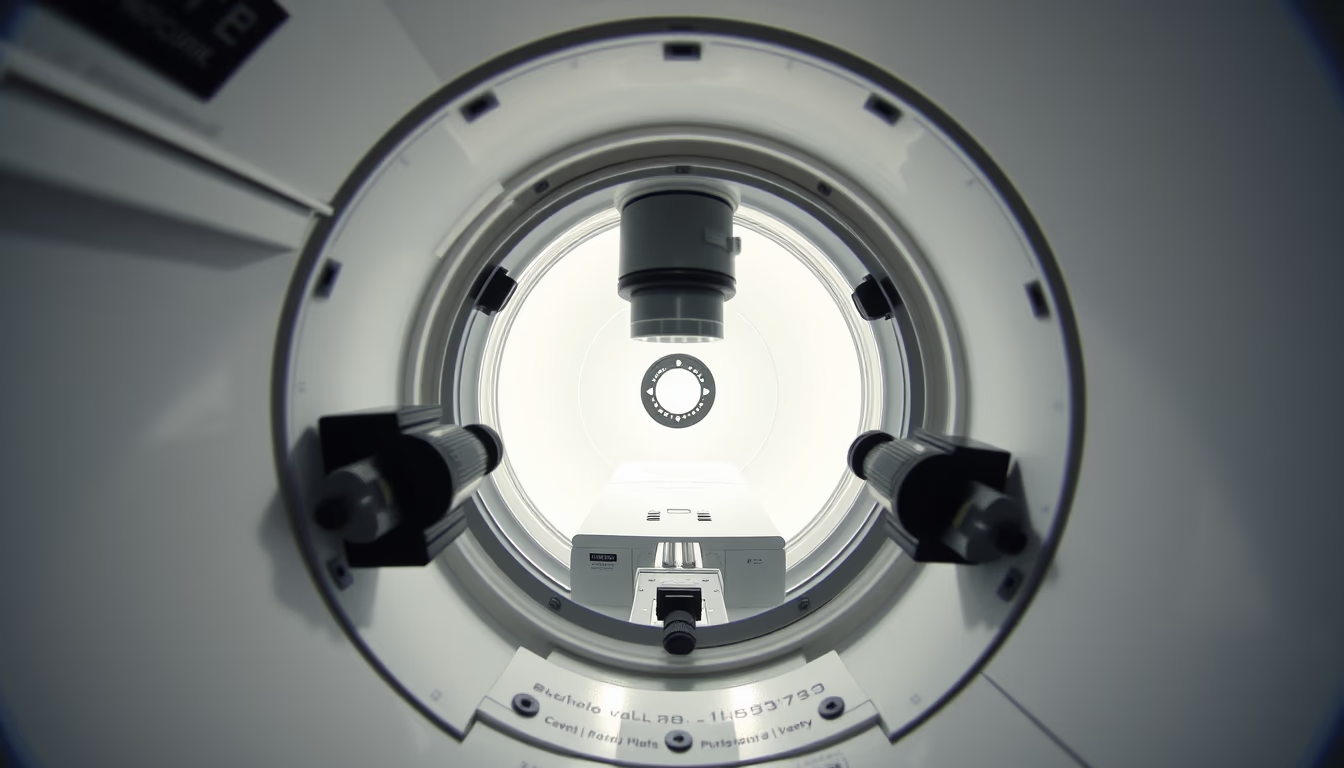
Particle physics detectors are essential tools in high-energy physics, used to study collisions of subatomic particles in accelerators like the Large Hadron Collider (LHC) at CERN. Detectors such as ATLAS, CMS, LHCb, and ALICE are built in multiple layers, each with a specific function: tracking particle trajectories, measuring energy in calorimeters, and identifying muons. ATLAS and CMS, for example, weigh thousands of tons and are the size of a multi-story building. They played a key role in the discovery of the Higgs boson in 2012, a feat that earned the Nobel Prize in Physics.
The operation of these detectors generates enormous data volumes, on the order of petabytes per year, processed by a global computing grid (GRID). Each collision produces thousands of particles traveling at near light speed, and detectors must record events with nanosecond precision. To minimize interference, detectors are installed in underground caverns, tens of meters deep. The LHC itself lies in a 27-kilometer circular tunnel straddling the French-Swiss border.
Beyond searching for new particles, particle detectors have applications in medicine (PET scans), industry, and security, demonstrating how fundamental research yields impactful technologies. The international collaboration involved is massive: thousands of scientists and engineers from dozens of countries work together to design, build, and operate these instruments. The future includes even larger and more sensitive detectors, such as those planned for the Future Circular Collider.
Frequently Asked Questions
How does a particle detector work?
A particle detector records particles produced in high-energy collisions, identifying their type, energy, and trajectory. It consists of concentric layers that measure different properties such as momentum, energy deposit, and muon signals.
What is the largest particle detector in the world?
The largest particle detector by volume is ATLAS at CERN's LHC, measuring 46 meters long, 25 meters high, and weighing 7,000 tons. CMS is similar in size, with 21 meters length and 15 meters diameter.
What important discoveries have been made with particle detectors?
The discovery of the Higgs boson in 2012 by the ATLAS and CMS detectors is the most famous. Others include the observation of exotic particles, CP violation studies at LHCb, and the creation of quark-gluon plasma at ALICE.
Direct URL
https://pub-c7d6a6ea828543ac903a74a341ccb2e1.r2.dev/imagens/particle-physics-detector-aerial-drone-shot-fresh0.avifHow to credit
Include a visible link back to UtilizAí. Copy one of the snippets below:
<a href="https://xn--utiliza-eza.com/en/midia/imagens/particle-physics-detector-aerial-drone-shot-fresh0">Particle physics detector</a> by <a href="https://xn--utiliza-eza.com">UtilizAí</a>, licensed under <a href="https://creativecommons.org/licenses/by/4.0/">CC BY 4.0</a>.
[Particle physics detector](https://xn--utiliza-eza.com/en/midia/imagens/particle-physics-detector-aerial-drone-shot-fresh0) by [UtilizAí](https://xn--utiliza-eza.com), CC BY 4.0
License: CC-BY-4.0