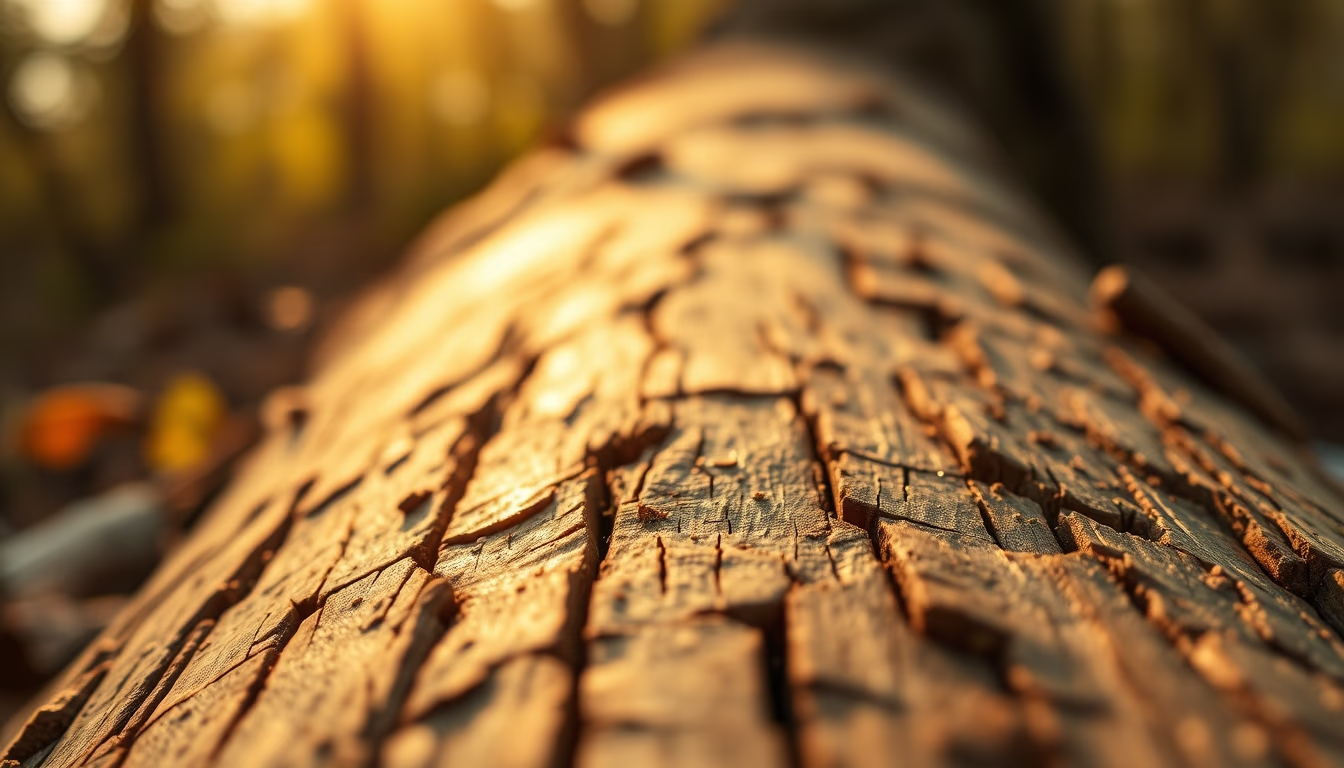
Paper texture fiber macro
1344×768 · AVIF · CC BY 4.0
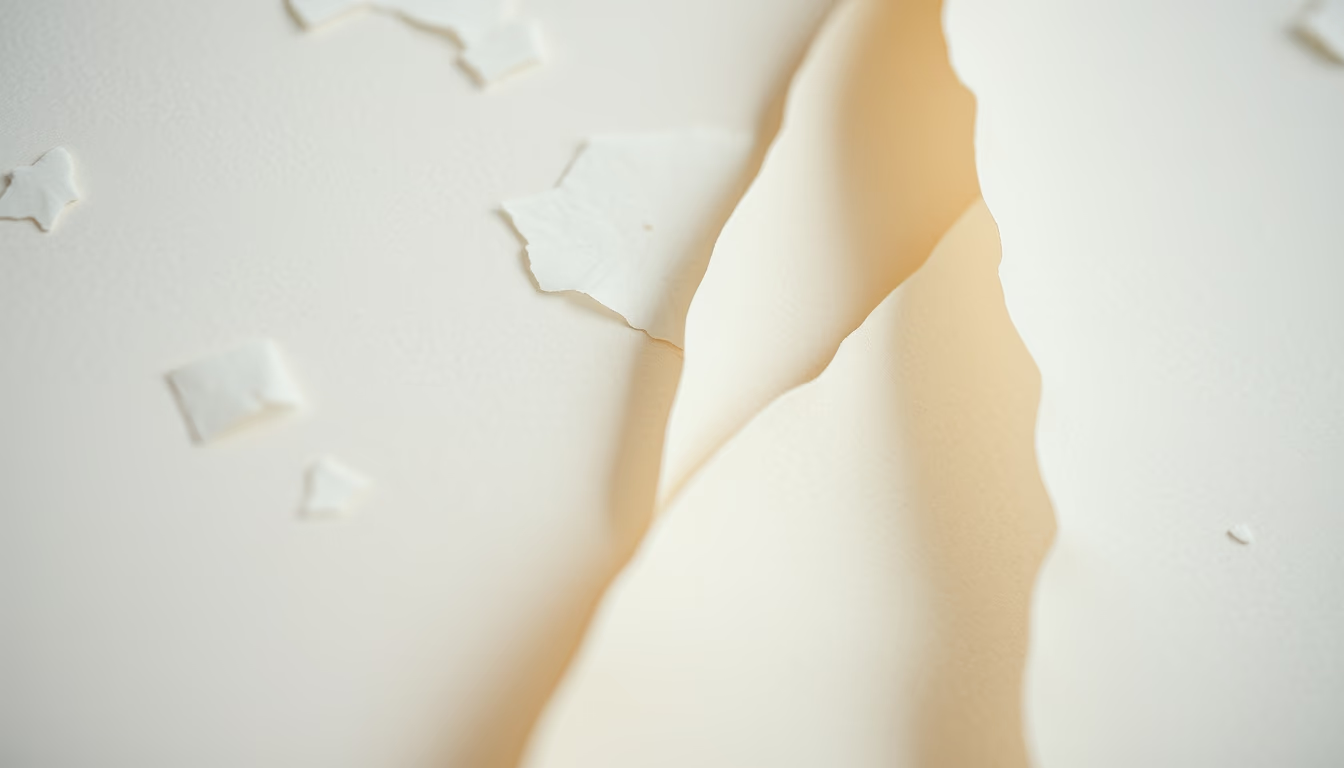
Macro photography of cellulose fibers reveals the fibrous structure of paper, a material essential to human communication for centuries.
About this subject
Paper is primarily composed of cellulose fibers obtained from plant sources such as trees, cotton, and even bamboo. When viewed under macro photography, these fibers exhibit an interwoven mesh that gives the material strength and flexibility. Papermaking originated in China around the 2nd century BCE, with Cai Lun refining the process using mulberry fibers and rags. From the 19th century onward, industrial-scale production began using wood pulp, which now accounts for about 90% of global output.
Cellulose, a polysaccharide forming plant cell walls, is the basic raw material. During processing, fibers are separated chemically (Kraft process) or mechanically, then pressed and dried into sheets. Fiber orientation and length affect properties such as weight, opacity, and ink absorption. High-quality papers, such as those for art printing, use long fibers from cotton or flax.
Interestingly, cellulose fiber is also used in products like textiles, biodegradable plastics, and even explosives (nitrocellulose). Recycled paper undergoes a defibering process that shortens fibers, reducing strength but contributing to sustainability. Fiber microscopy aids in detecting document forgery, conserving rare works, and improving industrial processes.
Frequently Asked Questions
Where do paper fibers come from?
Fibers come from plants such as pine, eucalyptus, cotton, and bamboo. The cellulose extracted from these sources forms the basis of paper.
How are cellulose fibers processed to make paper?
Fibers are separated from wood by chemical or mechanical processes, forming a pulp. This pulp is spread on screens, pressed, and dried into sheets.
What is the difference between recycled paper and virgin paper?
Recycled paper uses already processed fibers, which are shorter and less strong. Virgin paper uses new, longer, and stronger fibers. Recycling saves resources but requires adding virgin fibers to maintain quality.
Direct URL
https://pub-c7d6a6ea828543ac903a74a341ccb2e1.r2.dev/imagens/paper-texture-fiber-macro-documentary-photography-p0.avifHow to credit
Include a visible link back to UtilizAí. Copy one of the snippets below:
<a href="https://xn--utiliza-eza.com/en/midia/imagens/paper-texture-fiber-macro-documentary-photography-p0">Paper texture fiber macro</a> by <a href="https://xn--utiliza-eza.com">UtilizAí</a>, licensed under <a href="https://creativecommons.org/licenses/by/4.0/">CC BY 4.0</a>.
[Paper texture fiber macro](https://xn--utiliza-eza.com/en/midia/imagens/paper-texture-fiber-macro-documentary-photography-p0) by [UtilizAí](https://xn--utiliza-eza.com), CC BY 4.0
License: CC-BY-4.0