Paper texture fiber macro
1344×768 · AVIF · CC BY 4.0
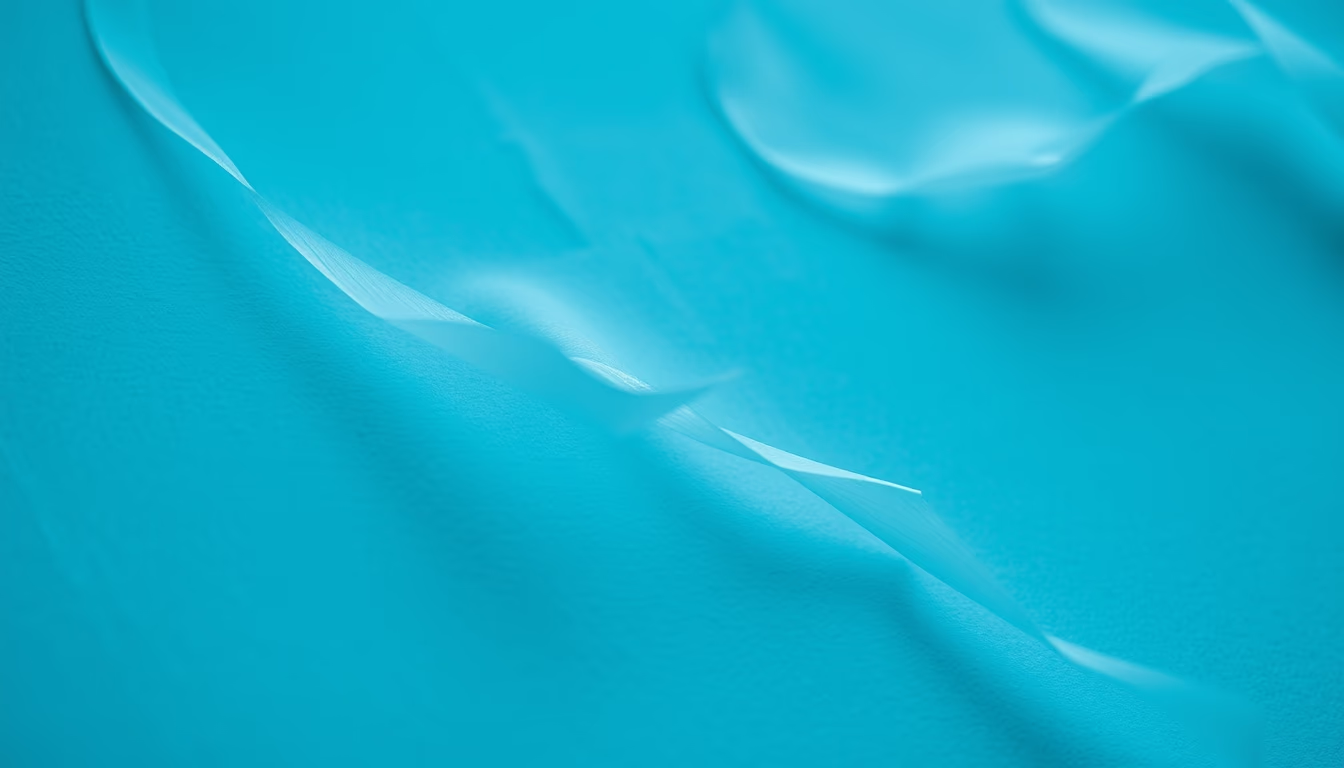
Macro photography of paper fibers reveals the complex cellulose structure that defines texture, strength, and absorbency of the material.
About this subject
Paper, at its core, is a mat of plant fibers, primarily cellulose extracted from wood. Macro observation reveals these filaments, which range from 0.5 to 4 millimeters in length depending on tree species and pulping process. Softwood fibers (like pine) are longer and provide greater strength, while hardwood fibers (eucalyptus) are shorter and yield smoother surfaces. During manufacturing, fibers are suspended in water, then drained and pressed to form a sheet. The random or aligned orientation of fibers directly impacts properties such as basis weight, opacity, and printability.
Paper surface texture depends not only on fibers but also on applied finishes. Coated papers (e.g., gloss or matte) receive a layer of minerals and binders to seal pores, resulting in a smooth, glossy finish. Uncoated papers (like offset) retain natural porosity, with fibers more exposed, creating a rough feel and higher ink absorption. In handmade or recycled papers, fiber heterogeneity is more pronounced, including fragments of other celluloses, pigments, and mineral fillers such as kaolin or calcium carbonate.
Historically, microscopic fiber analysis is used in conservation and document authentication. Each fiber type has unique morphological features, such as bordered pits in softwoods or vessels in hardwoods, that allow identification of plant origin. In the printing industry, knowledge of fibrous structure guides paper selection for specific techniques: for example, watercolor papers require long fibers and high wet strength, while newsprint prioritizes low cost and rapid ink absorbency.
Interestingly, cotton fiber, used for banknote and certificate papers, is nearly pure cellulose and lacks lignin, enhancing durability and resistance to aging.
Frequently Asked Questions
What determines paper texture?
Texture is determined by fiber type, manufacturing process, and finishing. Long, irregular fibers produce a rough surface; short, mechanically processed fibers yield smooth surfaces. Coatings and calendering also affect smoothness.
How are paper fibers classified?
They are classified by plant origin (wood, cotton, flax, etc.), length (long or short), and pulping process (mechanical or chemical). Microscopic analysis identifies species such as pine, eucalyptus, or fir.
Why are some papers stronger than others?
Strength depends on fiber length and hydrogen bonding between fibers. Long softwood fibers provide higher tensile strength, while mineral fillers may reduce strength but improve opacity.
Direct URL
https://pub-c7d6a6ea828543ac903a74a341ccb2e1.r2.dev/imagens/paper-texture-fiber-macro-aerial-drone-shot-p3.avifHow to credit
Include a visible link back to UtilizAí. Copy one of the snippets below:
<a href="https://xn--utiliza-eza.com/en/midia/imagens/paper-texture-fiber-macro-aerial-drone-shot-p3">Paper texture fiber macro</a> by <a href="https://xn--utiliza-eza.com">UtilizAí</a>, licensed under <a href="https://creativecommons.org/licenses/by/4.0/">CC BY 4.0</a>.
[Paper texture fiber macro](https://xn--utiliza-eza.com/en/midia/imagens/paper-texture-fiber-macro-aerial-drone-shot-p3) by [UtilizAí](https://xn--utiliza-eza.com), CC BY 4.0
License: CC-BY-4.0