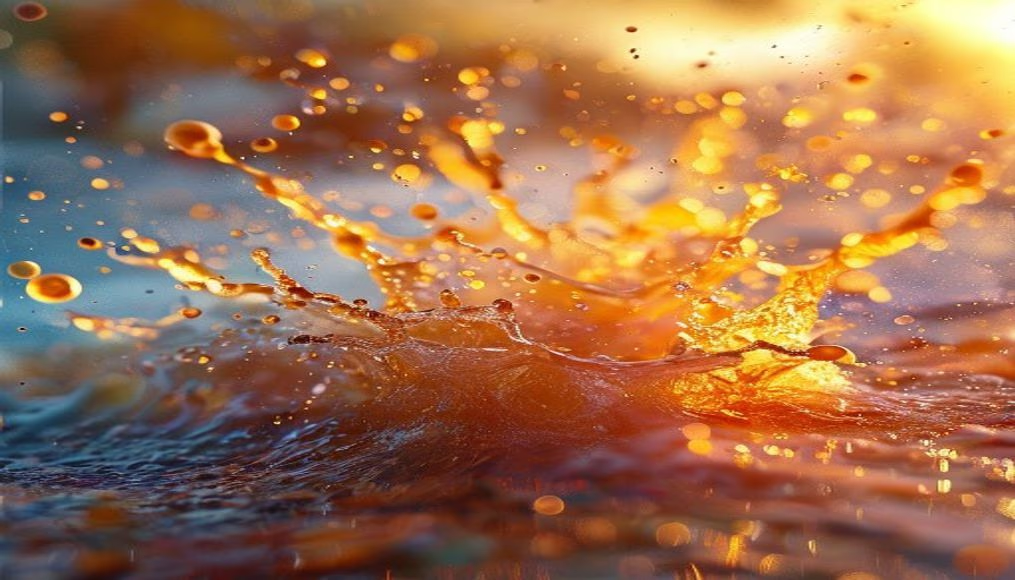
Paint splash water
1344×768 · AVIF · CC BY 4.0
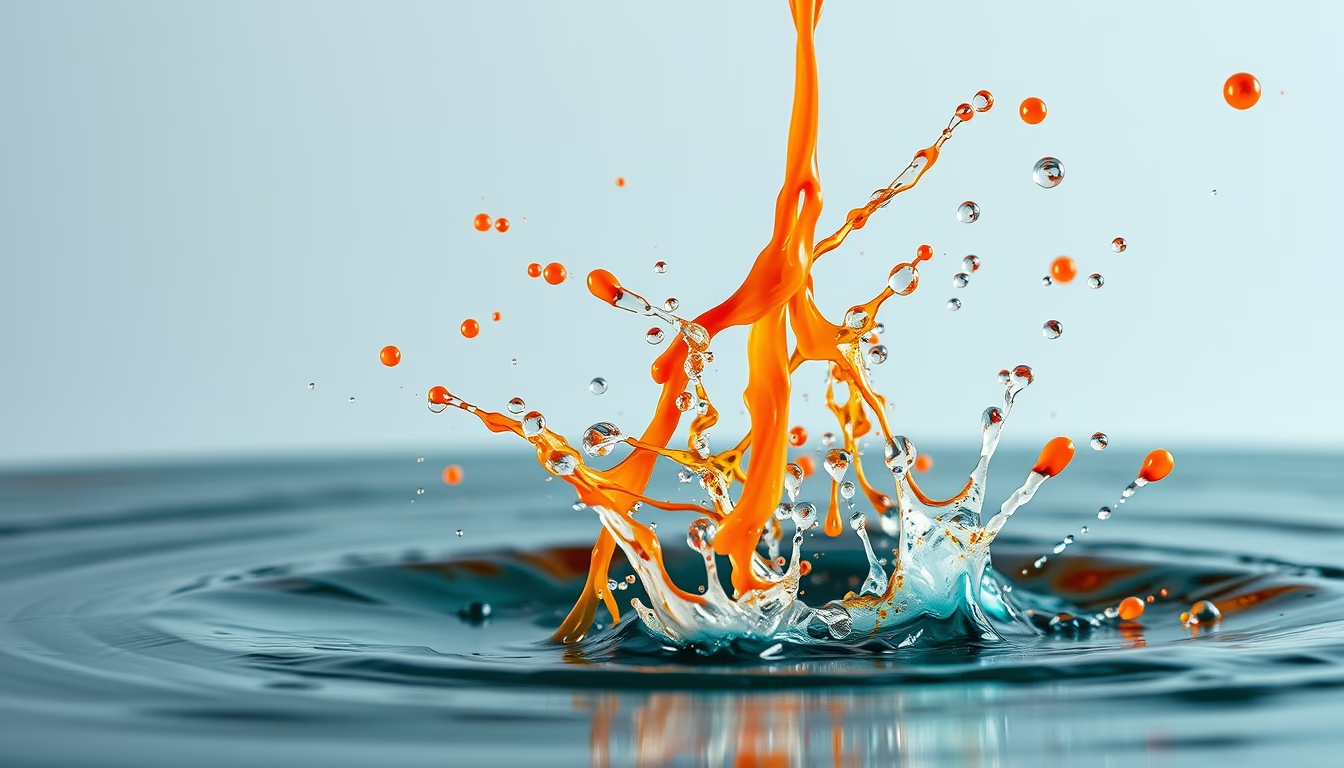
Fine art photography of colorful paint jets suspended in water, captured at high speed to reveal ephemeral abstract patterns.
About this subject
Paint splash water photography is a high-speed technique that freezes the motion of pigments thrown into a liquid, creating organic shapes and bursts of color. The process requires specialized equipment: a camera with a fast shutter (1/4000 s or faster), synchronized flashes, and a remote trigger or sound sensor to capture the exact moment of impact. Drops of acrylic or watercolor paint are launched into a tank of water, where viscosity and surface tension determine the morphology of the spread.
Historically, the technique dates back to Harold Edgerton's experiments at MIT in the 1930s, where he photographed milk drops with stroboscopic flashes. Today, contemporary artists like Jack Long and Markus Reugels elevate the practice to abstract art, exploring color combinations and textures that resemble nebulae, flowers, or marine creatures. Images are often digitally composited from multiple captures to achieve greater chromatic density.
The artistic appeal lies in unpredictability: each shot is unique, and nuances of density, impact angle, and water temperature drastically alter the result. Curators note that these works dialogue with abstract expressionism and fluid art, but with the differential of technical precision. For 2026, trends point to the integration of artificial intelligence in post-production to enhance symmetries or create animations from splash sequences.
In fine art photography, large-format printing on metallic photographic paper or acrylic enhances contrast and depth. Collectors value limited editions with certificates of authenticity, and the works have appeared in digital art galleries and contemporary photography exhibitions worldwide.
Frequently Asked Questions
What equipment is needed to photograph paint in water?
A camera with a fast shutter (ideally 1/4000 s or faster), macro or close-up lenses, high-power flashes with high-speed sync, a glass or acrylic tank, syringes or droppers to launch the paint, and a remote trigger or sound sensor to capture the exact moment.
What type of paint works best?
Liquid acrylic or concentrated watercolors have good viscosity and pigmentation. Thick paints don't spread well; thin ones dissolve too fast. Food coloring can also be used for translucent effects.
How does water temperature affect the result?
Colder water increases surface tension, creating more defined shapes and bubbles that take longer to pop. Warm water reduces paint viscosity, leading to smoother spreads and quick blending. The ideal temperature depends on the desired effect.
Direct URL
https://pub-c7d6a6ea828543ac903a74a341ccb2e1.r2.dev/imagens/paint-splash-water-fine-art-photography-p3.avifHow to credit
Include a visible link back to UtilizAí. Copy one of the snippets below:
<a href="https://xn--utiliza-eza.com/en/midia/imagens/paint-splash-water-fine-art-photography-p3">Paint splash water</a> by <a href="https://xn--utiliza-eza.com">UtilizAí</a>, licensed under <a href="https://creativecommons.org/licenses/by/4.0/">CC BY 4.0</a>.
[Paint splash water](https://xn--utiliza-eza.com/en/midia/imagens/paint-splash-water-fine-art-photography-p3) by [UtilizAí](https://xn--utiliza-eza.com), CC BY 4.0
License: CC-BY-4.0