Pagoda multiple stories
1344×768 · AVIF · CC BY 4.0

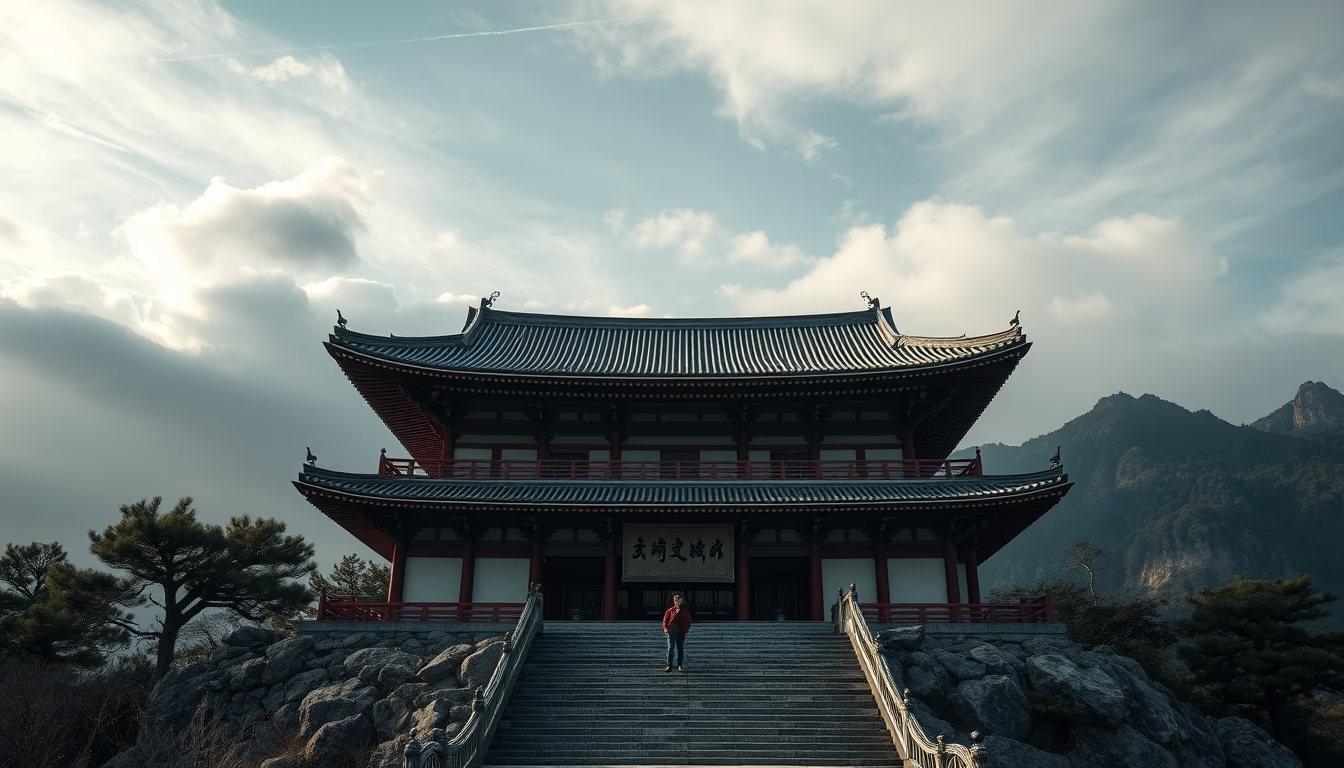
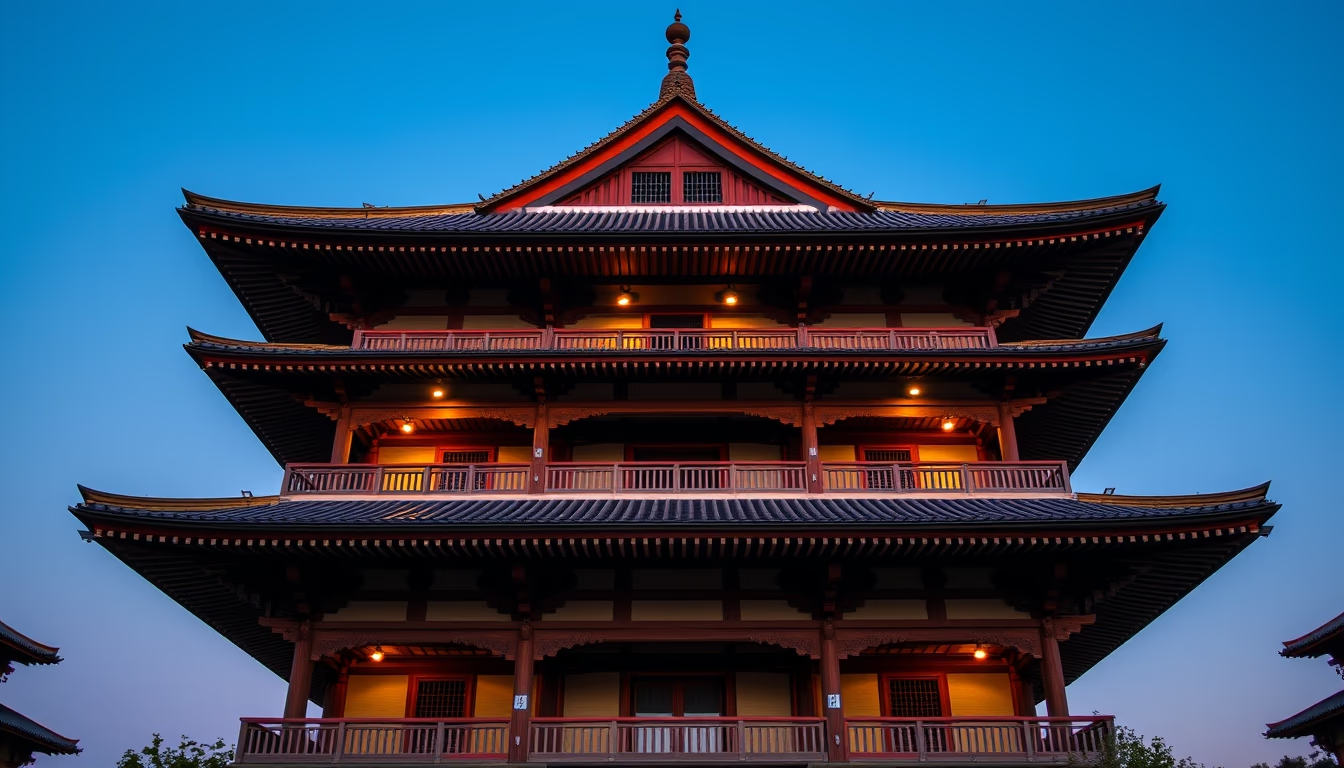
Multi-storied pagodas are iconic East Asian structures, blending religious architecture with Zen symbolism.
About this subject
Pagodas are multi-storied towers originating from East Asian religious architecture, closely tied to Buddhism and Zen. Their form evolved from Indian stupas, which housed sacred relics, but over centuries were adapted in China, Korea and Japan with local influences. The number of stories is typically odd, ranging from 3 to 13, with 5, 7, or 9 being common. Each story represents a step on the path to enlightenment, and the spire on top symbolizes connection to the divine.
Historically, pagodas were built as reliquaries or memorials, but also served as observation towers or landscape elements in Zen temples. A famous example is the Pagoda at Horyu-ji Temple in Japan, 7th century, considered the world's oldest wooden structure. In China, the Giant Wild Goose Pagoda (Xi'an) has 7 stories and was built in the 7th century to store Buddhist scriptures.
Construction in wood or brick required sophisticated engineering to withstand earthquakes. Design includes curved eaves and narrow corridors, often painted in vibrant colors. In Zen context, the pagoda is not just a building but a symbol of spiritual journey: each story represents a stage of purification, and ascending leads to enlightened emptiness.
Pagodas are also popular subjects in editorial art and photography, captured in studio with dramatic lighting to emphasize verticality and ornamental details. In global pop culture, they evoke tranquility, exoticism and a Zen aesthetic that transcends religions.
Frequently Asked Questions
Why do pagodas have multiple stories?
Each story symbolizes a stage on the Buddhist path to enlightenment. Odd numbers (e.g., 5, 7, 9) represent perfection and spiritual balance.
What is the difference between a pagoda and a stupa?
A stupa is a hemispherical Indian monument housing relics. The pagoda is its East Asian evolution, acquiring multiple stories and curved roofs, incorporating local elements.
Where can one find historical pagodas in Brazil?
In Brazil, pagodas are rare, but exist in Buddhist temples such as Templo Zu Lai in Cotia (SP) and Templo de Kuan Yin in São Paulo, which feature Oriental-inspired structures.
Direct URL
https://pub-c7d6a6ea828543ac903a74a341ccb2e1.r2.dev/imagens/pagoda-multiple-stories-studio-editorial-portrait-fresh8.avifHow to credit
Include a visible link back to UtilizAí. Copy one of the snippets below:
<a href="https://xn--utiliza-eza.com/en/midia/imagens/pagoda-multiple-stories-studio-editorial-portrait-fresh8">Pagoda multiple stories</a> by <a href="https://xn--utiliza-eza.com">UtilizAí</a>, licensed under <a href="https://creativecommons.org/licenses/by/4.0/">CC BY 4.0</a>.
[Pagoda multiple stories](https://xn--utiliza-eza.com/en/midia/imagens/pagoda-multiple-stories-studio-editorial-portrait-fresh8) by [UtilizAí](https://xn--utiliza-eza.com), CC BY 4.0
License: CC-BY-4.0