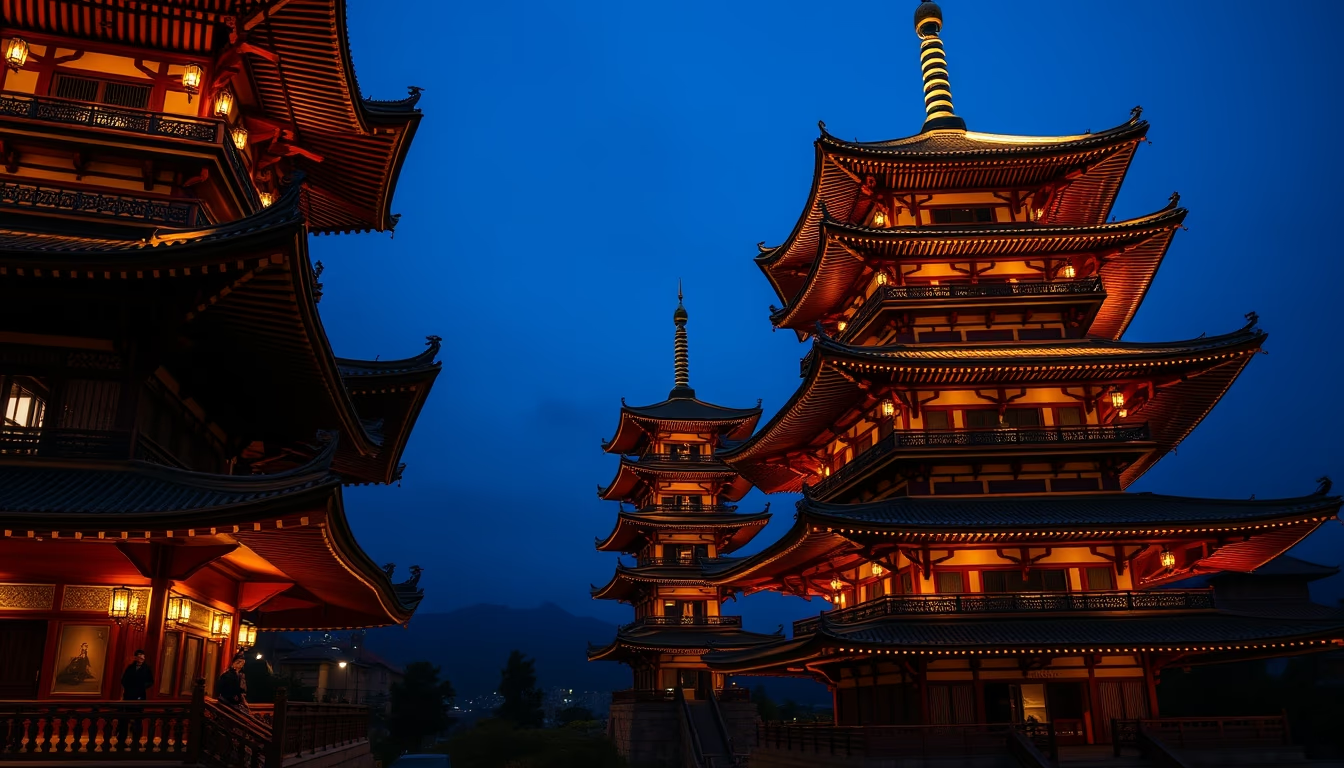
Pagoda multiple stories
1344×768 · AVIF · CC BY 4.0

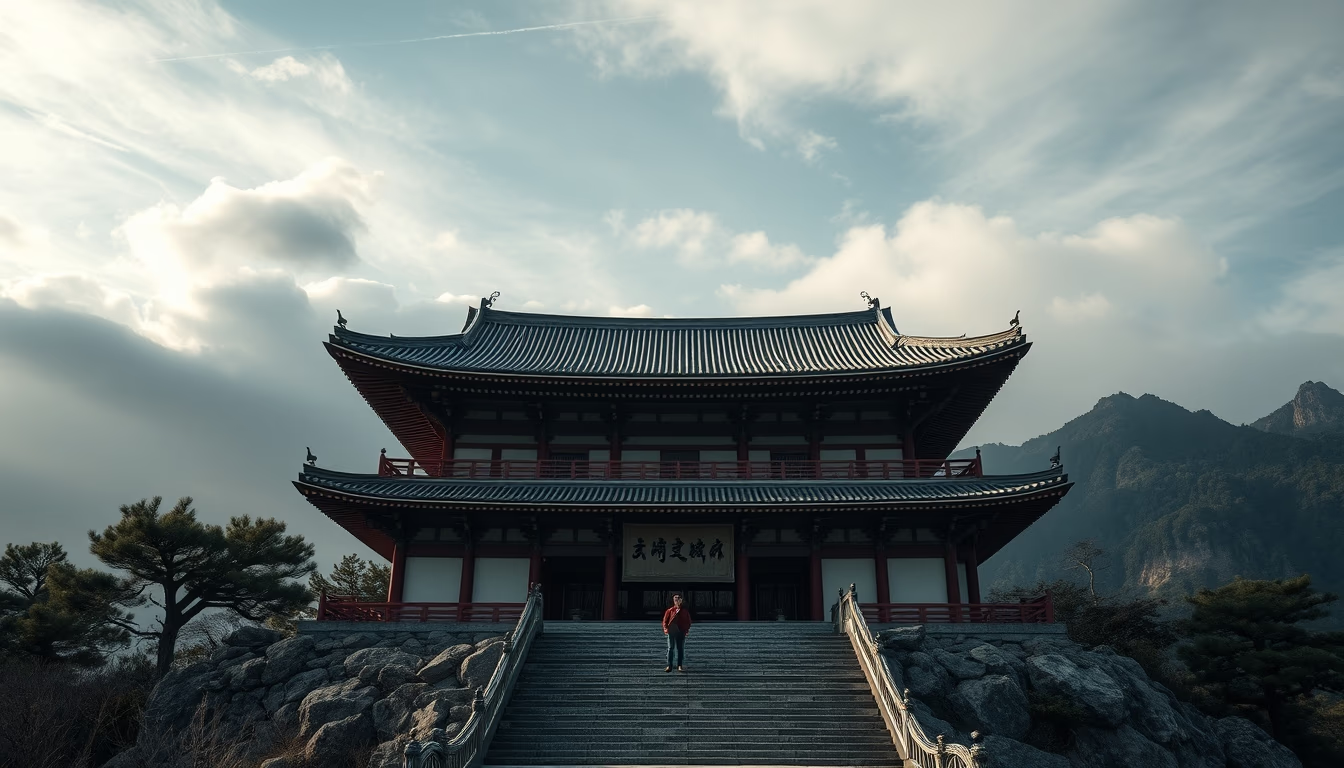
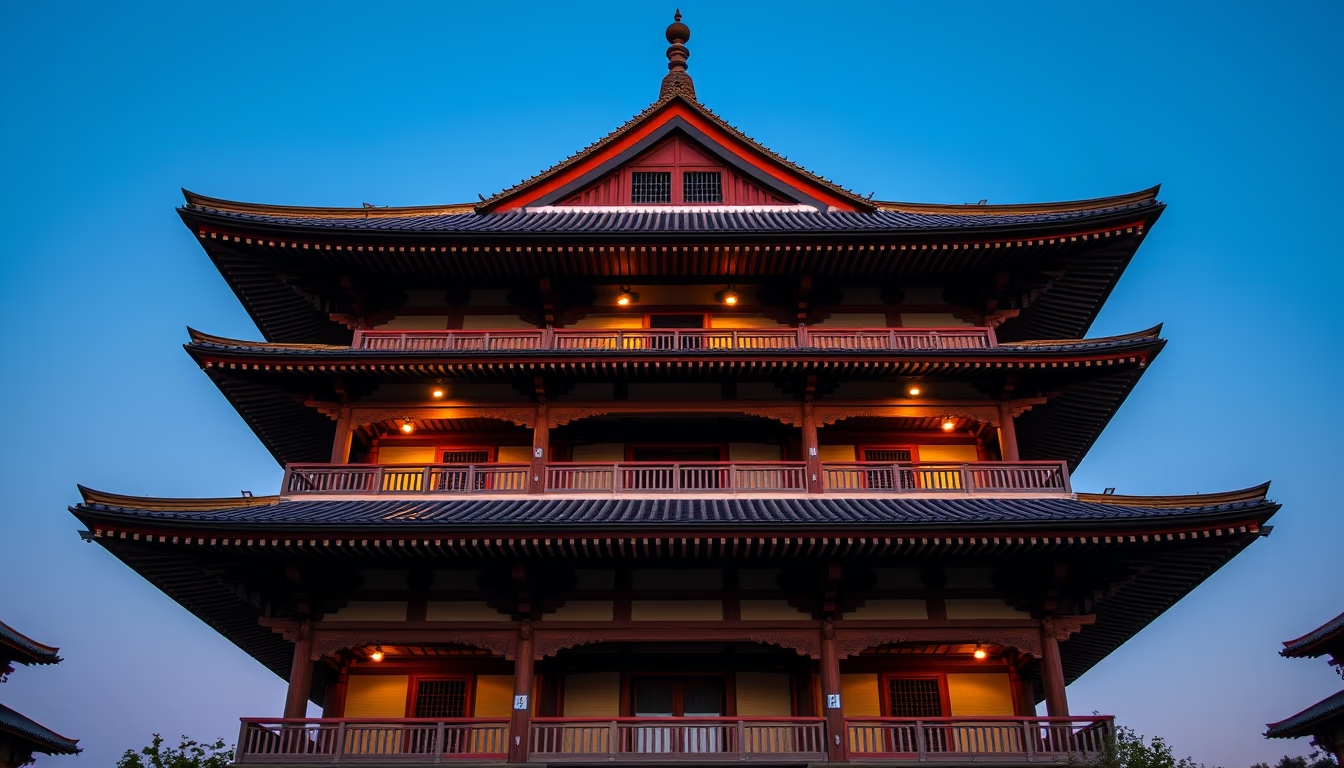
Multi-story pagodas are tiered towers typical of East Asia, serving religious purposes and embodying symbolic architecture.
About this subject
The multi-story pagoda is an iconic architectural structure originating from the Indian stupa but taking distinctive forms in China, Japan, Korea, and other East Asian countries. Traditionally associated with Buddhism, pagodas house sacred relics and serve as places for meditation and worship. The height and number of stories are typically odd, carrying symbolic meanings linked to natural elements or stages of enlightenment.
Pagodas were constructed mainly from wood or brick, with curved roofs and overhanging eaves. Each story diminishes in size as the tower rises, creating an elegant silhouette. Famous examples include the Iron Pagoda in Kaifeng, China, and the Toji Pagoda in Kyoto, Japan. The wooden construction technique, using interlocking joints without nails, demonstrates advanced engineering.
Beyond religious significance, pagodas are cultural and tourist landmarks. Many have survived centuries of earthquakes due to the flexibility of their structures. An aerial view, such as from a drone shot, reveals the symmetry and integration with the surrounding landscape, often gardens or temple complexes.
Frequently Asked Questions
What is the function of a multi-story pagoda?
A pagoda serves as a place of worship and meditation in Buddhism, housing sacred relics and often functioning as a memorial. Its vertical structure symbolizes the spiritual journey toward enlightenment.
Why do pagodas have an odd number of stories?
The odd number of stories holds symbolic meaning in Buddhism, representing concepts such as the five elements (earth, water, fire, air, void) or the stages of the path to enlightenment. Odd numbers are also believed to bring good luck.
What is the difference between a Chinese and a Japanese pagoda?
While both share a common origin, Chinese pagodas are generally taller and built of brick or stone, whereas Japanese pagodas are wooden with more curved roofs. Japanese pagodas also tend to have fewer stories, such as the typical three- or five-story pagodas found in temples.
Direct URL
https://pub-c7d6a6ea828543ac903a74a341ccb2e1.r2.dev/imagens/pagoda-multiple-stories-aerial-drone-shot-fresh9.avifHow to credit
Include a visible link back to UtilizAí. Copy one of the snippets below:
<a href="https://xn--utiliza-eza.com/en/midia/imagens/pagoda-multiple-stories-aerial-drone-shot-fresh9">Pagoda multiple stories</a> by <a href="https://xn--utiliza-eza.com">UtilizAí</a>, licensed under <a href="https://creativecommons.org/licenses/by/4.0/">CC BY 4.0</a>.
[Pagoda multiple stories](https://xn--utiliza-eza.com/en/midia/imagens/pagoda-multiple-stories-aerial-drone-shot-fresh9) by [UtilizAí](https://xn--utiliza-eza.com), CC BY 4.0
License: CC-BY-4.0