Old map parchment
1344×768 · AVIF · CC BY 4.0
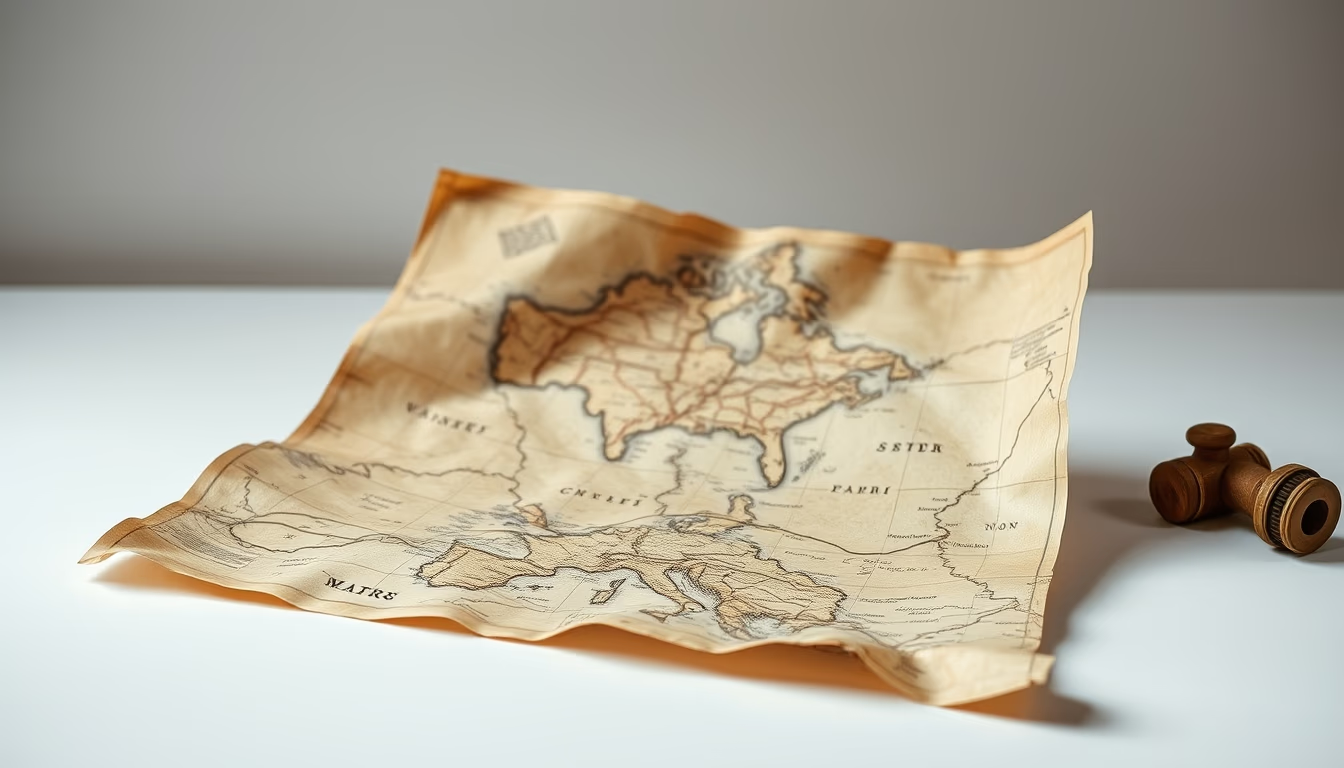
Old map parchment, a leather or skin support used for historical cartographic records, reveals crafting techniques and geographical knowledge of past eras.
About this subject
Parchment, made from the skin of animals such as goats, sheep, and calves, was the primary support for important documents before the widespread use of paper. In cartography, its use dates back to antiquity, with notable examples in medieval maps and portolan charts that guided European navigators from the 13th century onward. The choice of parchment was not arbitrary: its durability and tear resistance allowed maps to be consulted and transported for decades under harsh conditions.
The manufacturing process involved washing the skin, liming it, stretching it on a frame, and scraping repeatedly until a smooth, uniform surface was achieved. This artisanal work resulted in sheets of varying thickness, which could be joined for large-format maps. The Hereford Mappa Mundi, dating from the 13th century, is one of the most famous examples: measuring about 1.6 meters in height, it was drawn on a single calfskin, depicting the geographical and religious knowledge of the time.
Historically, parchment maps were instruments of power, used by kings, merchants, and explorers to plan routes, delimit territories, and control resources. Cartography on parchment flourished especially during the Age of Discovery, with Italian and Catalan portolan charts detailing coasts and ports with remarkable precision. Maps like the Catalan Atlas (1375) combined navigator data with mythological representations, merging science and art.
Today, these artifacts are cultural treasures, preserved under controlled conditions due to their fragility. Institutions such as the Bibliothèque nationale de France and the National Archives of Brazil hold significant collections, many digitized for public access. Conserving parchment requires restoration expertise, as the skin can dry out, deform, or suffer biological attacks. Each ancient map is a window into the past, revealing how our ancestors perceived and organized the world.
Frequently Asked Questions
Why was parchment used for ancient maps?
Parchment was durable, tear-resistant, and could be produced in large sheets, making it ideal for maps that needed to be handled and stored for long periods.
What is the difference between parchment and paper for maps?
Parchment is made from animal skin, while paper is from plant fibers. Parchment is more resistant and durable, but also more expensive, limiting its use to important documents.
Where can I see ancient parchment maps today?
They are preserved in national archives, libraries, and museums, such as the Library of Congress, the British Library, and the National Archives of Brazil. Many have been digitized.
Direct URL
https://pub-c7d6a6ea828543ac903a74a341ccb2e1.r2.dev/imagens/old-map-parchment-studio-still-life-p7.avifHow to credit
Include a visible link back to UtilizAí. Copy one of the snippets below:
<a href="https://xn--utiliza-eza.com/en/midia/imagens/old-map-parchment-studio-still-life-p7">Old map parchment</a> by <a href="https://xn--utiliza-eza.com">UtilizAí</a>, licensed under <a href="https://creativecommons.org/licenses/by/4.0/">CC BY 4.0</a>.
[Old map parchment](https://xn--utiliza-eza.com/en/midia/imagens/old-map-parchment-studio-still-life-p7) by [UtilizAí](https://xn--utiliza-eza.com), CC BY 4.0
License: CC-BY-4.0