Old map parchment
1344×768 · AVIF · CC BY 4.0
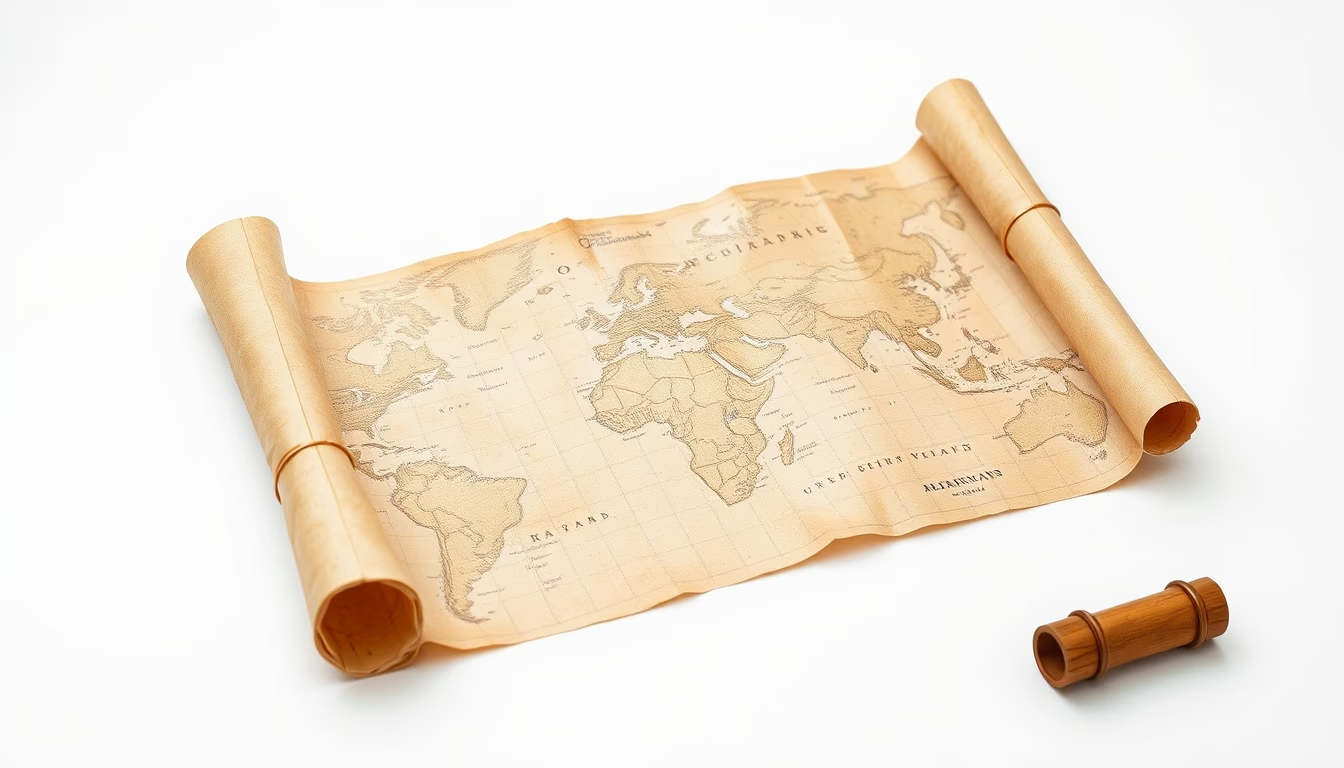
Old map parchments reveal centuries of exploration and geographic knowledge.
About this subject
Old map parchments are physical testimonies to the evolution of cartography and human exploration. Made from animal skin, usually sheep, goat, or calf, these materials were prepared through a process of washing, stretching, and drying, resulting in a durable and flexible surface for writing and drawing. During the Middle Ages and Renaissance, parchment was the preferred support for important documents, including maps, due to its superior resistance compared to paper.
Creating maps on parchment required skilled craftsmanship both in preparing the support and in detailed drawing. Cartographers like Gerardus Mercator and Abraham Ortelius produced some of their most famous works on this material. Parchment maps often included ornamental illustrations, sea monsters, coats of arms, and explanatory texts, blending science and art. The ink used was typically carbon-based or iron gall, and colors came from mineral and vegetable pigments.
Preserving old parchments is challenging, as they are sensitive to humidity, temperature, and light. Institutions such as the National Library of Brazil and the Library of Congress hold valuable collections. In Brazil, colonial maps on parchment are rare, but notable examples exist, such as the "Map of Brazil" from 1640 by Dutch cartographer Johannes Vingboons. These documents are fundamental for understanding colonization history and exploration routes.
Today, digitization has allowed access to these maps without damaging the originals. Projects like the "David Rumsey Map Collection" provide high-resolution images of thousands of old maps, many on parchment, for research and public appreciation. The unique texture of parchment and the characteristics of hand-drawn lines continue to fascinate historians, artists, and cartography enthusiasts.
Frequently Asked Questions
What is an old map parchment?
It is a map drawn or written on prepared animal skin, usually from sheep, goat, or calf, used before paper became common in cartography.
Why was parchment used for maps?
Parchment was more durable than paper, better resisting moisture and handling, and allowed erasures and corrections, making it ideal for valuable documents like maps.
How to preserve a parchment map?
Keep in a controlled environment with humidity between 45%-55%, temperature 18-22°C, avoid direct light, and handle with cotton gloves to prevent oil damage.
Direct URL
https://pub-c7d6a6ea828543ac903a74a341ccb2e1.r2.dev/imagens/old-map-parchment-commercial-product-photography-p0.avifHow to credit
Include a visible link back to UtilizAí. Copy one of the snippets below:
<a href="https://xn--utiliza-eza.com/en/midia/imagens/old-map-parchment-commercial-product-photography-p0">Old map parchment</a> by <a href="https://xn--utiliza-eza.com">UtilizAí</a>, licensed under <a href="https://creativecommons.org/licenses/by/4.0/">CC BY 4.0</a>.
[Old map parchment](https://xn--utiliza-eza.com/en/midia/imagens/old-map-parchment-commercial-product-photography-p0) by [UtilizAí](https://xn--utiliza-eza.com), CC BY 4.0
License: CC-BY-4.0