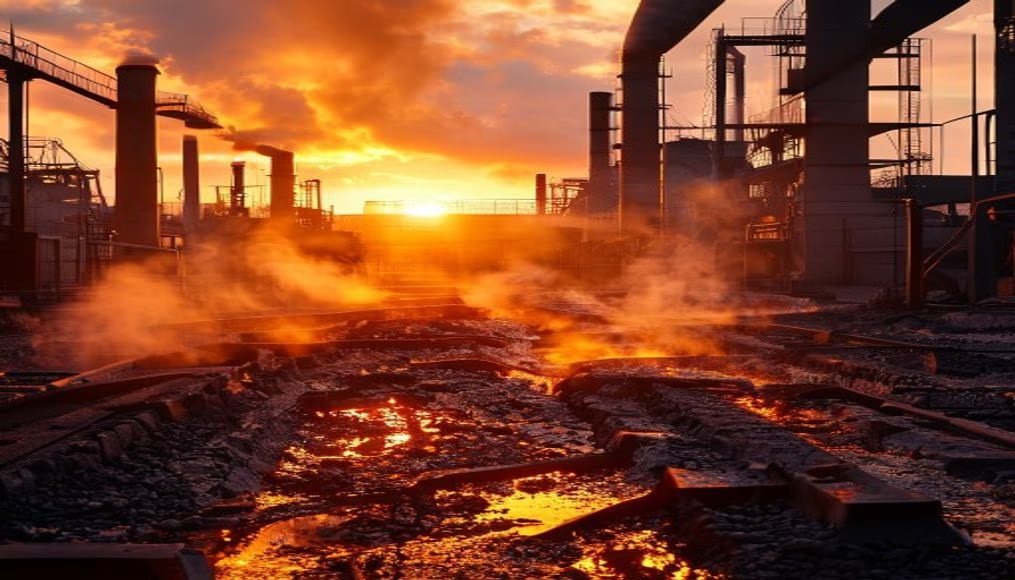
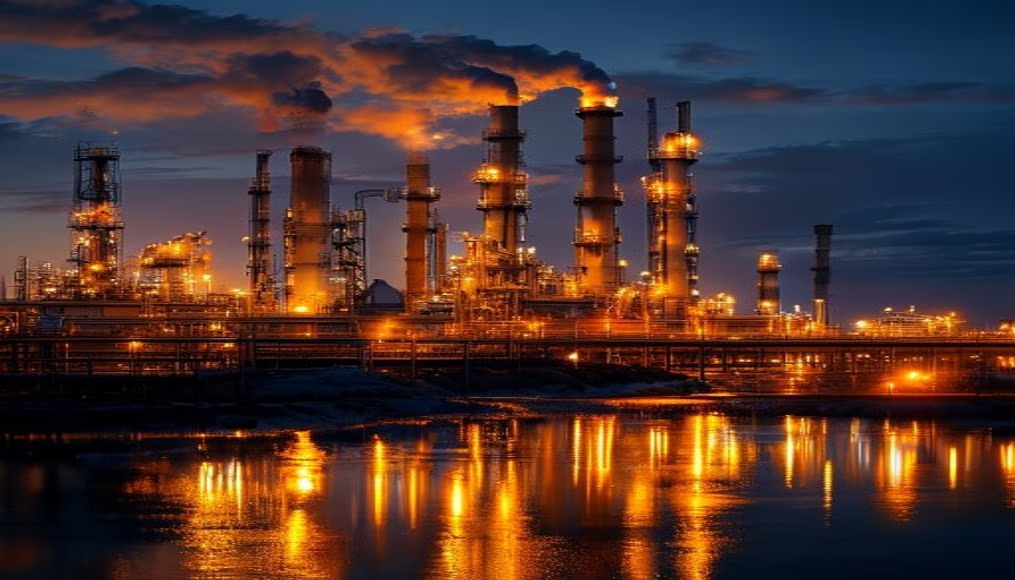
Oil refinery night lights
1344×768 · AVIF · CC BY 4.0
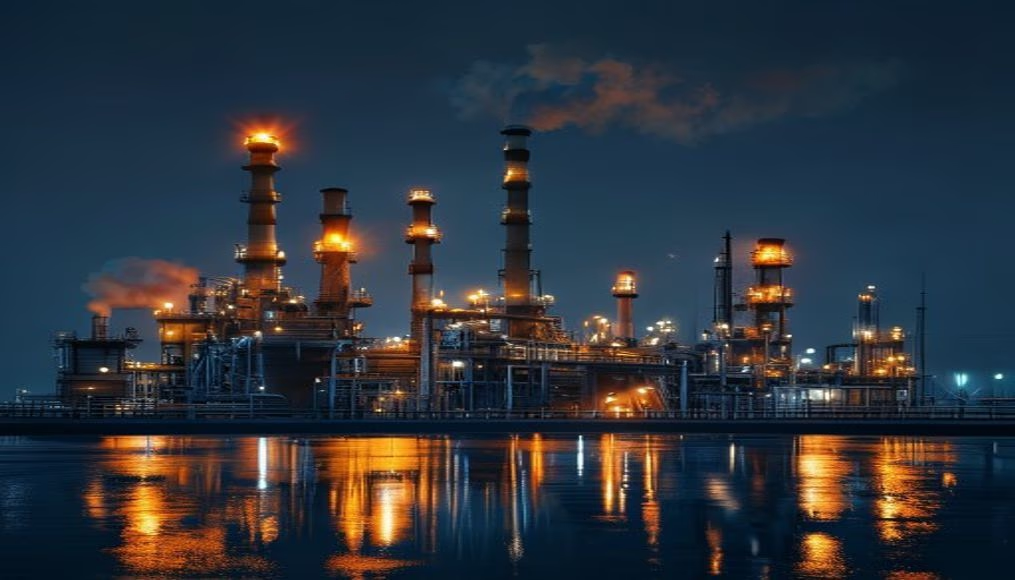
Oil refineries seen at night reveal illuminated industrial complexes, where 24/7 operations produce essential fuels and petrochemicals.
About this subject
An oil refinery is an industrial facility that processes crude oil into useful products such as gasoline, diesel, kerosene, LPG, and petrochemical feedstocks. The process involves fractional distillation, cracking, and other treatments that separate and transform hydrocarbons. At night, these giant plants become cities of light, with distillation towers, pipelines, and tanks illuminated by thousands of lamps and gas flare flames.
Night lighting is not just aesthetic; it is crucial for safety and efficiency. Workers and operators need clear visibility to monitor valves, gauges, and potential leaks. Lights also help guide vehicles and heavy equipment that operate around the clock. Flare flames, though common, indicate the burning of excess gases, a practice gradually being replaced by recovery technologies to reduce emissions.
Globally, refineries are a cornerstone of energy infrastructure. Countries like the United States, China, India, and Brazil have large refining parks, processing millions of barrels daily. Continuous operation is essential to meet demand from transportation, industry, and power generation. However, significant environmental impacts include greenhouse gas emissions (CO2, CH4), local pollutants, and potential soil and water contamination. Modern refineries increasingly invest in energy efficiency, carbon capture, and flaring reduction.
Interestingly, night photography of refineries has become an artistic and documentary genre. The images highlight the monumental scale and industrial beauty, but also raise awareness about energy transition challenges. As renewable energy advances, refineries are evolving, some adapting to produce biofuels and green hydrogen.
Frequently Asked Questions
Why do oil refineries operate 24 hours a day?
Refining is inherently a continuous process. Shutting down and restarting a distillation unit is expensive and risky, causing production losses and potential equipment damage. Also, demand for fuels and derivatives never stops, requiring uninterrupted operation.
What are flares and why do they burn at night?
Flares are safety devices that burn excess or unprocessable gases, preventing dangerous accumulations. At night, their flame is more visible, but the goal is to minimize flaring for environmental and economic reasons.
What is the environmental impact of refinery lighting at night?
Lighting contributes to light pollution, affecting local ecosystems such as migratory birds and insects. Refineries aim to use directional and efficient lamps (LED) to reduce this impact, but safety remains the top priority.
Direct URL
https://pub-c7d6a6ea828543ac903a74a341ccb2e1.r2.dev/imagens/oil-refinery-night-lights-commercial-product-photography-v9.avifHow to credit
Include a visible link back to UtilizAí. Copy one of the snippets below:
<a href="https://xn--utiliza-eza.com/en/midia/imagens/oil-refinery-night-lights-commercial-product-photography-v9">Oil refinery night lights</a> by <a href="https://xn--utiliza-eza.com">UtilizAí</a>, licensed under <a href="https://creativecommons.org/licenses/by/4.0/">CC BY 4.0</a>.
[Oil refinery night lights](https://xn--utiliza-eza.com/en/midia/imagens/oil-refinery-night-lights-commercial-product-photography-v9) by [UtilizAí](https://xn--utiliza-eza.com), CC BY 4.0
License: CC-BY-4.0