Oil paint thick texture
1344×768 · AVIF · CC BY 4.0
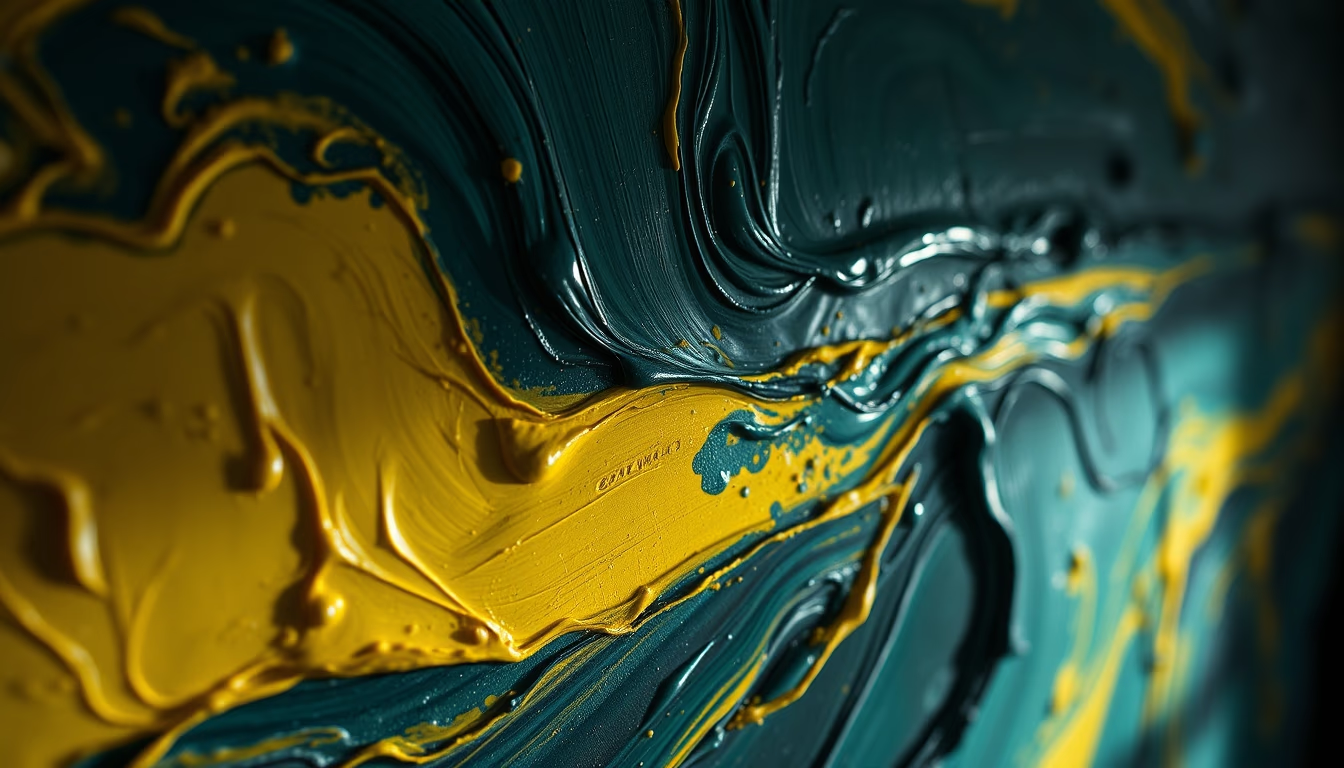
The thick texture of oil paint, known as impasto, is a technique that adds relief and drama to painting, creating a three-dimensional effect.
About this subject
Impasto is an oil painting technique that involves applying thick layers of paint onto the canvas so that brushstrokes and ridges remain visible. This method is often used to emphasize texture, light, and movement in the artwork, giving it a tactile quality that draws the viewer's eye. Great masters such as Rembrandt, Van Gogh, and Jackson Pollock employed impasto in distinct ways, whether to highlight details in portraits or to express intense emotions in abstract landscapes.
Historically, impasto gained prominence during the Baroque period, with artists like Rembrandt using it to add depth to their paintings. However, it was with Post-Impressionism and Abstract Expressionism that impasto became a signature technique. Van Gogh, for example, applied paint in such thick layers that his works resemble miniature sculptures. Pollock, on the other hand, used impasto in his drip paintings, creating complex and dynamic textures.
The impasto technique requires paint of high viscosity, often mixed with fillers such as sand or sawdust to increase volume. Beyond the aesthetic aspect, impasto also has a practical function: the thick paint layer reflects light unevenly, creating shadows and highlights that change with the lighting angle. This gives the artwork a sense of movement and vitality, something difficult to achieve with thin layers.
Today, impasto continues to be explored by contemporary artists, both in traditional paintings and in digital works that simulate this texture. Its popularity persists because the thick texture evokes a sense of materiality and authenticity, connecting the viewer to the artist's creative process. Collectors and art lovers value impasto for its ability to transform a simple canvas into a rich sensory experience.
Frequently Asked Questions
What is the impasto technique in oil painting?
Impasto is a technique where paint is applied in thick layers, keeping the marks of the brush or palette knife visible. This creates relief and texture on the canvas, giving a three-dimensional and expressive effect to the artwork.
Which famous artists used impasto?
Artists such as Rembrandt, Vincent van Gogh, Jackson Pollock, and Frank Auerbach are known for using impasto. Van Gogh, in particular, applied paint so thickly that his paintings gained a nearly sculptural quality.
How does impasto differ from other painting techniques?
Unlike techniques that aim for smooth, uniform surfaces, impasto emphasizes texture and relief. It requires denser paint and may include additives like sand to increase volume. Light interacts with the thick layers, creating dynamic shadows.
Direct URL
https://pub-c7d6a6ea828543ac903a74a341ccb2e1.r2.dev/imagens/oil-paint-thick-texture-fine-art-photography-p2.avifHow to credit
Include a visible link back to UtilizAí. Copy one of the snippets below:
<a href="https://xn--utiliza-eza.com/en/midia/imagens/oil-paint-thick-texture-fine-art-photography-p2">Oil paint thick texture</a> by <a href="https://xn--utiliza-eza.com">UtilizAí</a>, licensed under <a href="https://creativecommons.org/licenses/by/4.0/">CC BY 4.0</a>.
[Oil paint thick texture](https://xn--utiliza-eza.com/en/midia/imagens/oil-paint-thick-texture-fine-art-photography-p2) by [UtilizAí](https://xn--utiliza-eza.com), CC BY 4.0
License: CC-BY-4.0