Northeast wind farm turbines against scrubland vegetation
1344×768 · AVIF · CC BY 4.0
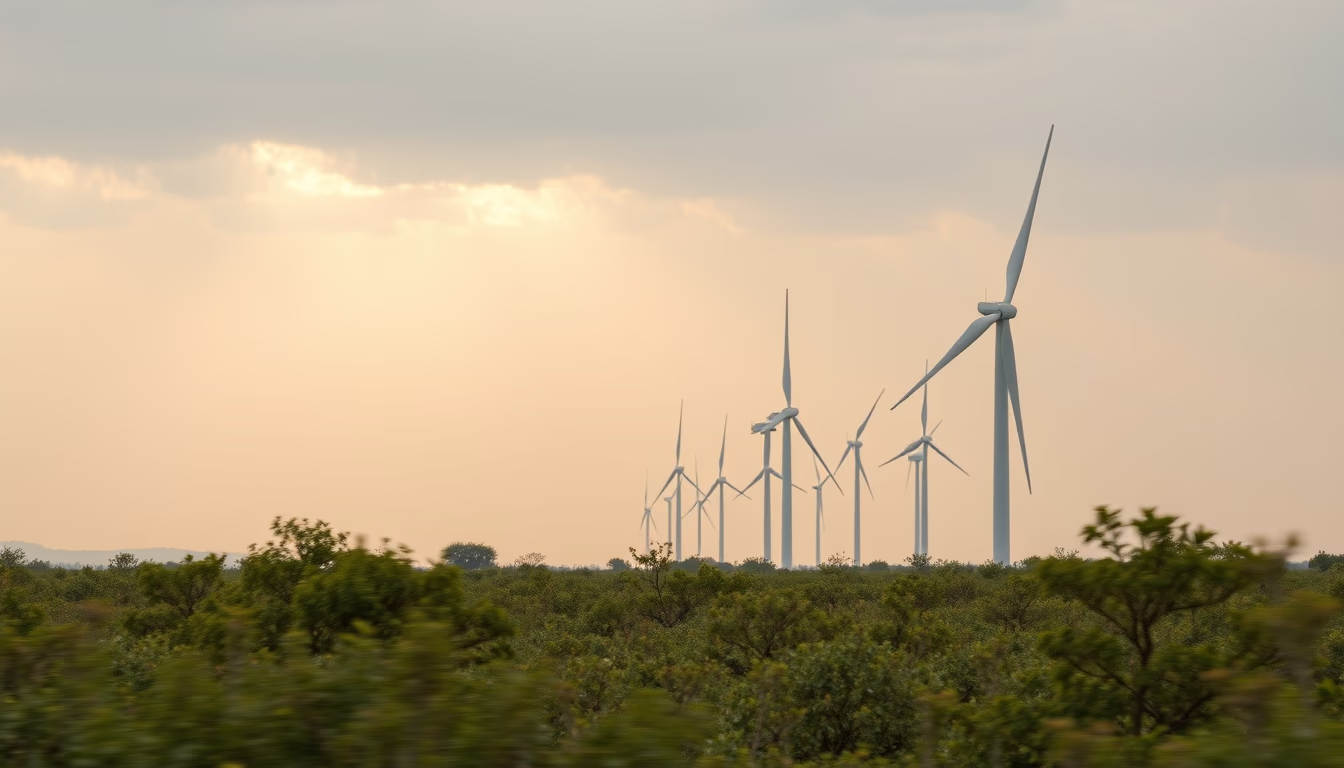
Wind turbines in the Brazilian Northeast contrast with Caatinga vegetation, the only exclusively Brazilian biome.
About this subject
The image shows a wind farm installed in the Caatinga biome, located in Northeast Brazil. The Caatinga is an exclusively Brazilian biome, covering about 10% of the national territory, characterized by xerophytic vegetation adapted to drought, such as cacti, bromeliads, and small trees. The Northeast region has the strongest winds in the country, with average annual speeds above 7 m/s, ideal for wind power generation. Brazil's onshore wind potential is estimated at 500 GW, most of which is in the Northeast.
Wind farms in the Caatinga generate significant socio-environmental impacts. On one hand, they contribute to a clean energy matrix: wind power already accounts for about 15% of national electricity generation. On the other hand, they require deforestation for tower installation and roads, fragmenting the habitat of endemic species such as the Brazilian three-banded armadillo (Tolypeutes tricinctus) and the Lear's macaw (Anodorhynchus leari). Studies show that bird mortality from turbine collisions is a concern, but mitigation measures such as automatic shutdown sensors are being implemented.
The Caatinga is one of Brazil's most threatened biomes, with only 7% of its area legally protected. Installing wind farms can be an opportunity for sustainable development, provided there is rigorous environmental planning and ecological compensation. Companies in the sector have adopted practices such as ecological corridors and wildlife monitoring. The image shows an overcast day, common during the rainy season when winds are stronger and more constant.
Interesting fact: the largest wind farm in Latin America is in Rio Grande do Norte, with an installed capacity of 1.6 GW. Modern wind turbine technology allows operation with winds as low as 3 m/s, reaching maximum power at 12 m/s. The Caatinga, with its flat terrain and low turbulence, offers exceptional conditions for wind generation.
Frequently Asked Questions
Why is Northeast Brazil ideal for wind energy?
The Northeast has constant and strong winds, with annual averages above 7 m/s, due to trade winds and the lack of significant natural barriers. The flat terrain of the Caatinga also reduces turbulence, increasing turbine efficiency.
What are the environmental impacts of wind farms in the Caatinga?
Main impacts include deforestation for tower installation and roads, habitat fragmentation, bird and bat collisions with blades, and local microclimate changes. Mitigation measures such as shutdown sensors and ecological corridors are used to reduce damage.
Is wind energy economically viable in Brazil?
Yes. The cost of wind energy in Brazil is competitive, with average auction prices below R$ 100/MWh. Installed capacity has grown rapidly, exceeding 22 GW in 2023, and the country is one of the world's largest wind energy producers.
Direct URL
https://pub-c7d6a6ea828543ac903a74a341ccb2e1.r2.dev/imagens/northeast-wind-farm-turbines-against-caatinga-vegetation-editorial-overcast-daytime-3.avifHow to credit
Include a visible link back to UtilizAí. Copy one of the snippets below:
<a href="https://xn--utiliza-eza.com/en/midia/imagens/northeast-wind-farm-turbines-against-caatinga-vegetation-editorial-overcast-daytime-3">Northeast wind farm turbines against scrubland vegetation</a> by <a href="https://xn--utiliza-eza.com">UtilizAí</a>, licensed under <a href="https://creativecommons.org/licenses/by/4.0/">CC BY 4.0</a>.
[Northeast wind farm turbines against scrubland vegetation](https://xn--utiliza-eza.com/en/midia/imagens/northeast-wind-farm-turbines-against-caatinga-vegetation-editorial-overcast-daytime-3) by [UtilizAí](https://xn--utiliza-eza.com), CC BY 4.0
License: CC-BY-4.0