Northeast wind farm turbines against scrubland vegetation
1344×768 · AVIF · CC BY 4.0
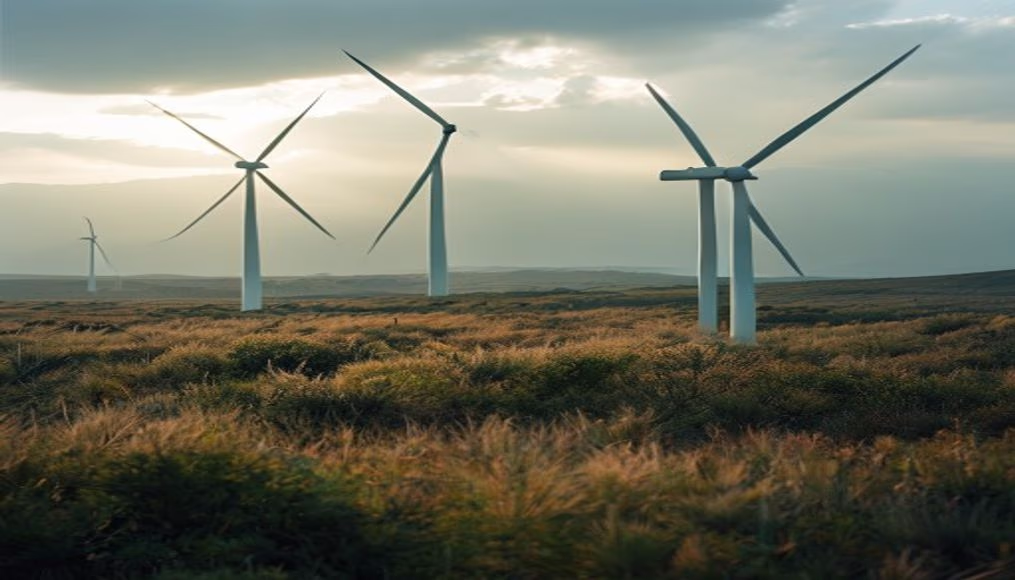
Wind turbines in Brazil's Northeast contrast with Caatinga vegetation, blending clean energy and a unique biome.
About this subject
Northeast Brazil hosts the majority of the country's wind farms, notably in Rio Grande do Norte, Bahia, Ceará, and Piauí. The turbines are installed in Caatinga, a biome exclusive to Brazil covering about 10% of the national territory. Caatinga features xerophytic vegetation adapted to drought, such as cacti, bromeliads, and twisted trees, which visually contrast with modern blades up to 80 meters high. The region is chosen for its constant strong winds, especially from June to December, when average speeds exceed 7 m/s, ideal for power generation. Brazil's first commercial wind farm, Mucuripe in Ceará, opened in 1992, but major growth occurred after the 2000s through PROINFA (Program to Incentivize Alternative Electricity Sources). By 2023, wind power accounted for about 12% of the national electricity matrix, with the Northeast holding over 80% of installed capacity. Coexistence between turbines and Caatinga requires environmental care, such as impact studies on migratory birds and bats, and measures to prevent soil compaction during installation. Despite challenges, wind energy has created jobs and income in drought-stricken areas, supporting sustainable development.
Frequently Asked Questions
Why is Caatinga chosen for wind farms?
Caatinga has constant strong winds, especially in the second semester, with average speeds above 7 m/s, ideal for power generation. The flat terrain and low population density also facilitate installation.
What is the environmental impact of turbines on Caatinga?
Main impacts are on birds and bats, which may collide with blades. Impact studies and measures like temporary shutdowns during migrations help mitigate risks. Installation can also compact soil, requiring care.
How many wind farms are in the Northeast?
In 2023, Brazil had over 800 wind farms, most in the Northeast. States like Rio Grande do Norte and Bahia lead, with dozens of farms operating.
Direct URL
https://pub-c7d6a6ea828543ac903a74a341ccb2e1.r2.dev/imagens/northeast-wind-farm-turbines-against-caatinga-vegetation-documentary-morning-6.avifHow to credit
Include a visible link back to UtilizAí. Copy one of the snippets below:
<a href="https://xn--utiliza-eza.com/en/midia/imagens/northeast-wind-farm-turbines-against-caatinga-vegetation-documentary-morning-6">Northeast wind farm turbines against scrubland vegetation</a> by <a href="https://xn--utiliza-eza.com">UtilizAí</a>, licensed under <a href="https://creativecommons.org/licenses/by/4.0/">CC BY 4.0</a>.
[Northeast wind farm turbines against scrubland vegetation](https://xn--utiliza-eza.com/en/midia/imagens/northeast-wind-farm-turbines-against-caatinga-vegetation-documentary-morning-6) by [UtilizAí](https://xn--utiliza-eza.com), CC BY 4.0
License: CC-BY-4.0