Northeast wind farm turbines against scrubland vegetation
1344×768 · AVIF · CC BY 4.0
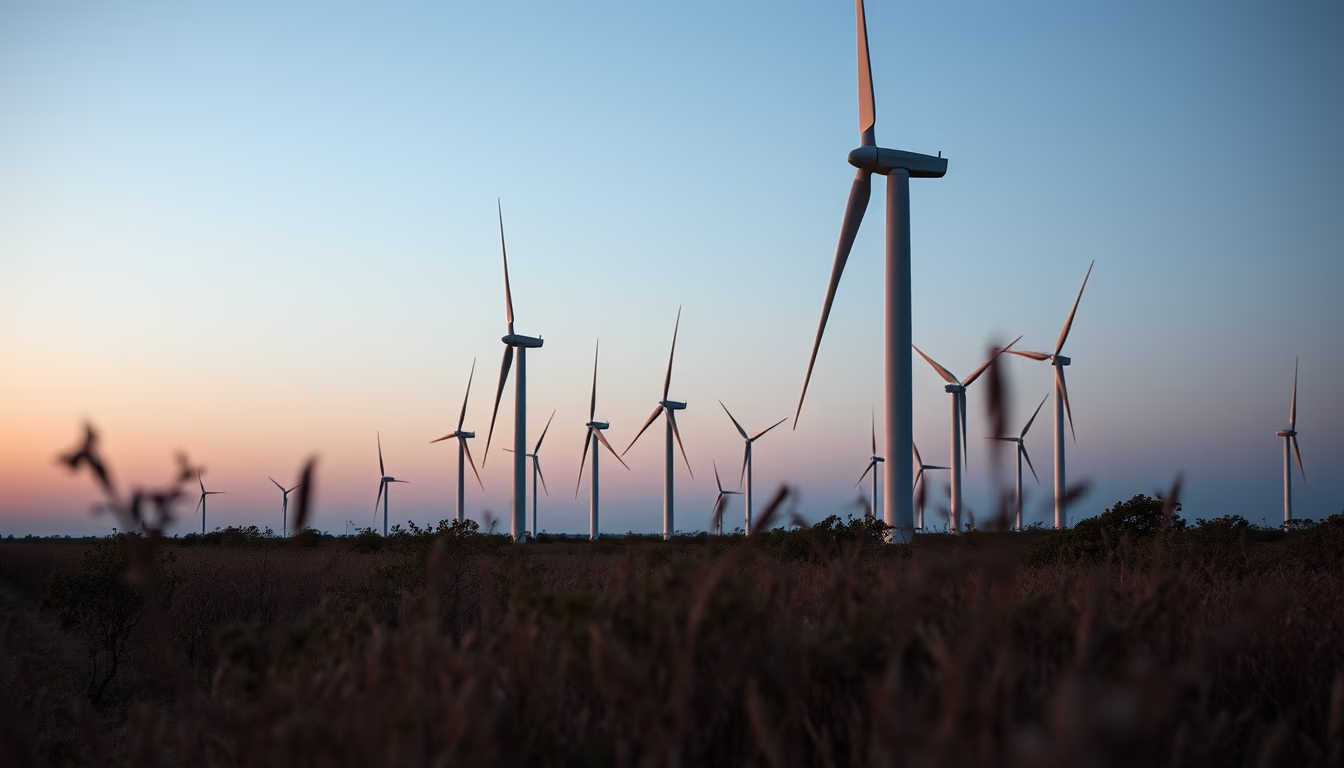
Wind turbines in Northeast Brazil contrast with the Caatinga vegetation, showcasing renewable energy integration in a unique biome.
About this subject
Northeast Brazil concentrates most of the country's wind energy, with parks installed in Caatinga areas, a biome exclusive to Brazil covering about 11% of the national territory. The turbines, typically with towers 80 to 100 meters high and blades sweeping areas up to 120 meters in diameter, harness the constant winds of the region, especially during winter. The Caatinga, with its xerophytic vegetation adapted to drought, such as cacti and thorny shrubs, creates a striking visual contrast with the modern structures.
Installing wind farms in the Caatinga requires environmental studies to minimize impacts on local fauna, such as birds and rodents. Many projects adopt compensatory measures, like ecological corridors and monitoring of endangered species. The Northeast region accounts for over 80% of Brazil's wind capacity, with Rio Grande do Norte leading generation. Brazil's onshore wind potential is estimated at 500 GW, 70% of which is in the Northeast.
Brazil's electricity matrix is one of the most renewable in the world, with wind power representing about 12% of installed capacity. On windy days, wind generation can supply up to 20% of national demand. Wind development in the semi-arid region also promotes social benefits, such as land leasing for family farmers and local job creation. The image captures twilight, when golden light highlights the turbine silhouettes against native vegetation.
The Caatinga hosts over 1,500 endemic plant and animal species, such as the three-banded armadillo and the Araripe manakin. Wind expansion must be planned to avoid habitat fragmentation, and research indicates that migratory birds may collide with blades, but risk is mitigated by temporary shutdown systems. The contrast between technology and nature in the image illustrates the challenge of aligning sustainable development with environmental conservation.
Frequently Asked Questions
Why is Northeast Brazil ideal for wind energy?
The Northeast has constant and strong winds, especially from June to December, with average speeds above 7 m/s. The low terrain roughness of the Caatinga and atmospheric stability favor generation.
Does wind turbine installation affect the Caatinga?
Yes, it can cause impacts such as habitat fragmentation and collision risk for birds. However, prior environmental studies and measures like ecological corridors and monitoring help minimize damage.
What is the installed wind capacity in Brazil?
Brazil has about 22 GW of installed wind capacity (2024), with the Northeast accounting for over 80% of that total. The country is the 6th largest wind energy producer worldwide.
Direct URL
https://pub-c7d6a6ea828543ac903a74a341ccb2e1.r2.dev/imagens/northeast-wind-farm-turbines-against-caatinga-vegetation-closeup-twilight-6.avifHow to credit
Include a visible link back to UtilizAí. Copy one of the snippets below:
<a href="https://xn--utiliza-eza.com/en/midia/imagens/northeast-wind-farm-turbines-against-caatinga-vegetation-closeup-twilight-6">Northeast wind farm turbines against scrubland vegetation</a> by <a href="https://xn--utiliza-eza.com">UtilizAí</a>, licensed under <a href="https://creativecommons.org/licenses/by/4.0/">CC BY 4.0</a>.
[Northeast wind farm turbines against scrubland vegetation](https://xn--utiliza-eza.com/en/midia/imagens/northeast-wind-farm-turbines-against-caatinga-vegetation-closeup-twilight-6) by [UtilizAí](https://xn--utiliza-eza.com), CC BY 4.0
License: CC-BY-4.0