Northeast wind farm turbines against scrubland vegetation
1344×768 · AVIF · CC BY 4.0
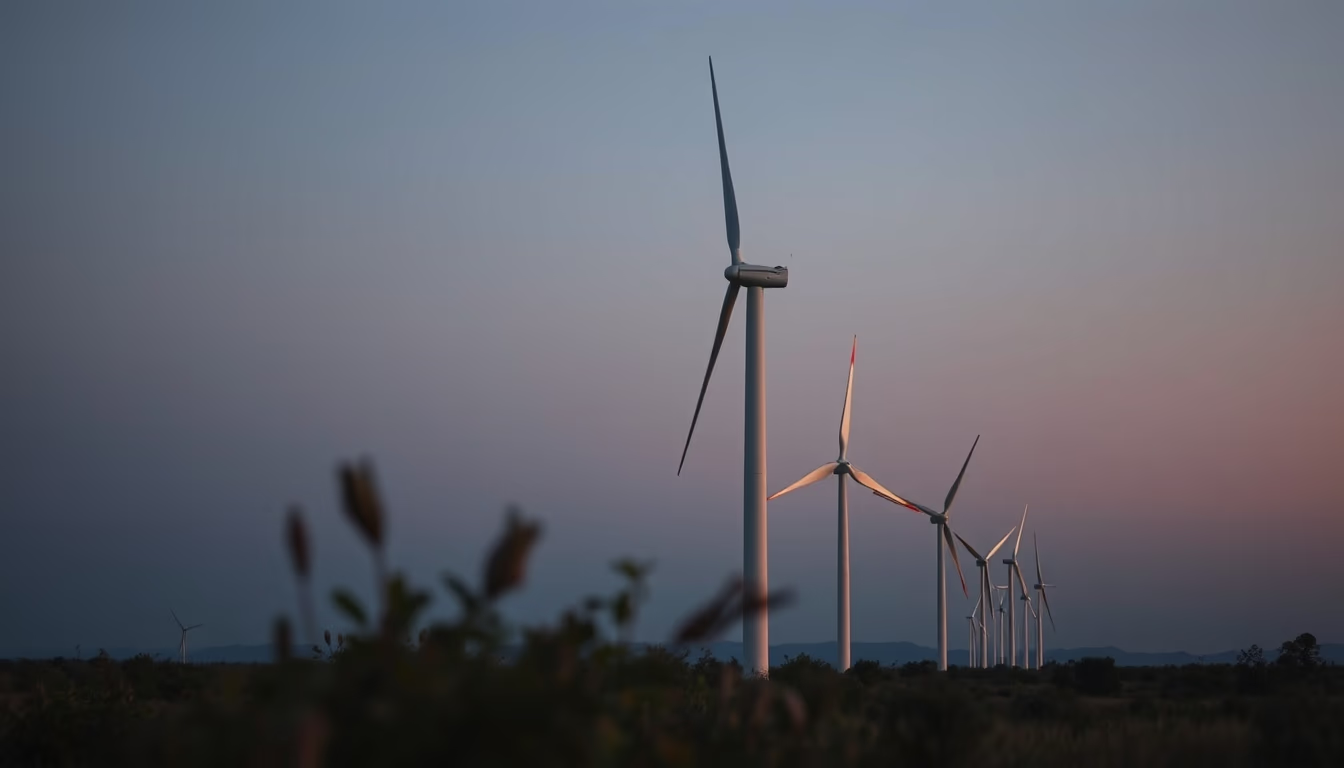
Wind turbines in Northeast Brazil contrast with Caatinga vegetation at twilight, showcasing the integration of renewable energy and semi-arid biome.
About this subject
Brazil has one of the largest wind energy potentials in the world, with the Northeast region concentrating about 90% of the country's wind farms. The state of Rio Grande do Norte leads production, followed by Bahia and Ceará. Wind turbines capture trade winds blowing steadily from the Atlantic Ocean, especially between June and December, the period of strongest winds. The image shows wind turbines installed in a Caatinga area, an exclusively Brazilian biome covering about 10% of the national territory. Caatinga is characterized by xerophytic vegetation, with plants adapted to drought, such as cacti and thorny shrubs. Installing wind farms in this biome requires environmental care, such as minimal deforestation and preservation of ecological corridors for local fauna. The contrast between modern towers and the arid landscape symbolizes the challenge of reconciling energy infrastructure with environmental conservation. Wind energy in Brazil has grown rapidly since 2009, when the first energy auctions incentivized the sector. Currently, it represents about 12% of the national electricity matrix, with an installed capacity exceeding 22 GW. The Northeast region benefits economically from job creation and royalty collection. The twilight in the image highlights the scenic beauty of wind farms, which have become tourist attractions in cities like João Câmara (RN) and Caetité (BA). Turbine maintenance involves cutting-edge technology, with sensors adjusting blades according to wind direction and intensity, maximizing efficiency.
Frequently Asked Questions
Why is Northeast Brazil ideal for wind energy?
The Northeast has strong and constant winds, especially trade winds from the Atlantic Ocean, with average speeds above 7 m/s. The flat topography and low atmospheric turbulence also favor generation.
How is the Caatinga affected by wind farms?
Installing wind farms in the Caatinga requires environmental licensing, with measures such as minimal deforestation, preservation of permanent preservation areas, and fauna monitoring. Studies show that the impact can be mitigated with proper planning.
What is Brazil's installed wind energy capacity?
In 2023, Brazil reached about 22 GW of installed wind energy capacity, ranking 6th globally. The Northeast region accounts for approximately 85% of this capacity.
Direct URL
https://pub-c7d6a6ea828543ac903a74a341ccb2e1.r2.dev/imagens/northeast-wind-farm-turbines-against-caatinga-vegetation-closeup-twilight.avifHow to credit
Include a visible link back to UtilizAí. Copy one of the snippets below:
<a href="https://xn--utiliza-eza.com/en/midia/imagens/northeast-wind-farm-turbines-against-caatinga-vegetation-closeup-twilight">Northeast wind farm turbines against scrubland vegetation</a> by <a href="https://xn--utiliza-eza.com">UtilizAí</a>, licensed under <a href="https://creativecommons.org/licenses/by/4.0/">CC BY 4.0</a>.
[Northeast wind farm turbines against scrubland vegetation](https://xn--utiliza-eza.com/en/midia/imagens/northeast-wind-farm-turbines-against-caatinga-vegetation-closeup-twilight) by [UtilizAí](https://xn--utiliza-eza.com), CC BY 4.0
License: CC-BY-4.0