Mount kilauea lava
1344×768 · AVIF · CC BY 4.0
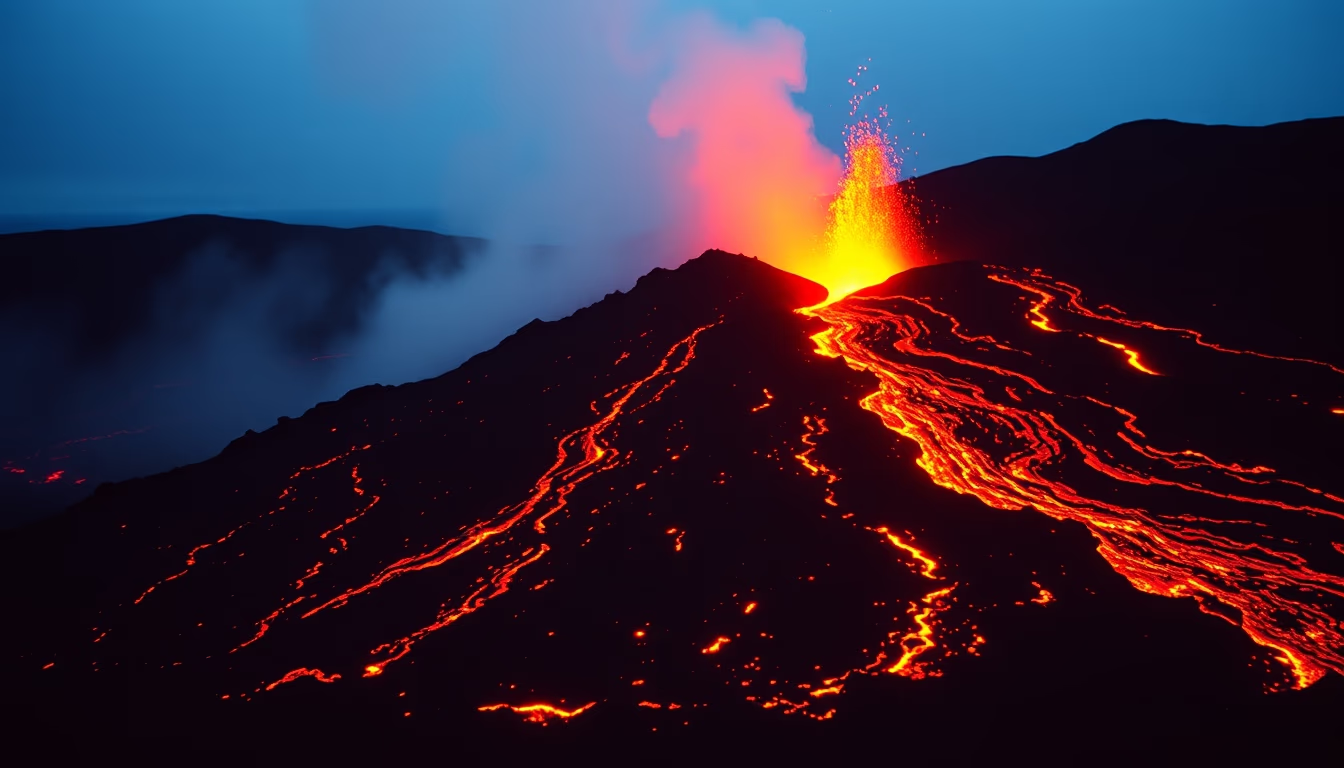
Kilauea volcano in Hawaii is one of the most active volcanoes on Earth, with frequent basaltic lava eruptions that shape the landscape and attract scientists.
About this subject
Kilauea is a shield volcano located on the Big Island of Hawaii, within Hawaii Volcanoes National Park. Its eruptive activity has been nearly continuous since 1983, making it one of the most closely monitored volcanoes in the world. The lava from Kilauea is predominantly basaltic, with low viscosity, allowing it to flow long distances before solidifying. There are two main types of lava emitted: pahoehoe, which is smooth and ropy, and a'a, which is rough and fragmented. Lava temperatures can reach up to 1,200 degrees Celsius (2,200 degrees Fahrenheit).
Eruptions at Kilauea are not limited to the summit caldera; they often occur along rift zones, such as the East Rift Zone, where lava emerges from fissures and builds new cones. The 2018 lower Puna eruption was particularly destructive, destroying hundreds of homes and adding new land to the coastline. When lava meets the ocean, it creates steam plumes and volcanic glass in a phenomenon known as lava haze or laze.
Kilauea is considered sacred in Hawaiian mythology as the home of the volcano goddess Pele. Traditional Hawaiians offer ho'okupu (offerings) to appease her. Scientifically, Kilauea provides crucial data for understanding shield volcanoes, ocean island formation, and lava cooling processes.
Frequently Asked Questions
What is the temperature of Kilauea's lava?
Kilauea's lava reaches temperatures between 1,100 and 1,200 degrees Celsius (2,000-2,200 °F), depending on composition and flow rate.
Is Kilauea currently erupting?
Kilauea has been erupting almost continuously since 1983, with occasional pauses. Current eruptions at Halema'uma'u crater and the East Rift Zone can be tracked via the US Geological Survey.
Is Kilauea's lava dangerous for visitors?
Yes, lava is extremely dangerous due to high temperatures, toxic gases (e.g., sulfur dioxide), and explosion hazards. Visitors must follow park guidelines and maintain a safe distance.
Direct URL
https://pub-c7d6a6ea828543ac903a74a341ccb2e1.r2.dev/imagens/mount-kilauea-lava-lo-fi-disposable-camera-p11.avifHow to credit
Include a visible link back to UtilizAí. Copy one of the snippets below:
<a href="https://xn--utiliza-eza.com/en/midia/imagens/mount-kilauea-lava-lo-fi-disposable-camera-p11">Mount kilauea lava</a> by <a href="https://xn--utiliza-eza.com">UtilizAí</a>, licensed under <a href="https://creativecommons.org/licenses/by/4.0/">CC BY 4.0</a>.
[Mount kilauea lava](https://xn--utiliza-eza.com/en/midia/imagens/mount-kilauea-lava-lo-fi-disposable-camera-p11) by [UtilizAí](https://xn--utiliza-eza.com), CC BY 4.0
License: CC-BY-4.0