Lake baikal frozen
1344×768 · AVIF · CC BY 4.0
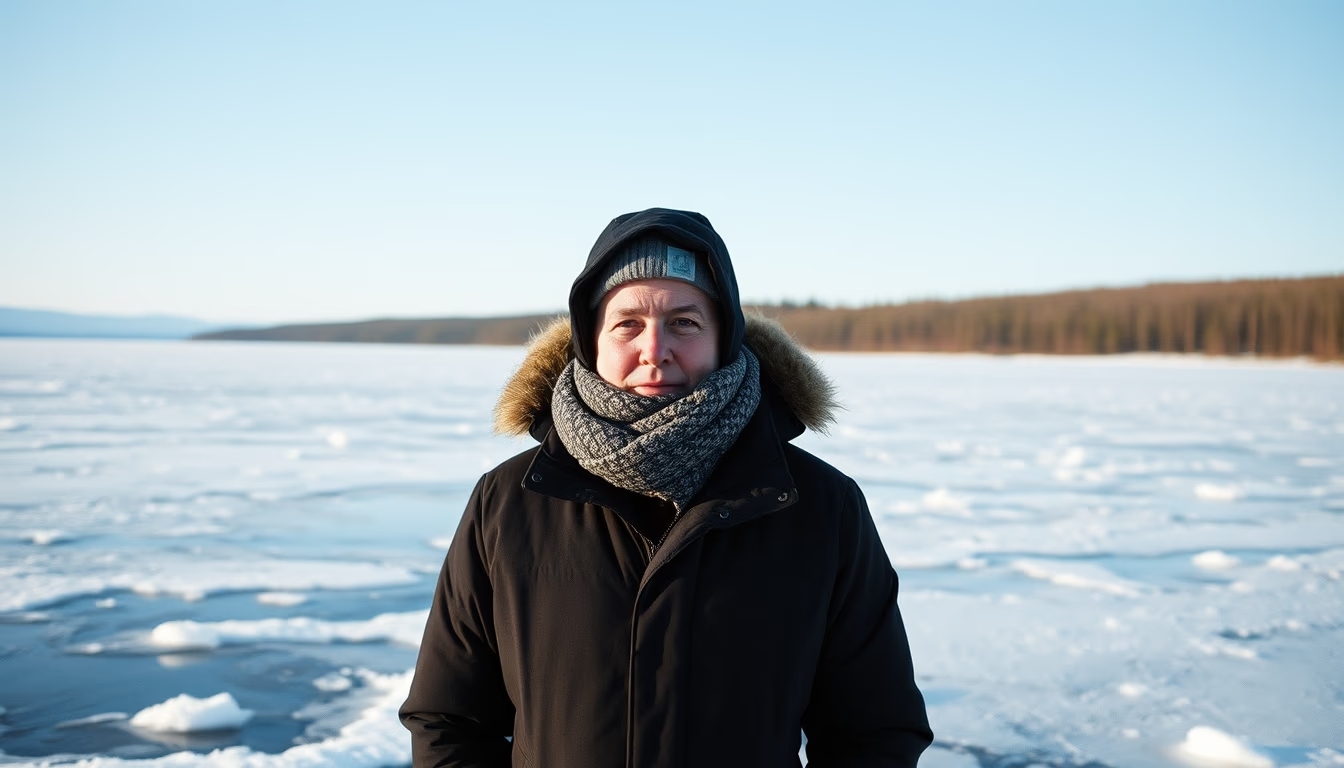
Lake Baikal in Siberia freezes completely during winter, creating one of the world's largest ice surfaces, up to 2 meters thick.
About this subject
Lake Baikal, located in southern Siberia, Russia, is the world's deepest and oldest freshwater lake, estimated to be 25 to 30 million years old. It holds about 20% of the world's unfrozen surface freshwater, with a volume greater than all the North American Great Lakes combined. During winter, from January to May, the lake freezes completely, forming an ice platform that can reach up to 2 meters in thickness in shallower areas.
The ice's transparency is remarkable, allowing one to see the bottom in many places, especially where the ice is purest. This clarity results from the absence of pollutants and the slow freezing process that expels impurities. Methane bubbles trapped in the ice create circular and elongated patterns, producing almost otherworldly landscapes. The methane is released by hydrothermal vents and microbial activity in the sediment.
The lake is a unique ecosystem, hosting over 2,500 species, of which about 80% are endemic. Among them stands out the Baikal seal (Pusa sibirica), the world's only freshwater seal. Other species include the omul fish and several sponge varieties. Lake Baikal was declared a UNESCO World Heritage Site in 1996, recognizing its biological and geological importance.
The region around the lake is geologically active, with faults and frequent earthquakes. The lake lies in a rift valley that continues to widen slowly. Scientific research at the site helps understand past and present climate changes, as the bottom sediments contain records spanning millions of years.
Frequently Asked Questions
Why is the ice of Lake Baikal so transparent?
The transparency results from the water's purity, lack of pollutants, and the slow freezing process that expels impurities, forming very pure ice crystals.
What unique species live in Lake Baikal?
The Baikal seal (Pusa sibirica) is the world's only freshwater seal. Other endemics include the omul fish and various species of sponges and amphipods.
How thick is the ice on Lake Baikal during winter?
On average, the ice reaches between 1 and 2 meters in thickness, and can exceed 2 meters in sheltered areas or where currents are weak.
Direct URL
https://pub-c7d6a6ea828543ac903a74a341ccb2e1.r2.dev/imagens/lake-baikal-frozen-film-grain-authentic-p11.avifHow to credit
Include a visible link back to UtilizAí. Copy one of the snippets below:
<a href="https://xn--utiliza-eza.com/en/midia/imagens/lake-baikal-frozen-film-grain-authentic-p11">Lake baikal frozen</a> by <a href="https://xn--utiliza-eza.com">UtilizAí</a>, licensed under <a href="https://creativecommons.org/licenses/by/4.0/">CC BY 4.0</a>.
[Lake baikal frozen](https://xn--utiliza-eza.com/en/midia/imagens/lake-baikal-frozen-film-grain-authentic-p11) by [UtilizAí](https://xn--utiliza-eza.com), CC BY 4.0
License: CC-BY-4.0