Sequoia giant tree
1344×768 · AVIF · CC BY 4.0
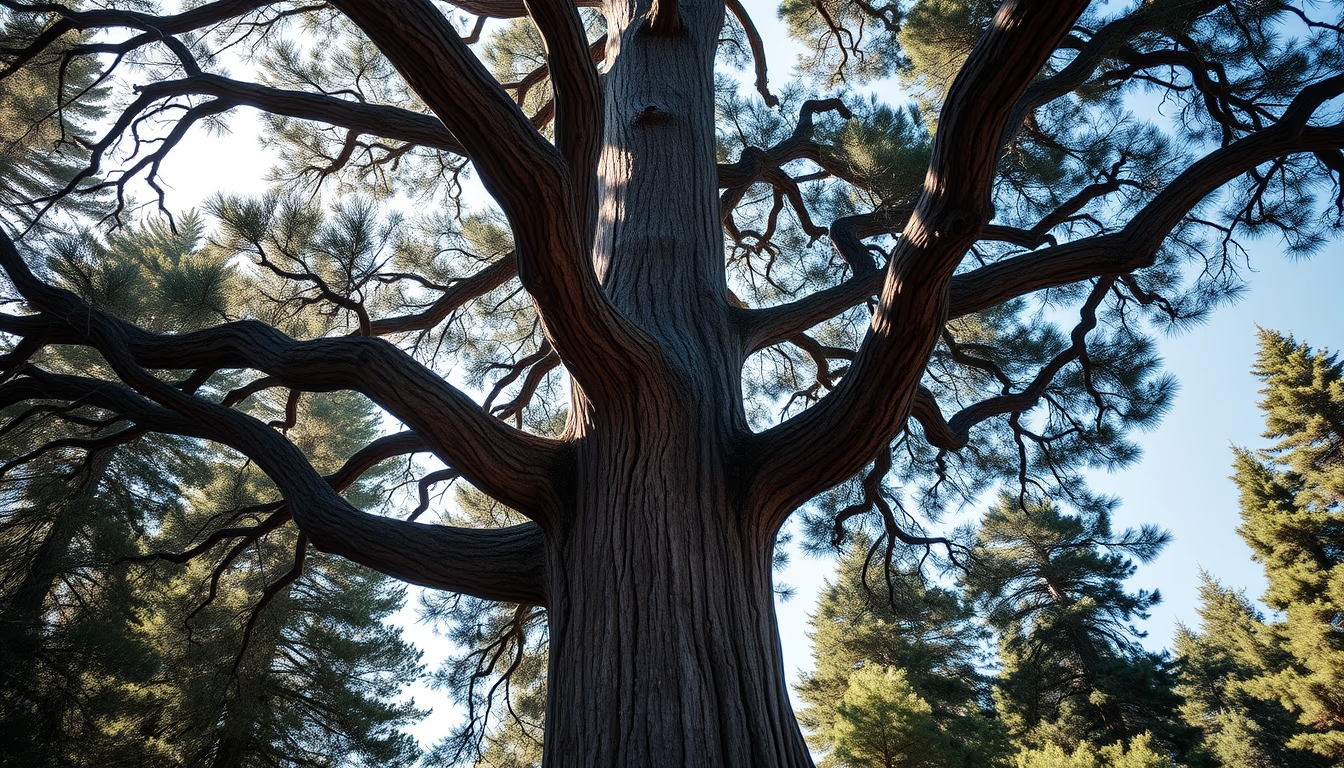
Giant sequoias are the most massive trees on Earth, native to California's Sierra Nevada and known for their millennial longevity.
About this subject
The giant sequoia (Sequoiadendron giganteum) is a conifer of the Cupressaceae family, endemic to a roughly 420 km stretch on the western slope of California's Sierra Nevada, United States. These trees can reach over 90 meters in height and diameters of up to 11 meters at the base, with volumes exceeding 1,400 cubic meters. The specimen known as General Sherman in Sequoia National Park is the largest living organism by volume on Earth, with estimated ages between 2,200 and 2,700 years.
Unlike coast redwoods (Sequoia sempervirens), giant sequoias occur at elevations between 1,400 and 2,400 meters, in well-drained granitic soils and a Mediterranean climate with winter snow. They depend on natural fires to germinate: seeds are released by serotinous cones, and heat opens the cones and prepares mineral soil. Controlled burns by Native peoples for millennia helped maintain these ecosystems; total fire suppression in the 20th century hampered recruitment of new trees.
The wood of the giant sequoia is resistant to rot and fire but has low mechanical strength, which discouraged intensive logging, though limited exploitation occurred in the 19th century. Today, nearly all giant sequoias are protected in national parks and monuments such as Sequoia-Kings Canyon, Yosemite, and Mariposa Grove. The species is listed as Endangered by the IUCN due to climate change, with reduced snowpack, increased severe droughts, and more intense wildfires. In 2020 and 2021, wildfires killed between 13% and 19% of all mature giant sequoias.
The giant sequoia is not the tallest tree (coast redwoods exceed 110 meters), nor the oldest (bristlecone pines reach 5,000 years), but it is the most massive. Its trunk can contain up to 2,000 tons of biomass. The largest specimens have names: General Grant (second largest), President, and Lincoln. The fibrous, spongy bark, up to 60 cm thick, protects against fire and insects. Leaves are scale-like, and cones take two years to mature.
Frequently Asked Questions
What is the difference between a giant sequoia and a coast redwood?
The giant sequoia (Sequoiadendron giganteum) is more massive and grows at high elevations in the Sierra Nevada, while the coast redwood (Sequoia sempervirens) is taller (over 110 m) and inhabits the California coast. Giant sequoias have thicker bark and fire-dependent cones for seed release.
Why is fire important for giant sequoias?
Fire heat opens serotinous cones and exposes mineral soil, enabling seed germination. Fire also reduces competition from other plants and recycles nutrients. Without natural or controlled fire, giant sequoias do not reproduce effectively.
Where can I see giant sequoias outside California?
Giant sequoias are endemic to California and rarely grow well elsewhere. Some botanical gardens and parks in temperate regions may have small specimens, but they do not reach the massive size found in their native Sierra Nevada habitat.
Direct URL
https://pub-c7d6a6ea828543ac903a74a341ccb2e1.r2.dev/imagens/sequoia-giant-tree-magazine-editorial-p11.avifHow to credit
Include a visible link back to UtilizAí. Copy one of the snippets below:
<a href="https://xn--utiliza-eza.com/en/midia/imagens/sequoia-giant-tree-magazine-editorial-p11">Sequoia giant tree</a> by <a href="https://xn--utiliza-eza.com">UtilizAí</a>, licensed under <a href="https://creativecommons.org/licenses/by/4.0/">CC BY 4.0</a>.
[Sequoia giant tree](https://xn--utiliza-eza.com/en/midia/imagens/sequoia-giant-tree-magazine-editorial-p11) by [UtilizAí](https://xn--utiliza-eza.com), CC BY 4.0
License: CC-BY-4.0