Kilimanjaro tanzania snow
1344×768 · AVIF · CC BY 4.0
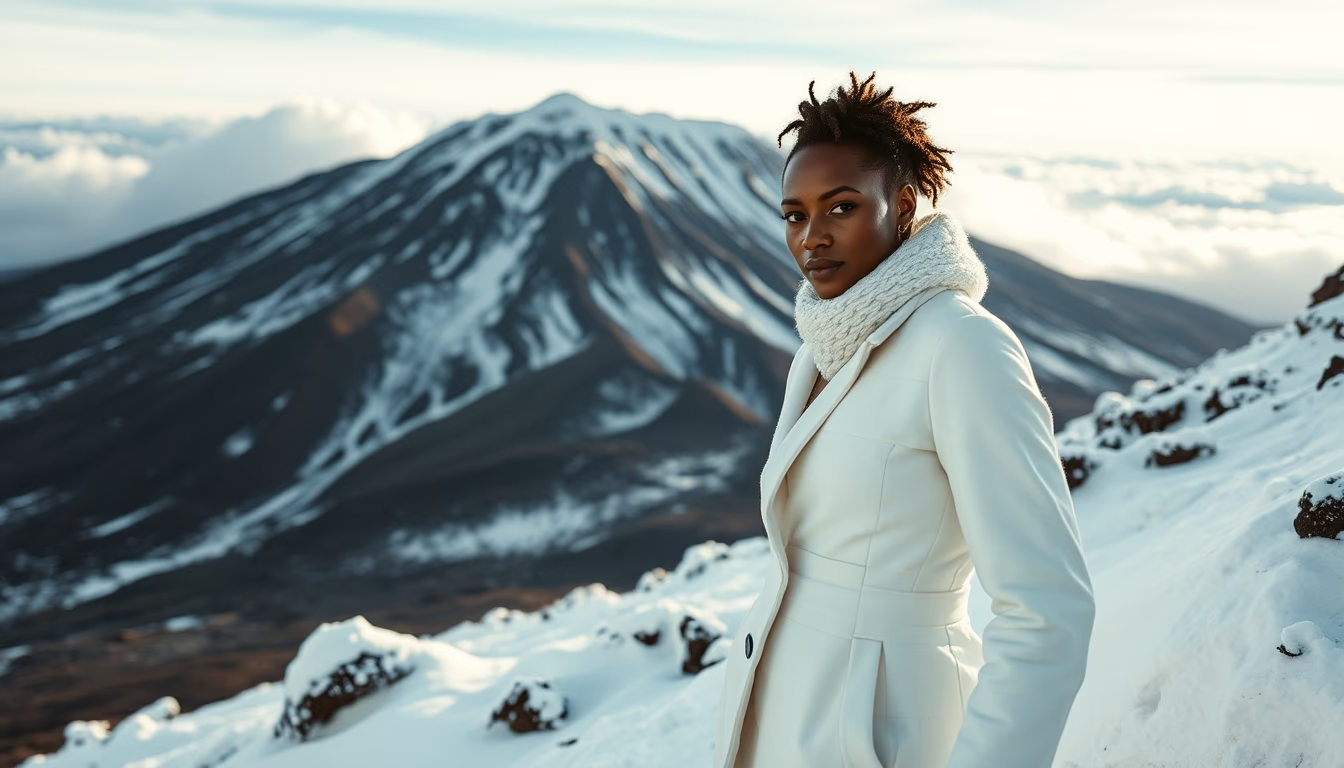
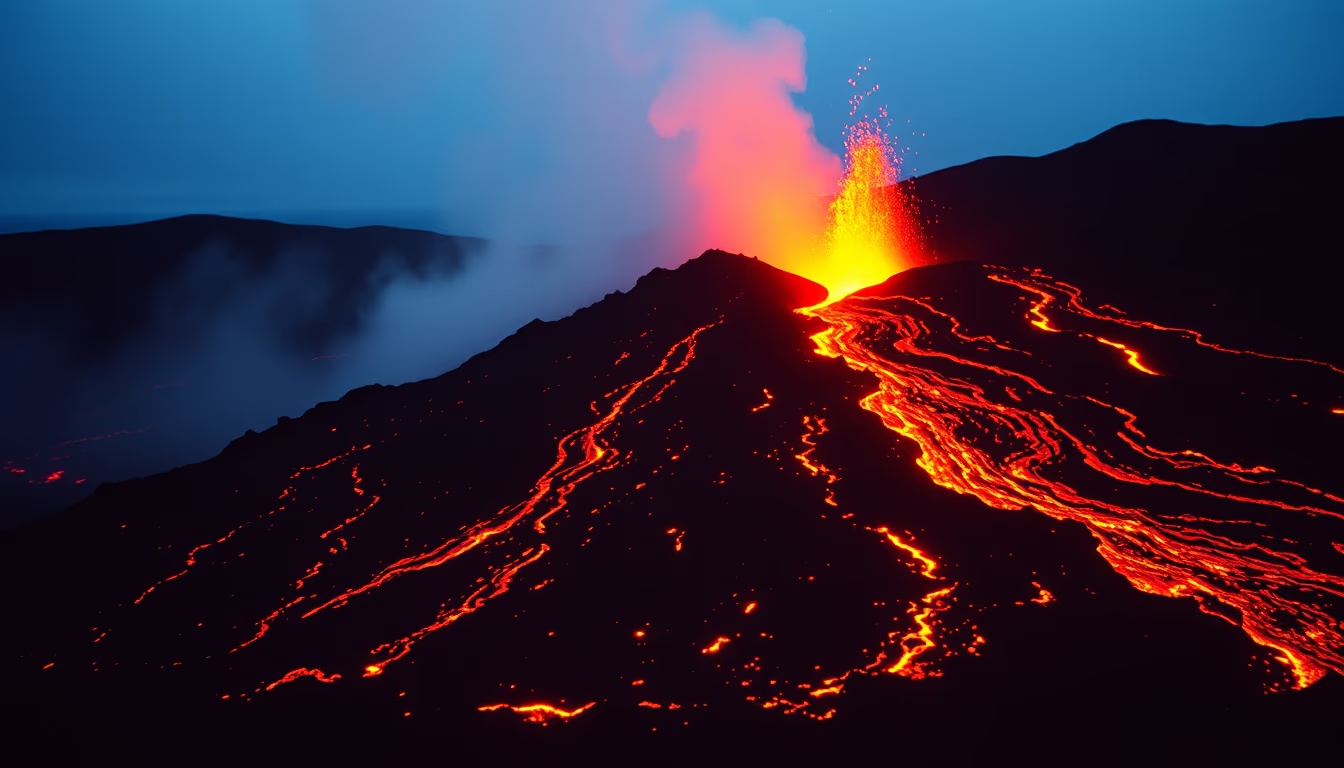
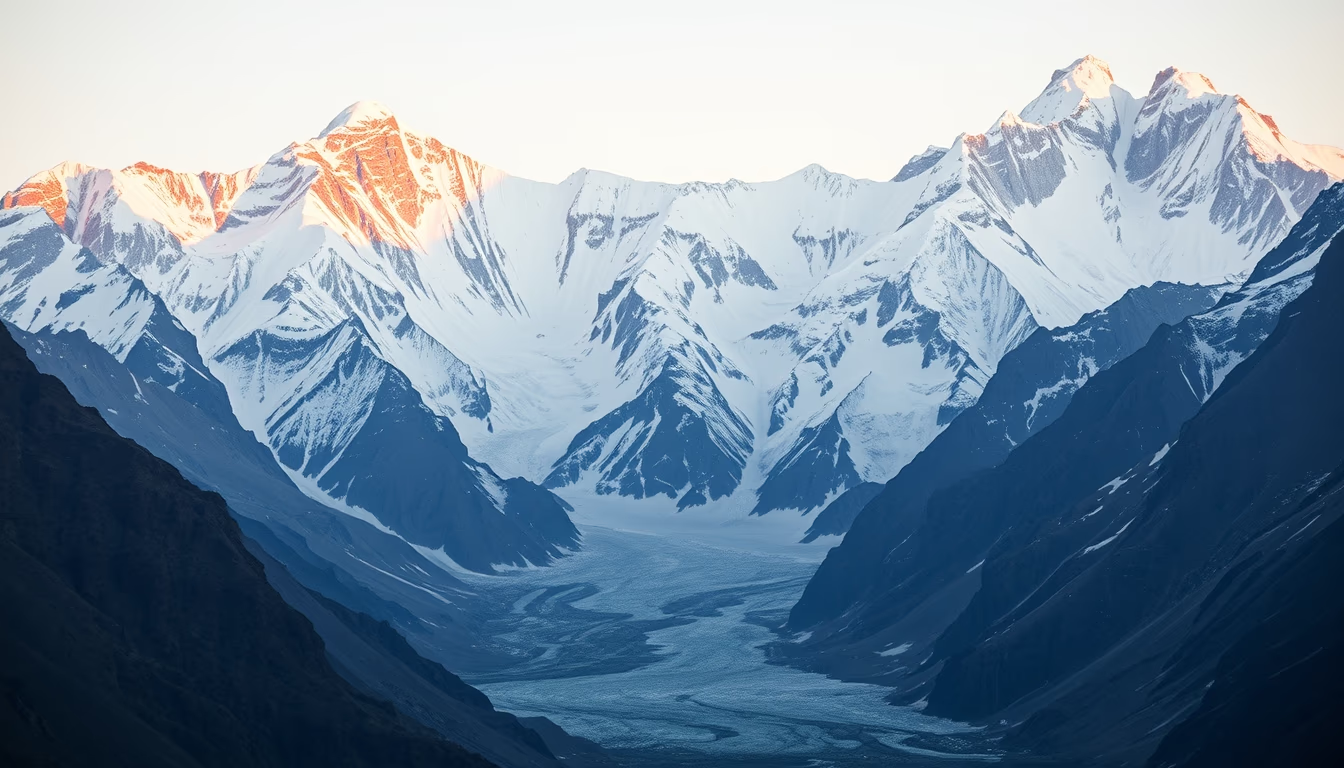
Mount Kilimanjaro in Tanzania is Africa's highest peak, hosting equatorial glaciers that are rapidly retreating due to climate change.
About this subject
Mount Kilimanjaro, located in northeastern Tanzania, is a dormant stratovolcano with three volcanic cones: Kibo, Mawenzi, and Shira. At 5,895 meters, it is the highest point in Africa and one of the world's largest volcanoes. Its snow and glacier cover, despite being near the equator, result from high altitude and specific climatic patterns. Kilimanjaro's glaciers, such as the Furtwängler Glacier and the Rebmann Glacier, have been shrinking dramatically since the 19th century. Studies indicate that if current global warming trends continue, most of the permanent ice may disappear by 2050. This retreat is not only a symbol of climate change but also affects local water supplies and tourism in the region. Kilimanjaro National Park, a UNESCO World Heritage site, protects the unique biodiversity of its slopes, which include zones of rainforest, heathland, and alpine desert. The snow capping Kibo Peak forms through precipitation and sublimation, maintained by low nighttime temperatures. The area around the mountain is inhabited by the Chaga and Maasai peoples, who have used the region's natural resources for centuries. Kilimanjaro is also a popular destination for climbers, with routes such as Marangu and Machame attracting thousands of visitors annually. However, the melting of its glaciers has been documented by photographers and scientists, serving as a global warning about the vulnerability of high-altitude ecosystems.
Frequently Asked Questions
Why does Mount Kilimanjaro have snow if it is on the equator?
Kilimanjaro has snow because of its high altitude (5,895 m), where temperatures are low enough to maintain permanent ice and snow despite its equatorial location.
Are the glaciers on Kilimanjaro disappearing?
Yes, the glaciers on Kilimanjaro have shrunk by more than 80% since the early 20th century. Scientists predict they could disappear entirely by 2050 if greenhouse gas emissions are not reduced.
What is the best time to climb Mount Kilimanjaro?
The best times are during the dry seasons: from June to October and from December to March. These periods offer more stable weather conditions and less chance of precipitation.
Direct URL
https://pub-c7d6a6ea828543ac903a74a341ccb2e1.r2.dev/imagens/kilimanjaro-tanzania-snow-high-fashion-editorial-p11.avifHow to credit
Include a visible link back to UtilizAí. Copy one of the snippets below:
<a href="https://xn--utiliza-eza.com/en/midia/imagens/kilimanjaro-tanzania-snow-high-fashion-editorial-p11">Kilimanjaro tanzania snow</a> by <a href="https://xn--utiliza-eza.com">UtilizAí</a>, licensed under <a href="https://creativecommons.org/licenses/by/4.0/">CC BY 4.0</a>.
[Kilimanjaro tanzania snow](https://xn--utiliza-eza.com/en/midia/imagens/kilimanjaro-tanzania-snow-high-fashion-editorial-p11) by [UtilizAí](https://xn--utiliza-eza.com), CC BY 4.0
License: CC-BY-4.0