Mosaic tile detail
1344×768 · AVIF · CC BY 4.0
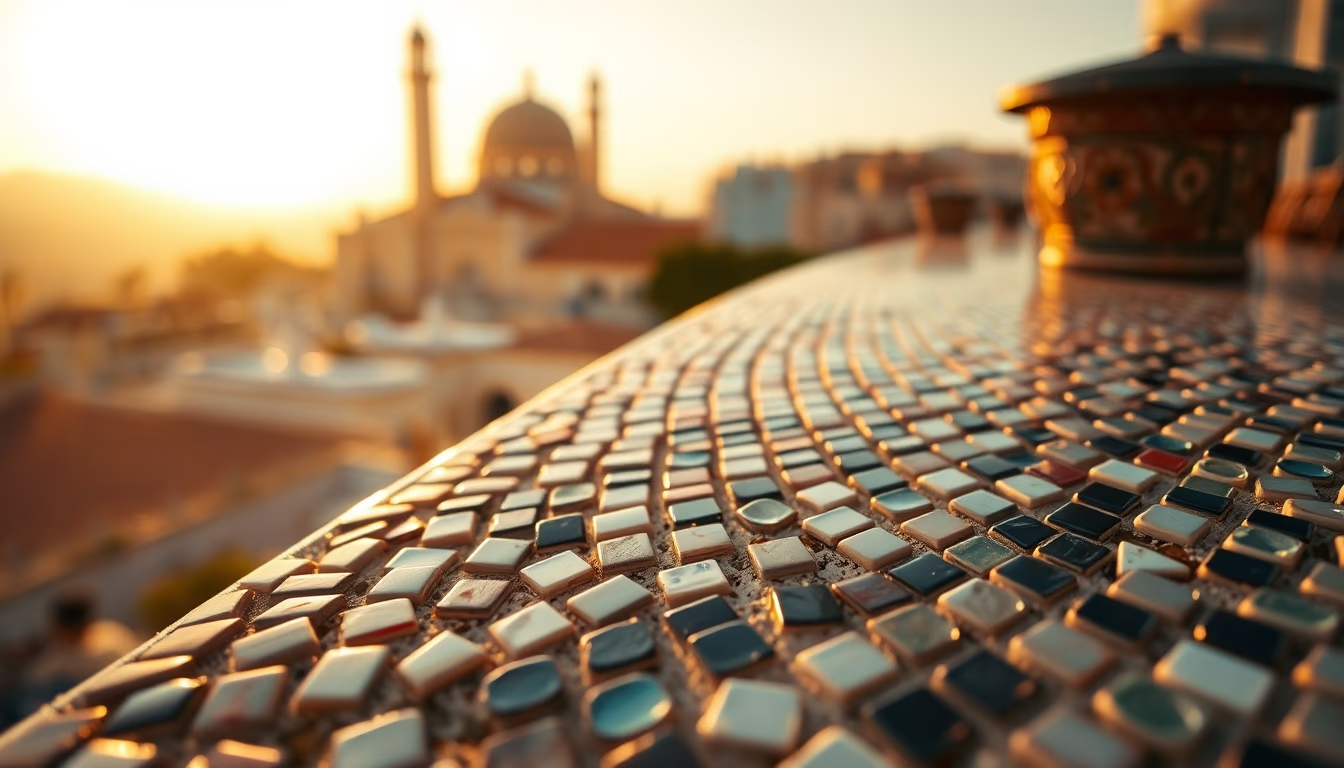
Mosaic tile details reveal centuries of art and technique, from the Iberian Peninsula to colonial Brazil.
About this subject
Mosaic tiles are a decorative art form that combines fragments of ceramic, glass, or stone to create patterns and images. This ancient technique, originating in Mesopotamia over 4,000 years ago, was refined by Greeks and Romans but gained its own identity in the Iberian Peninsula under Moorish rule. The Arabs introduced the azulejo (from Arabic al-zulayj, 'small polished stone') to Europe, and from the 15th century onward, Portugal and Spain became production centers, exporting the technique to their colonies.
In Brazil, azulejos arrived with Portuguese colonizers in the 16th century and were widely used on church facades, convents, and mansions. Cities such as São Luís do Maranhão, Olinda, and Salvador preserve Baroque and Rococo examples, many blending Islamic geometric patterns with European figurative scenes. The mosaic tile technique demands precision: each piece is hand-painted, glazed, and fired in a kiln at high temperatures, ensuring durability and vibrant colors.
Beyond historical value, azulejos hold cultural significance as intangible heritage. In Portugal, tile production is a living tradition, with factories like Viúva Lamego (founded in 1849) exporting worldwide. In Brazil, the Museu da Casa Brasileira and the Museu do Azulejo (in São Paulo) preserve collections documenting the art's aesthetic and technical evolution. Today, contemporary artists reinterpret mosaic tiles in urban installations, such as the panels in São Paulo's Metro or Athos Bulcão's works in Brasília.
Frequently Asked Questions
What are mosaic tiles?
Mosaic tiles are compositions made of small glazed ceramic pieces, called azulejos, that form geometric or figurative patterns. This decorative technique is common in Portugal, Spain, and countries like Brazil.
What is the origin of azulejos?
Azulejos originate from Islamic art, introduced by the Moors to the Iberian Peninsula. The word comes from Arabic al-zulayj, meaning 'small polished stone'.
How are azulejos produced?
Each tile is hand-painted with colored enamels and then fired in a kiln at high temperatures (around 1000°C). The technique requires precision to ensure perfect colors and fit.
Direct URL
https://pub-c7d6a6ea828543ac903a74a341ccb2e1.r2.dev/imagens/mosaic-tile-detail-travel-photography-p2.avifHow to credit
Include a visible link back to UtilizAí. Copy one of the snippets below:
<a href="https://xn--utiliza-eza.com/en/midia/imagens/mosaic-tile-detail-travel-photography-p2">Mosaic tile detail</a> by <a href="https://xn--utiliza-eza.com">UtilizAí</a>, licensed under <a href="https://creativecommons.org/licenses/by/4.0/">CC BY 4.0</a>.
[Mosaic tile detail](https://xn--utiliza-eza.com/en/midia/imagens/mosaic-tile-detail-travel-photography-p2) by [UtilizAí](https://xn--utiliza-eza.com), CC BY 4.0
License: CC-BY-4.0