Metal corrosion patina
1344×768 · AVIF · CC BY 4.0
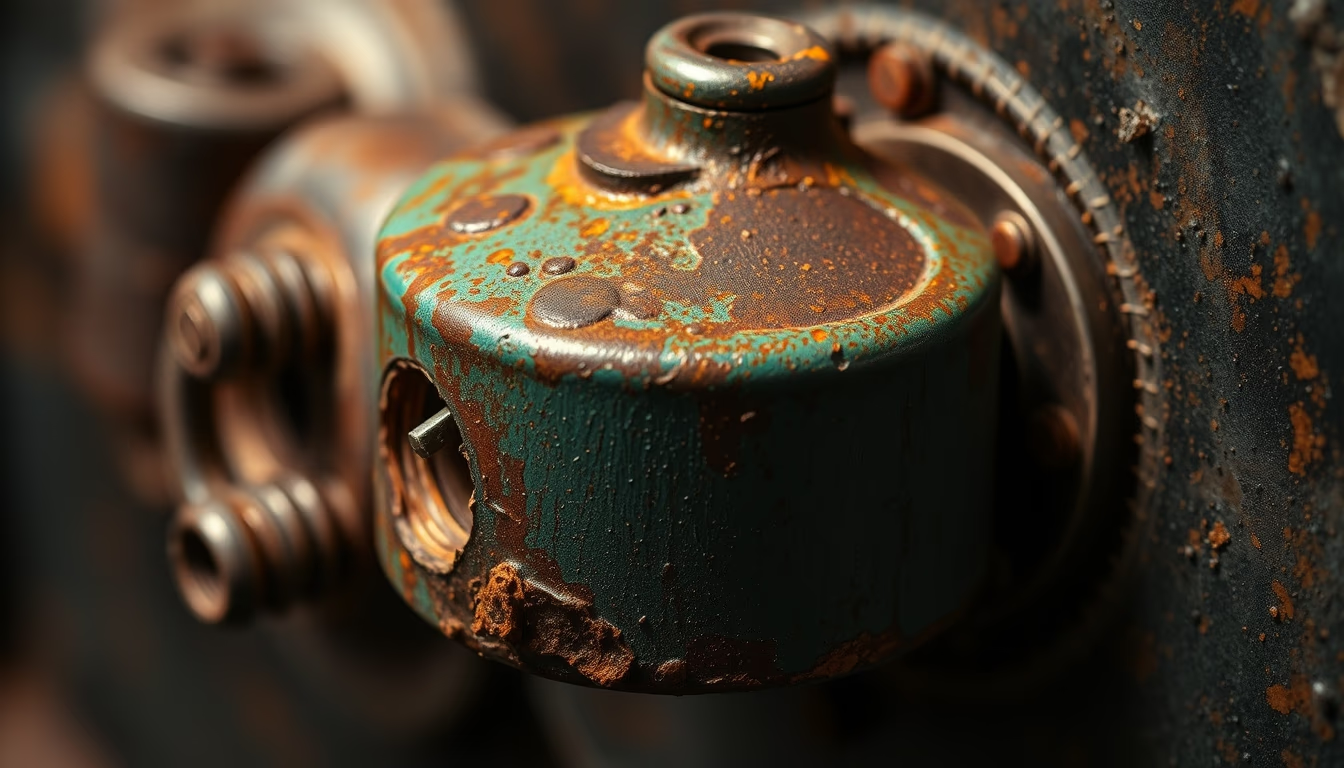
Discover how metal corrosion patina turns degraded surfaces into abstract art, revealing the hidden beauty of oxidation.
About this subject
Metal corrosion patina is a surface layer that forms naturally on metals like copper, bronze, and iron when exposed to oxygen, moisture, and other environmental agents. More than simple deterioration, patina is a complex chemical process that can take years or decades to develop, resulting in unique textures and colors, from the blue-green of oxidized copper (as seen in historic statues and rooftops) to the earthy orange tones of rusted iron.
In art and architecture, patina is often cherished and preserved as a mark of authenticity and history. The most iconic example is the Statue of Liberty, whose copper coating developed a blue-green patina that protects it from further corrosion. Sculptors and artisans also induce patinas artificially to create decorative effects, using acidic solutions or salts to accelerate the process. In fine art photography, macro captures of these surfaces reveal microscopic details that resemble abstract landscapes, elevating imperfection into a visual statement.
Interestingly, patina is not just aesthetic: it acts as a protective barrier that prevents further corrosion of the underlying metal. For bronze, the patina (mostly copper carbonate) is so stable that ancient masterpieces like the Riace bronzes have survived millennia thanks to this layer. For iron, rust (iron oxide) is porous and accelerates decay, but certain stable rust patinas, such as those on Corten steel, are intentionally used in modern architectural facades.
For fine art photographers, corrosion patina offers an infinite field of textural exploration. Each stain, crystallization, or bubble tells a story of exposure to time, wind, and rain. Raking light in macro reveals reliefs and colors that go unnoticed by the naked eye, transforming what might be considered scrap into a gallery.
Frequently Asked Questions
What causes metal corrosion patina?
Patina is caused by the oxidation of metal in contact with oxygen, water, and pollutants. For copper, it forms copper carbonate (green); for iron, iron oxide (rust). The process is accelerated by humid or salty environments.
Does patina permanently damage the metal?
It depends on the metal. On copper and bronze, patina acts as a protective layer, stabilizing the surface. On iron, rust is porous and can cause ongoing degradation if untreated, but certain weathering steels (Corten) are designed to form a stable patina.
Why do fine art photographers photograph corrosion patina?
Because patina creates abstract patterns, textures, and unique colors in macro photography. Each surface tells a story of exposure over time, and photography reveals details invisible to the naked eye, turning corrosion into art.
Direct URL
https://pub-c7d6a6ea828543ac903a74a341ccb2e1.r2.dev/imagens/metal-corrosion-patina-fine-art-photography-p4.avifHow to credit
Include a visible link back to UtilizAí. Copy one of the snippets below:
<a href="https://xn--utiliza-eza.com/en/midia/imagens/metal-corrosion-patina-fine-art-photography-p4">Metal corrosion patina</a> by <a href="https://xn--utiliza-eza.com">UtilizAí</a>, licensed under <a href="https://creativecommons.org/licenses/by/4.0/">CC BY 4.0</a>.
[Metal corrosion patina](https://xn--utiliza-eza.com/en/midia/imagens/metal-corrosion-patina-fine-art-photography-p4) by [UtilizAí](https://xn--utiliza-eza.com), CC BY 4.0
License: CC-BY-4.0