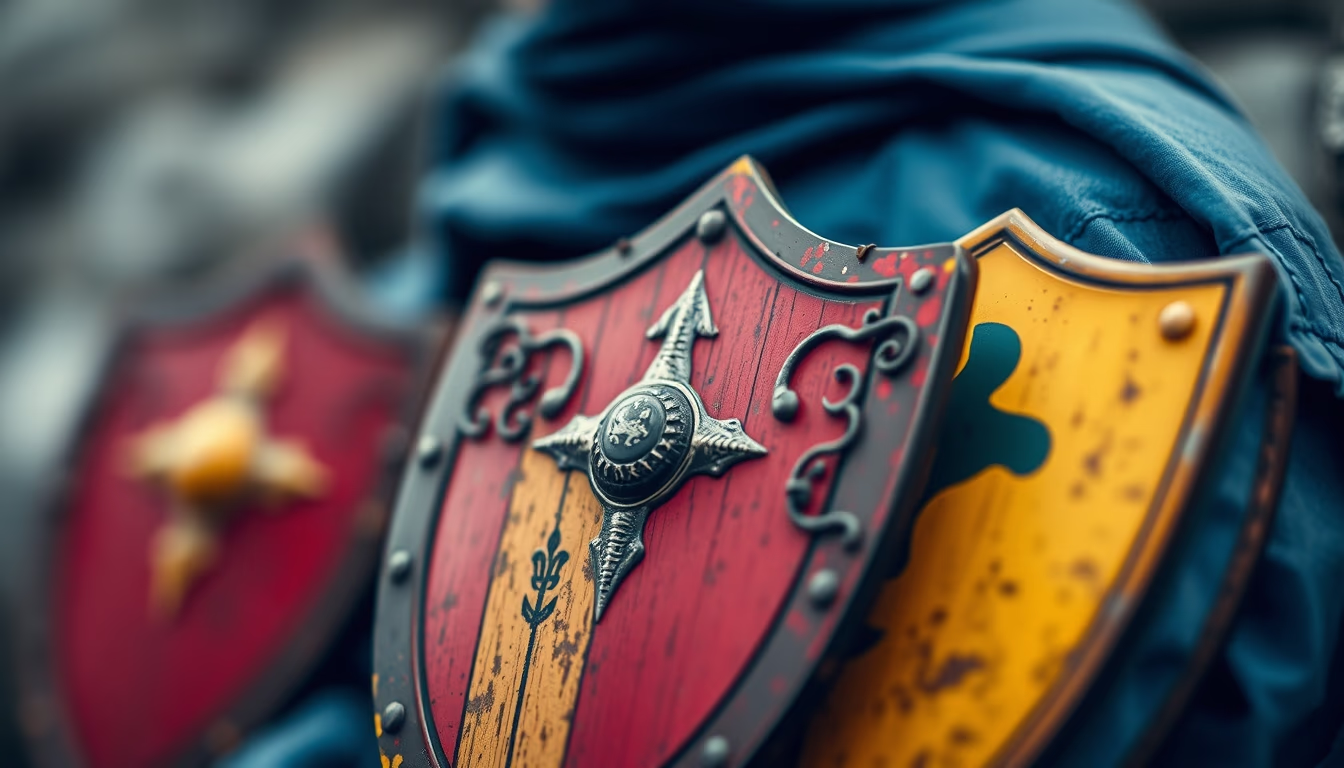
Medieval shield colors
1344×768 · AVIF · CC BY 4.0
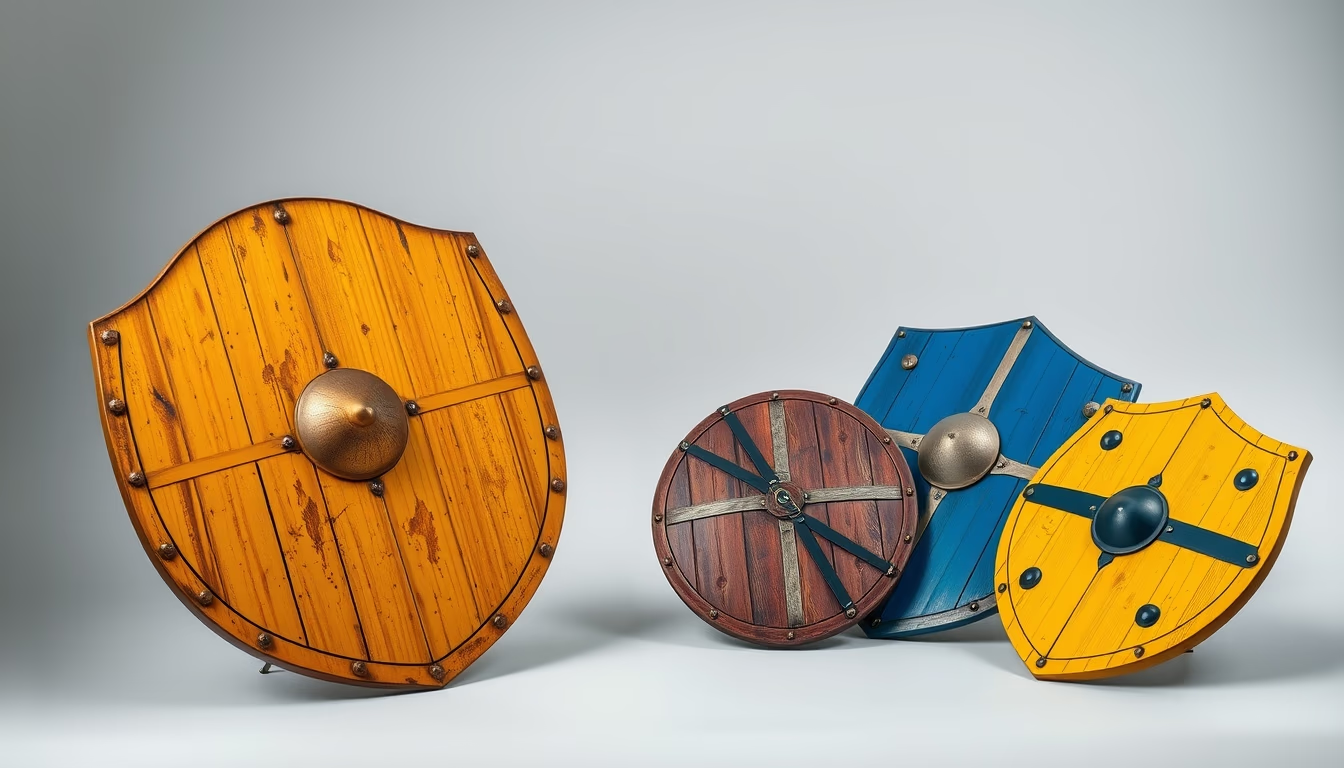
Medieval shield colors carried specific heraldic meanings, such as red for courage and blue for loyalty, forming an essential visual code in the Middle Ages.
About this subject
In the Middle Ages, the colors on shields were not merely decorative but part of a complex heraldic system that identified knights, noble families, and kingdoms during battles and tournaments. Heraldry emerged in the 12th century when closed helmets made it difficult to recognize combatants, making shield colors and symbols essential for distinguishing friends from foes.
Each color, called a tincture, had a specific meaning. Red (gules) represented courage and military valor, blue (azure) symbolized loyalty and truth, green (vert) was associated with hope and joy, black (sable) indicated wisdom and mourning, purple (purpure) denoted royalty and sovereignty, and gold (or) and silver (argent) represented generosity and peace, respectively. These colors were applied onto wooden or metal shields, often combined with geometric figures or animals.
Shields were personalized according to family lineage, and heraldic rules prohibited placing color on color (for instance, blue on red) to ensure contrast and visibility. The heraldic tradition spread throughout Europe, influencing flags, coats of arms, and even modern logos. Even after the military use of shields declined, the study of heraldic colors and symbols remains an important area of medieval history, revealing social hierarchies and political alliances of the time.
Frequently Asked Questions
What is the meaning of the color red on medieval shields?
The color red, called gules in heraldry, symbolized courage, military valor, and a desire for conquest. It was often used by knights who wanted to demonstrate bravery in battle.
Why could some colors not be combined on shields?
Heraldic rules prohibited placing color on color (such as blue on red) to ensure contrast and visibility from a distance. The basic rule was that metals (gold and silver) could be combined with colors, but colors could not be placed on other colors.
How did shield colors help identify knights?
Since helmets covered the face, the colors and symbols on shields allowed allies and enemies to quickly recognize which lineage or kingdom a knight belonged to, preventing friendly fire and aiding military strategy.
Direct URL
https://pub-c7d6a6ea828543ac903a74a341ccb2e1.r2.dev/imagens/medieval-shield-colors-studio-still-life-p7.avifHow to credit
Include a visible link back to UtilizAí. Copy one of the snippets below:
<a href="https://xn--utiliza-eza.com/en/midia/imagens/medieval-shield-colors-studio-still-life-p7">Medieval shield colors</a> by <a href="https://xn--utiliza-eza.com">UtilizAí</a>, licensed under <a href="https://creativecommons.org/licenses/by/4.0/">CC BY 4.0</a>.
[Medieval shield colors](https://xn--utiliza-eza.com/en/midia/imagens/medieval-shield-colors-studio-still-life-p7) by [UtilizAí](https://xn--utiliza-eza.com), CC BY 4.0
License: CC-BY-4.0