Mechanical clock gears
1344×768 · AVIF · CC BY 4.0
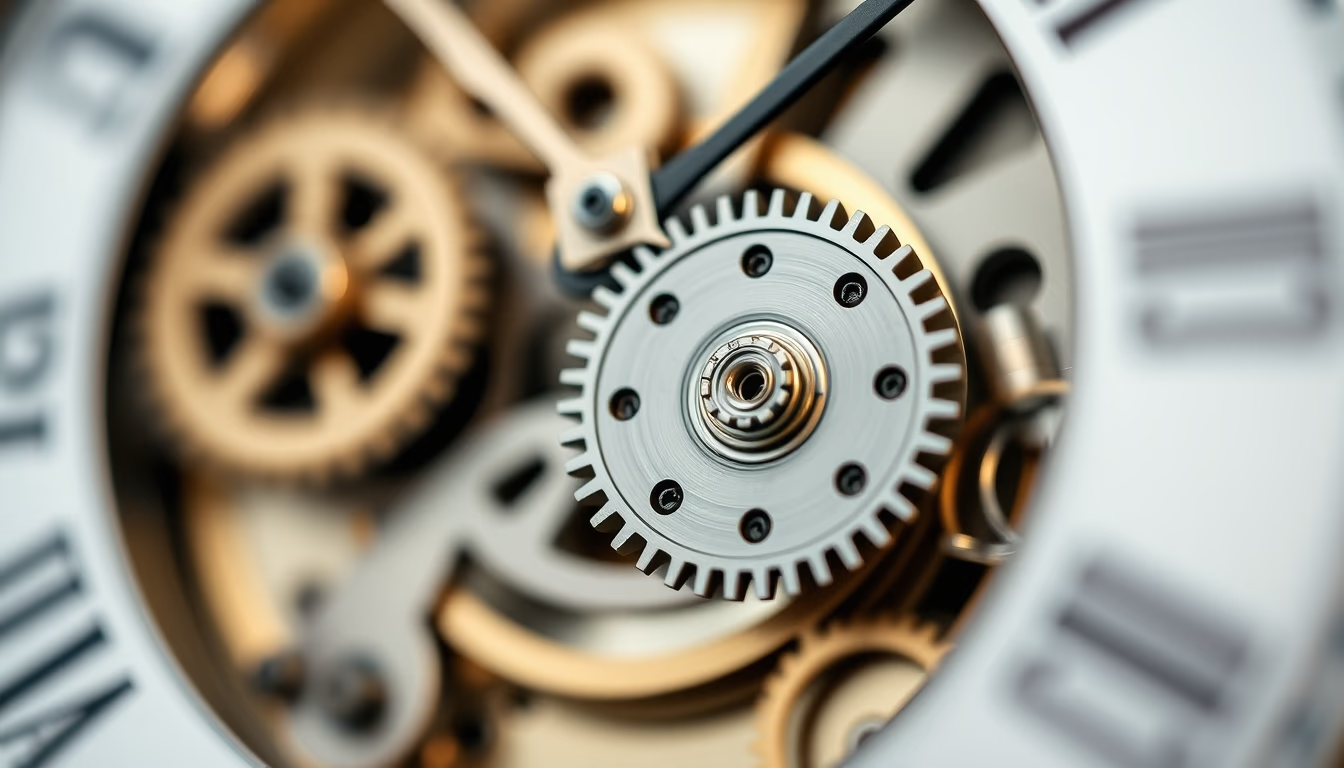
Mechanical clock gears are essential components that convert spring energy into precise pointer movement.
About this subject
Mechanical clock gears form a transmission system that reduces the speed of the mainspring to move the hands. Invented around the 13th century in Europe, early gears were made of wrought iron and used the verge escapement to control the rhythm. The basic mechanism consists of a series of toothed wheels, each with a specific number of teeth that determine gear ratios. For example, the minute wheel often has 60 teeth, ensuring the second hand completes one revolution in 60 seconds.
The evolution of gears was crucial for clock accuracy. In the 17th century, Christiaan Huygens introduced the pendulum and anchor escapement, requiring finer and more regular gears. In the 18th century, John Harrison created the marine chronometer using special gears to compensate for temperature variations. Iconic clocks like Big Ben in London use steel and brass gears, designed to withstand decades of continuous operation.
Culturally, clock gears symbolize the Industrial Revolution and the standardization of time. Before mechanical clocks, time was measured by the sun or hourglasses. The spread of tower clocks in European cities allowed coordination of work hours, transportation, and communication. Today, high-precision mechanical clocks, such as those used in Swiss watchmaking, continue to be produced with polished brass gears, synthetic rubies, and stainless steel.
Interestingly, manufacturing clock gears requires tolerances on the order of micrometers. Modern techniques like laser cutting and CNC milling allow creating teeth with an involute profile, reducing friction and wear. Despite digital clocks, mechanical gears remain appreciated by enthusiasts and collectors, often restored using traditional techniques.
Frequently Asked Questions
How do mechanical clock gears work?
They transmit and reduce the rotation from the mainspring to the hands. Each gear pair has a tooth ratio that determines speed: for example, a 60-tooth gear driving a 30-tooth gear doubles the speed.
What is the history of clock gears?
They appeared in 13th-century Europe, initially in tower clocks. Advancements like Huygens' pendulum (17th century) and Harrison's marine chronometer (18th century) demanded more precise gears, culminating in modern Swiss watchmaking.
What materials are used in clock gears?
Traditionally brass and steel. Today, nickel alloys, synthetic rubies (to reduce friction), and in luxury watches, gold or titanium. The choice depends on desired durability and accuracy.
Direct URL
https://pub-c7d6a6ea828543ac903a74a341ccb2e1.r2.dev/imagens/mechanical-clock-gears-tilt-shift-miniature-p8.avifHow to credit
Include a visible link back to UtilizAí. Copy one of the snippets below:
<a href="https://xn--utiliza-eza.com/en/midia/imagens/mechanical-clock-gears-tilt-shift-miniature-p8">Mechanical clock gears</a> by <a href="https://xn--utiliza-eza.com">UtilizAí</a>, licensed under <a href="https://creativecommons.org/licenses/by/4.0/">CC BY 4.0</a>.
[Mechanical clock gears](https://xn--utiliza-eza.com/en/midia/imagens/mechanical-clock-gears-tilt-shift-miniature-p8) by [UtilizAí](https://xn--utiliza-eza.com), CC BY 4.0
License: CC-BY-4.0