Mechanical clock gears
1344×768 · AVIF · CC BY 4.0
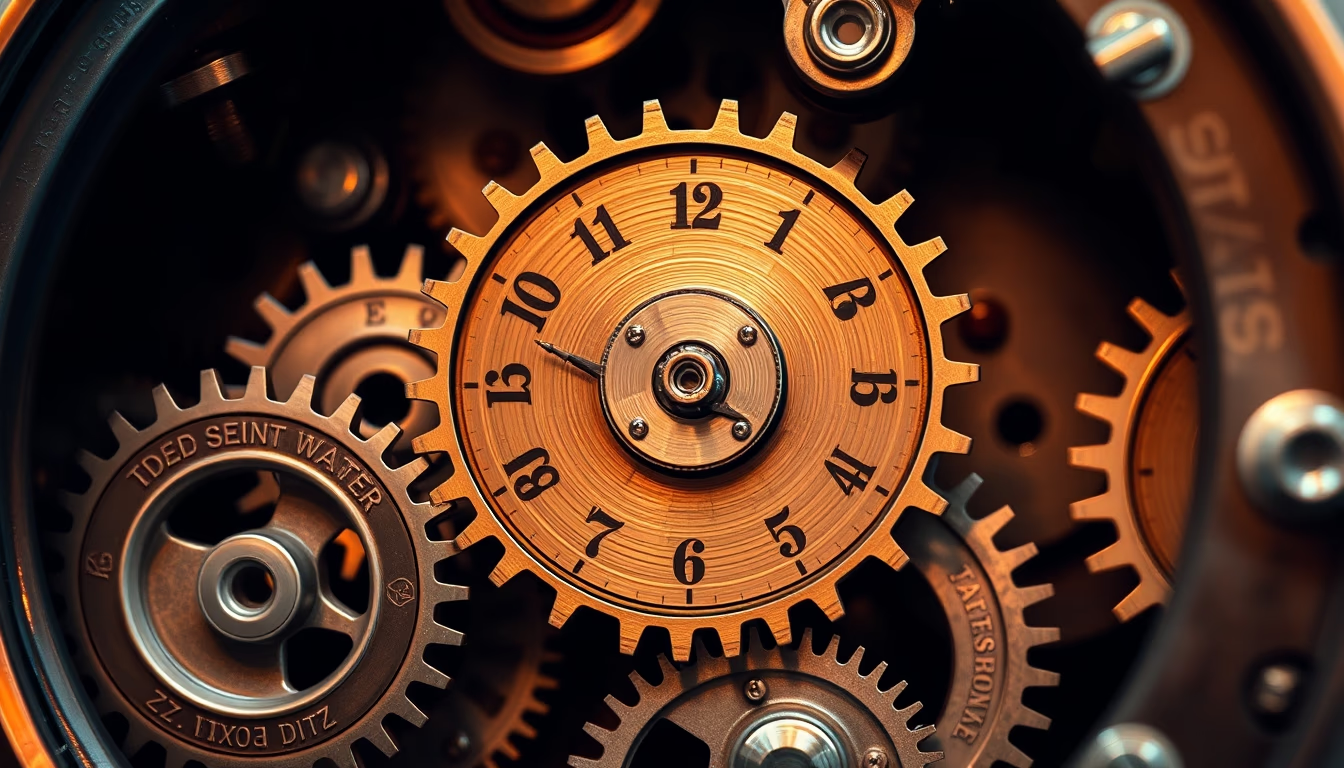
Mechanical clock gears combine precision and artistry, driving human timekeeping for centuries with intricate mechanisms.
About this subject
Mechanical clock gears are the essential components that transmit and regulate energy to keep time. Unlike digital or quartz clocks, mechanical ones rely on a system of gears, springs, and escapement to divide continuous motion into measured intervals. The basic principle involves a mainspring storing energy, which is gradually released through a series of gears of different sizes, adjusting the speed so that the hands move correctly.
The history of clock gears dates back to the 14th century, with the first mechanical clocks appearing in church towers across Europe. The escapement mechanism, such as the anchor escapement invented by Robert Hooke in the 17th century, was crucial for accuracy. The complexity of these gears requires high-tolerance manufacturing, often in brass or steel, using techniques like milling and turning. In the pre-industrial era, artisan clockmakers would spend months on a single movement.
Each gear has a specific number of teeth, and the ratio between them determines the rate of time advancement. For example, a gear with 60 teeth connected to one with 30 teeth doubles the speed. Pendulum clocks further improved precision in the 17th century with Christiaan Huygens. Today, gears are used not only in wristwatches and wall clocks but also in marine chronometers and astronomical clocks, some such as the 15th-century Prague Orloj still functioning.
Interestingly, collectors and enthusiasts often restore antique gears, valuing brands like Patek Philippe and Omega. The aesthetic of exposed gears, with their polished teeth and axles, inspires steampunk design and kinetic art. Despite the rise of digital timepieces, the gear mechanism remains a symbol of engineering and horological tradition.
Frequently Asked Questions
How do mechanical clock gears work?
The mainspring stores energy, which is released through gears of different sizes. The gear ratio regulates speed, and the escapement controls release, ensuring accurate hand movement.
What is the difference between mechanical and quartz clocks?
Mechanical clocks use gears and springs, powered by manual or automatic winding. Quartz clocks use a quartz crystal and battery, being more accurate and cheaper, but less traditional.
Why are antique clock gears valuable?
They represent pre-industrial craftsmanship with high manual precision. Historic brands and rare mechanisms are collectible, sometimes worth thousands of dollars among enthusiasts.
Direct URL
https://pub-c7d6a6ea828543ac903a74a341ccb2e1.r2.dev/imagens/mechanical-clock-gears-lo-fi-disposable-camera-p3.avifHow to credit
Include a visible link back to UtilizAí. Copy one of the snippets below:
<a href="https://xn--utiliza-eza.com/en/midia/imagens/mechanical-clock-gears-lo-fi-disposable-camera-p3">Mechanical clock gears</a> by <a href="https://xn--utiliza-eza.com">UtilizAí</a>, licensed under <a href="https://creativecommons.org/licenses/by/4.0/">CC BY 4.0</a>.
[Mechanical clock gears](https://xn--utiliza-eza.com/en/midia/imagens/mechanical-clock-gears-lo-fi-disposable-camera-p3) by [UtilizAí](https://xn--utiliza-eza.com), CC BY 4.0
License: CC-BY-4.0