Mechanical clock gears
1344×768 · AVIF · CC BY 4.0
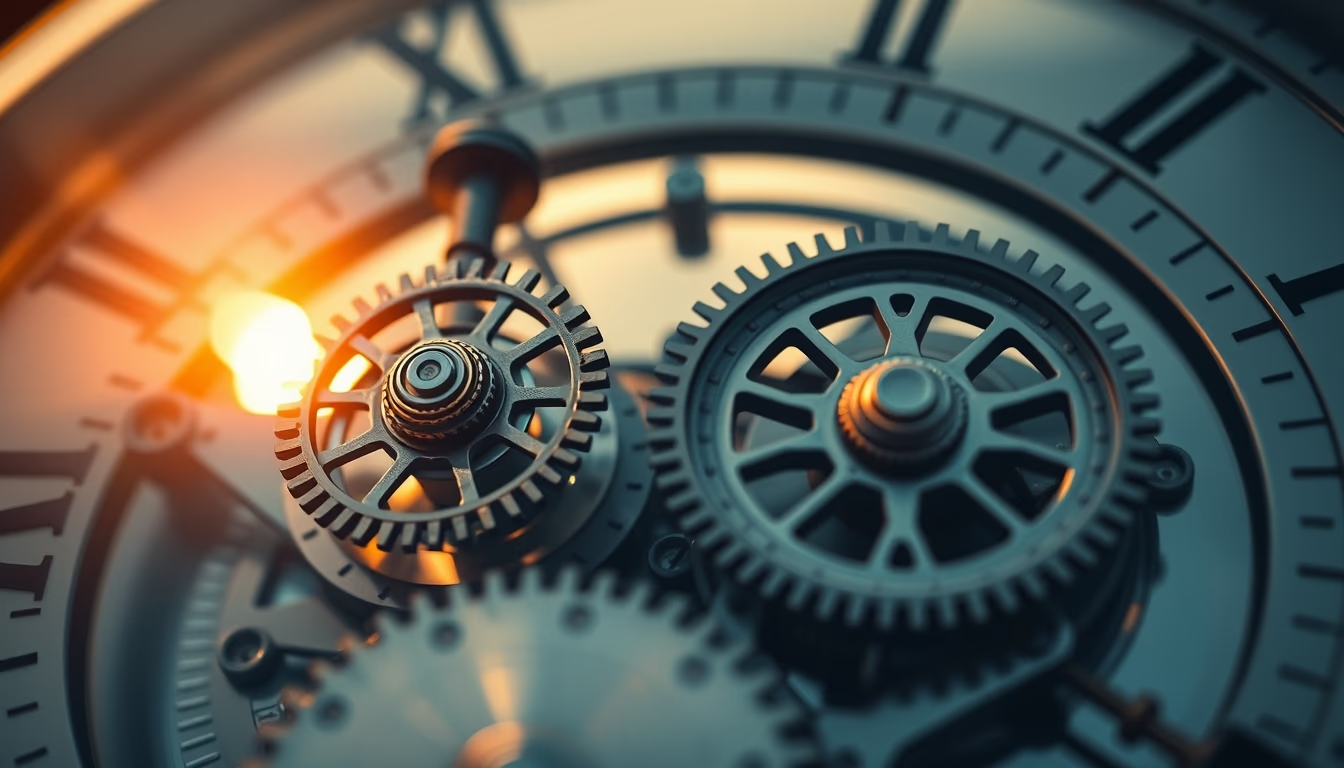
Mechanical clock gears are fundamental components that convert energy into precise motion, representing centuries of innovation in timekeeping.
About this subject
Mechanical clock gears, typically made from brass or steel, are responsible for transmitting and regulating the power generated by the mainspring or weight. Each toothed wheel has a specific number of teeth that, when meshed with others, determines the gear ratio. This system allows energy to be distributed in a controlled manner, moving the hands with precise accuracy. The first known mechanical clocks appeared in Europe in the 13th century, installed in church towers, with robust wrought iron gears.
The development of precision gearing was a milestone for the Industrial Revolution, enabling not only more accurate clocks but also machine tools and navigation devices. Clockmakers such as Christiaan Huygens, who introduced the pendulum in 1656, and John Harrison, who created marine chronometers, improved the accuracy of mechanisms. Miniaturization of gears in the 19th century made pocket watches and later wristwatches possible, transforming timekeeping into something personal and portable.
Technically, a typical gear train includes the mainspring barrel, center wheel, third wheel, fourth wheel, and escape wheel. The escape wheel interacts with the pallet fork to release energy in discrete increments, producing the characteristic ticking sound. Lubrication with specialized oils is essential to reduce friction and wear, and material choice directly affects durability: brass for low-load gears and hardened steel for high-stress components.
Interestingly, many antique clocks feature gears made of gilt brass or blued steel, results of heat treatment and aesthetic finishes. Maintaining a mechanical clock requires complete disassembly, cleaning, and re lubrication every few years by a skilled horologist. The rhythmic tick tock is not just a byproduct but the result of the escapement controlling energy release, and for many enthusiasts, this sound is an integral part of owning a mechanical clock.
Frequently Asked Questions
How do mechanical clock gears work?
The gears form a gear train that reduces the high speed of the mainspring to slow, precise movements of the hands. The escape wheel, together with the pallet fork, releases energy in regular increments, producing the ticks.
What is the difference between brass and steel gears in antique clocks?
Brass gears were more common because they were easier to machine and less prone to corrosion, while hardened steel gears were used in high-stress components like escape wheels. The choice depended on cost and application.
Why do mechanical clocks require periodic maintenance?
Lubricating oil degrades over time and accumulates dust, increasing friction and wear. Servicing every 3 to 5 years ensures accuracy and prolongs the mechanism's life, requiring professional disassembly and cleaning.
Direct URL
https://pub-c7d6a6ea828543ac903a74a341ccb2e1.r2.dev/imagens/mechanical-clock-gears-cinematic-wide-shot-p10.avifHow to credit
Include a visible link back to UtilizAí. Copy one of the snippets below:
<a href="https://xn--utiliza-eza.com/en/midia/imagens/mechanical-clock-gears-cinematic-wide-shot-p10">Mechanical clock gears</a> by <a href="https://xn--utiliza-eza.com">UtilizAí</a>, licensed under <a href="https://creativecommons.org/licenses/by/4.0/">CC BY 4.0</a>.
[Mechanical clock gears](https://xn--utiliza-eza.com/en/midia/imagens/mechanical-clock-gears-cinematic-wide-shot-p10) by [UtilizAí](https://xn--utiliza-eza.com), CC BY 4.0
License: CC-BY-4.0