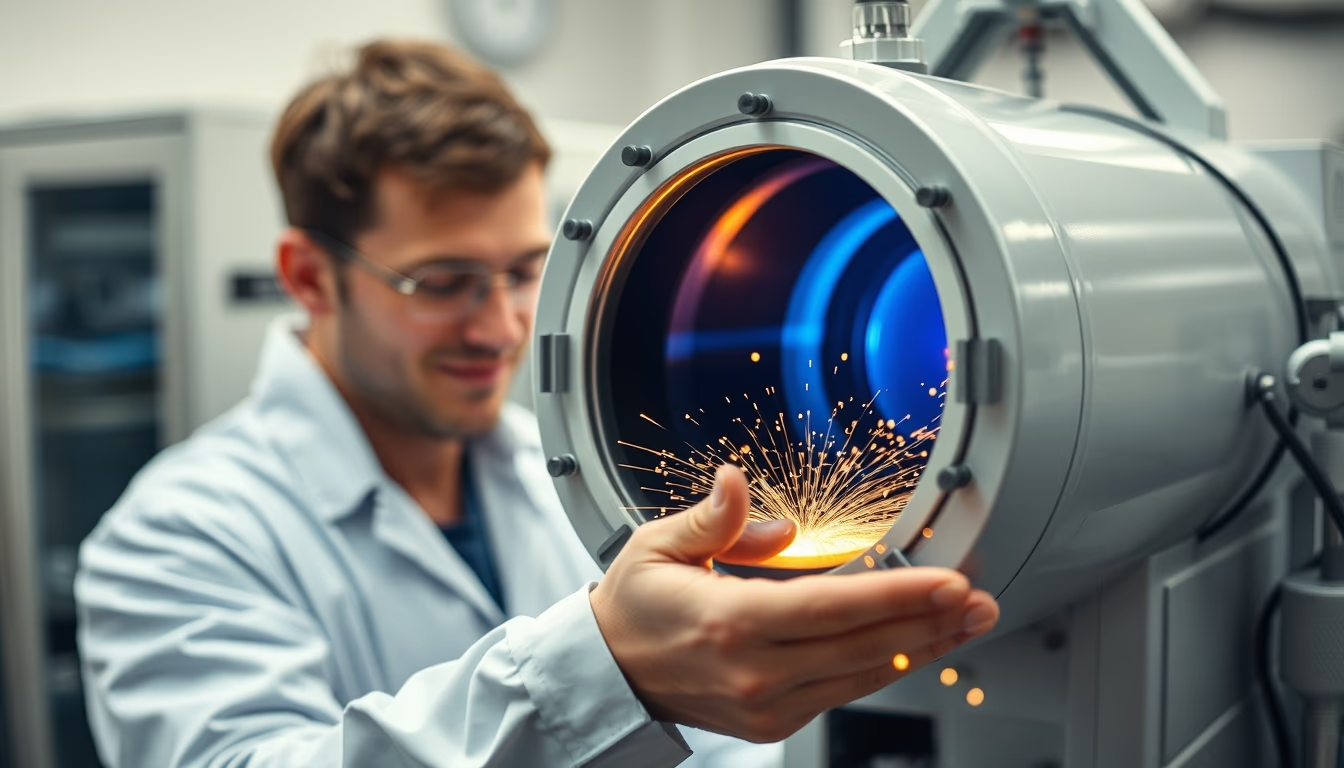
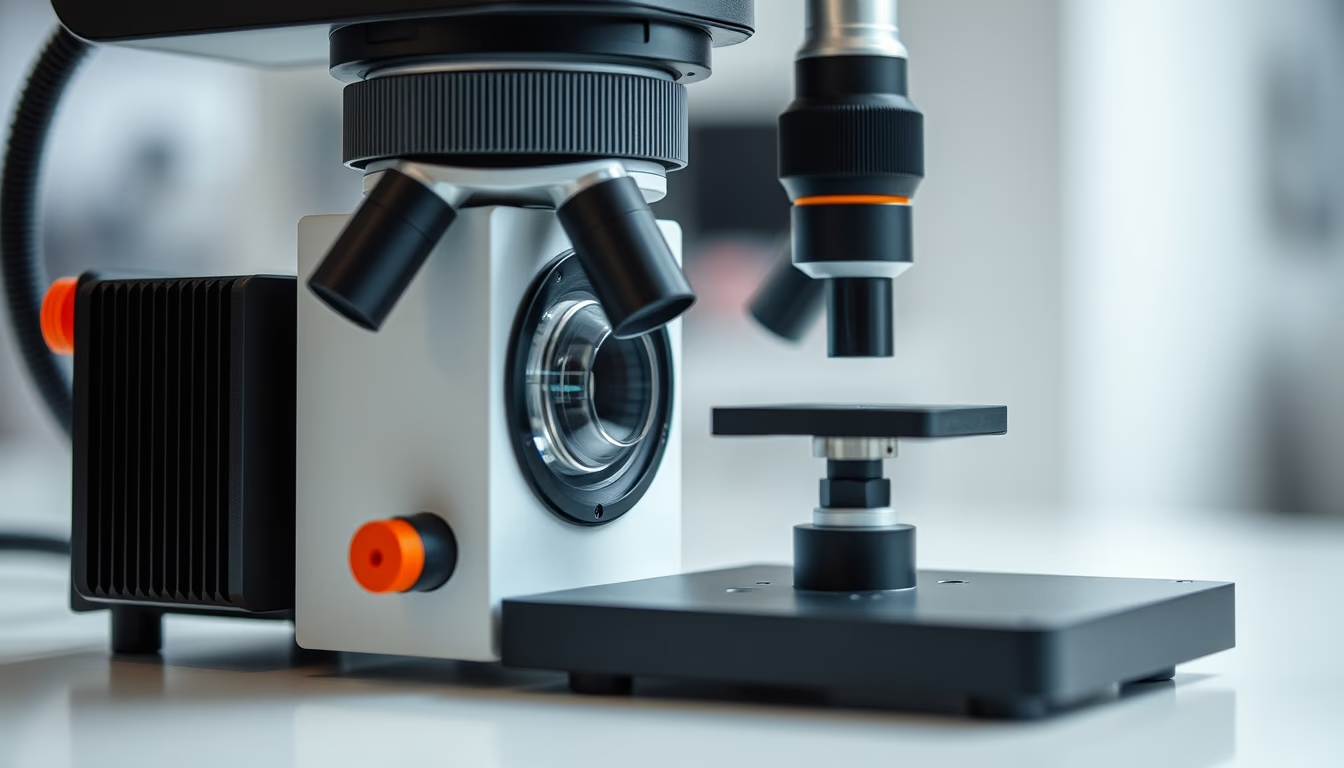
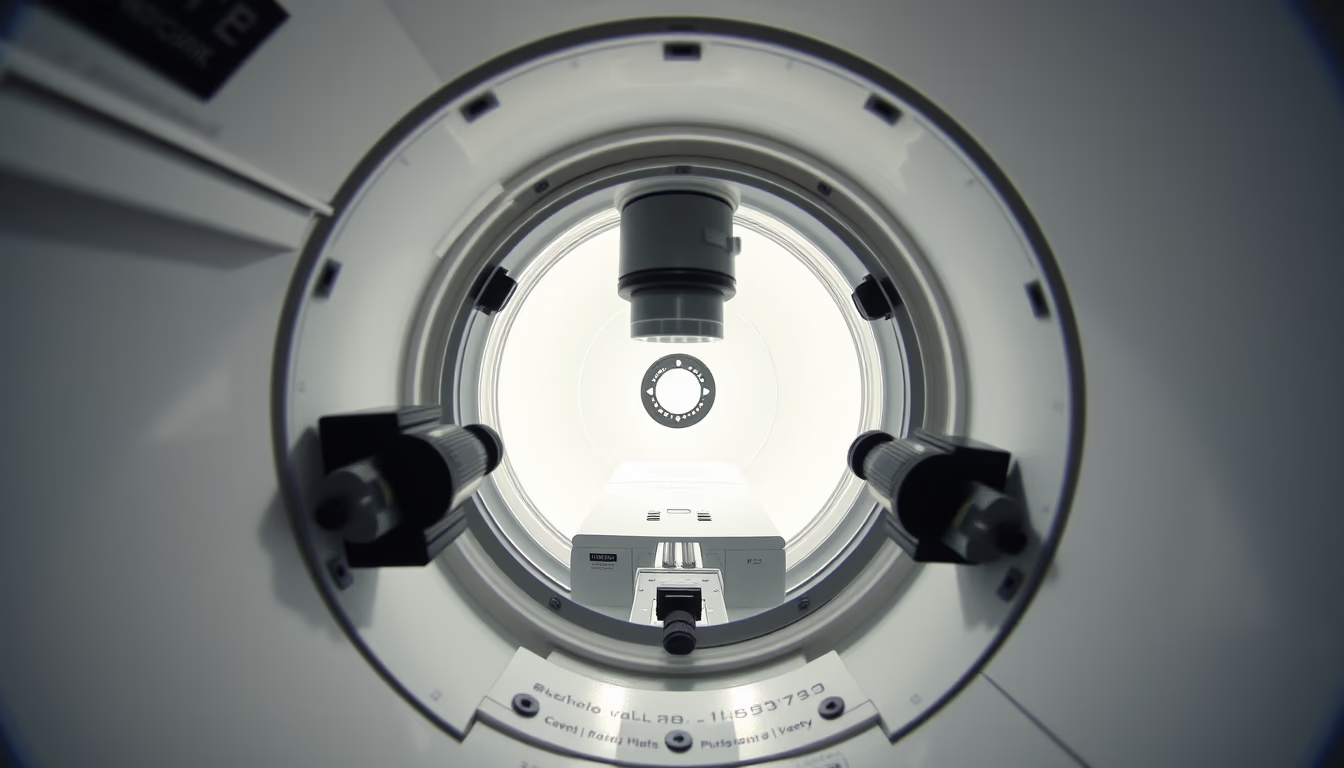
Mass spectrometer device
1344×768 · AVIF · CC BY 4.0
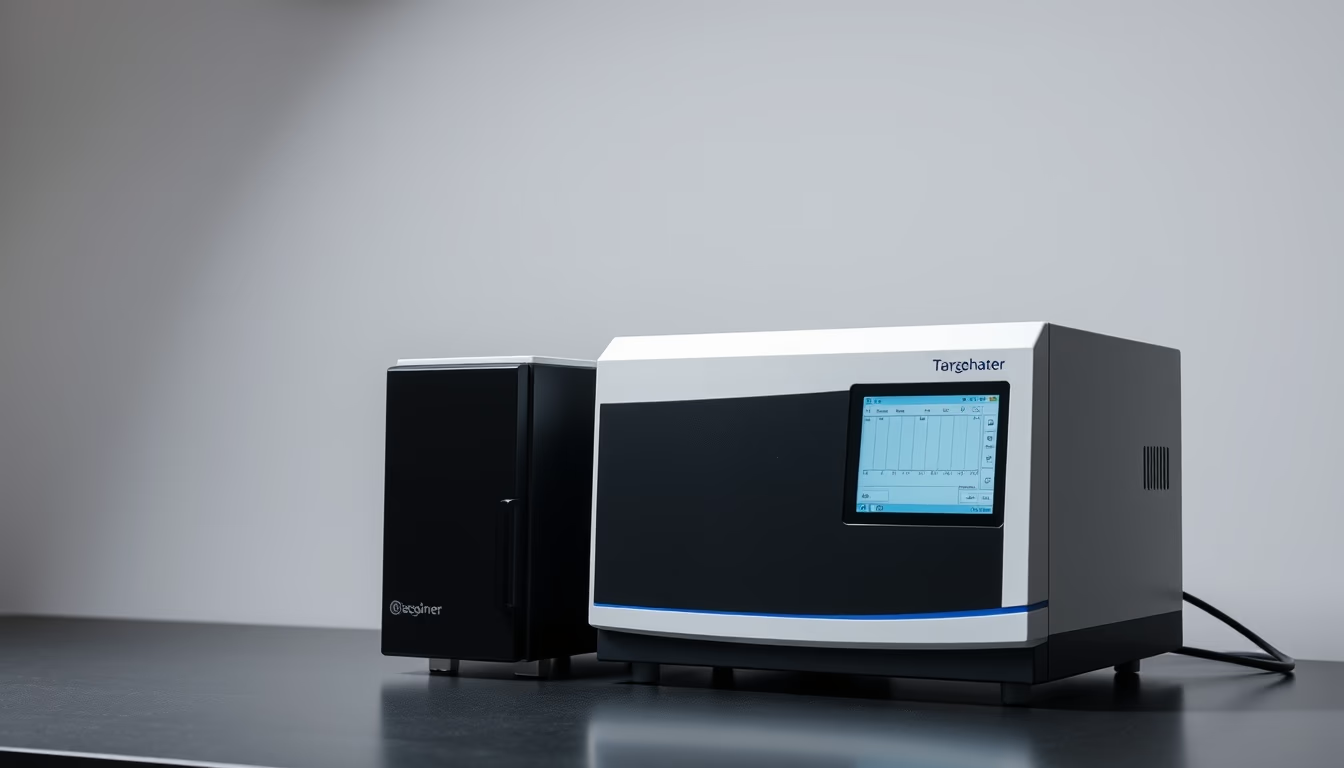
A mass spectrometer is an analytical instrument that measures the mass-to-charge ratio of ions, crucial in chemistry, biology, and medicine.
About this subject
The mass spectrometer is one of the most versatile and accurate instruments in chemical analysis. It works by ionizing chemical compounds and separating the resulting ions based on their mass-to-charge ratio (m/z). This process enables the identification of unknown molecules, quantification of substances, and elucidation of structures. Originating in the early 20th century with experiments by J.J. Thomson and Francis Aston, the device was instrumental in the discovery of stable isotopes and earned Aston the Nobel Prize in Chemistry in 1922. Since then, technology has evolved into various configurations: quadrupole, time-of-flight (TOF), ion trap, magnetic sector, and hybrids such as Q-TOF and Orbitrap. Each type offers specific advantages in resolution, sensitivity, and mass range. In practice, mass spectrometers are indispensable in quality control laboratories, pharmaceutical research, clinical diagnostics (such as newborn screening), food analysis, forensic toxicology, proteomics, and metabolomics. Coupled techniques like liquid chromatography-mass spectrometry (LC-MS) and gas chromatography-mass spectrometry (GC-MS) further expand applicability, allowing analysis of complex mixtures with high selectivity. The instrument also plays a critical role in biomarker discovery and environmental monitoring of pollutants. In summary, the mass spectrometer has transformed humanity's ability to explore the molecular world.
Frequently Asked Questions
What is a mass spectrometer used for?
It is used to identify and quantify molecules, determine chemical structures, and analyze isotopologues. Applications include chemistry, biology, medicine, pharmacology, environmental science, and forensics.
How does a mass spectrometer work?
The sample is ionized (e.g., by electrospray or electron impact). Ions are separated in a mass analyzer (quadrupole, TOF, etc.) based on mass-to-charge ratio, then detected. The result is a mass spectrum.
What is the difference between LC-MS and GC-MS?
LC-MS (liquid chromatography-mass spectrometry) analyzes non-volatile or thermolabile compounds, while GC-MS (gas chromatography-mass spectrometry) is suitable for volatile and heat-stable substances. Both provide separation and identification.
Direct URL
https://pub-c7d6a6ea828543ac903a74a341ccb2e1.r2.dev/imagens/mass-spectrometer-device-studio-still-life-fresh13.avifHow to credit
Include a visible link back to UtilizAí. Copy one of the snippets below:
<a href="https://xn--utiliza-eza.com/en/midia/imagens/mass-spectrometer-device-studio-still-life-fresh13">Mass spectrometer device</a> by <a href="https://xn--utiliza-eza.com">UtilizAí</a>, licensed under <a href="https://creativecommons.org/licenses/by/4.0/">CC BY 4.0</a>.
[Mass spectrometer device](https://xn--utiliza-eza.com/en/midia/imagens/mass-spectrometer-device-studio-still-life-fresh13) by [UtilizAí](https://xn--utiliza-eza.com), CC BY 4.0
License: CC-BY-4.0