Magnifying glass papers
1344×768 · AVIF · CC BY 4.0
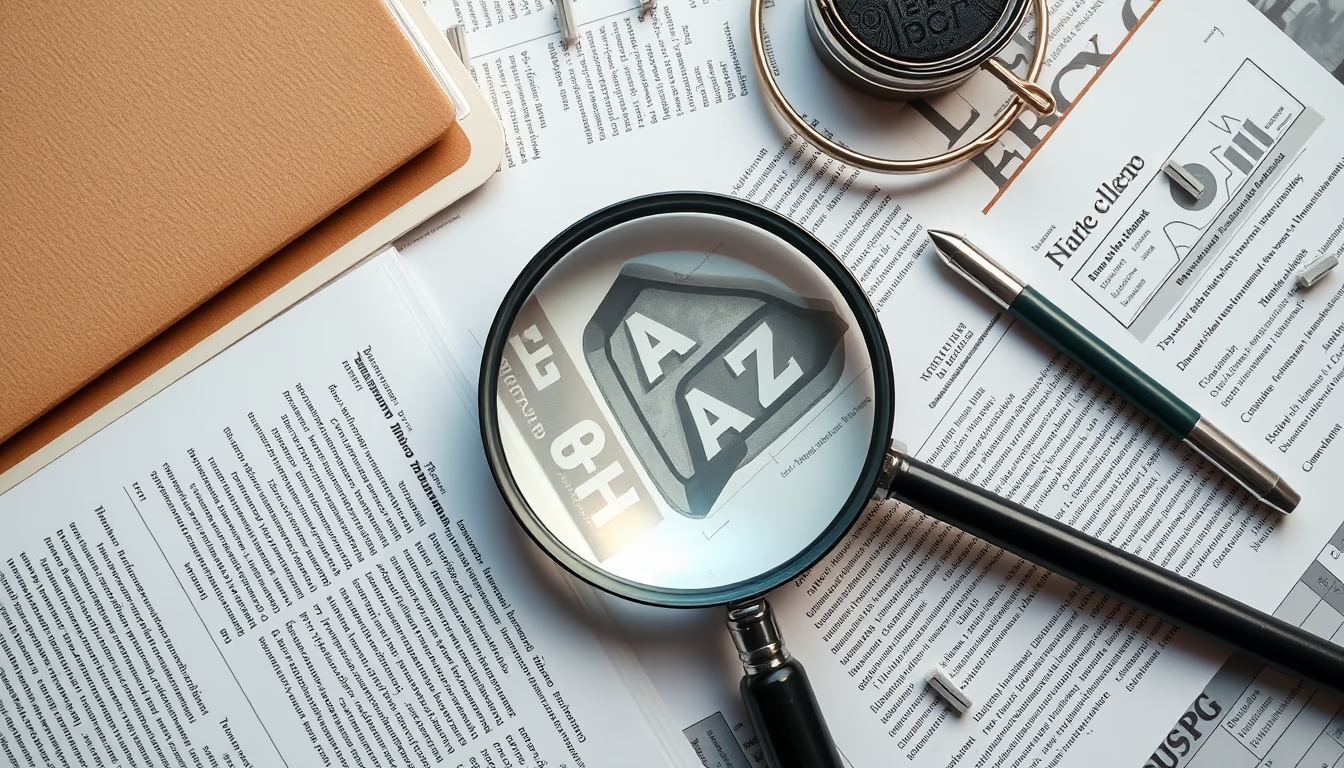
Magnifying glass over old papers evokes historical research and the analysis of rare documents.
About this subject
The magnifying glass is a simple optical instrument consisting of a converging lens that magnifies nearby objects. Its use on ancient documents dates back to the Renaissance, when scholars like Galileo and Kepler improved lenses to observe details imperceptible to the naked eye. In historical research, the magnifying glass aids in reading worn manuscripts, identifying watermarks, and verifying the authenticity of seals and signatures.
Antique papers, especially those produced between the 15th and 19th centuries, carry unique features: rag fibers, gelatin-based sizings, and laid lines. Analyzing these elements helps date and locate the document's origin. In Brazil, historical archives such as the National Archive and the Brazilian Historical and Geographical Institute preserve millions of documents that require careful handling with magnifying glasses to avoid damage.
The combination of a magnifying glass and old papers is also iconic in popular imagination, associated with detectives, archivists, and collectors. In museums, the magnifying glass is an essential tool for conservators examining artworks and documents for restorations or forgeries. The isometric flat lay technique, as in the image, is often used in stock photography to represent this activity in a stylized way.
Trivia: the oldest known magnifying glass was discovered in the ruins of ancient Mesopotamia, dating back to around 700 BC, made of polished rock crystal. The word 'magnifying glass' in Portuguese ('lupa') comes from the Latin 'lupus', wolf, referring to the animal's sharp eyesight.
Frequently Asked Questions
Why is the magnifying glass important for historical document research?
The magnifying glass allows tiny details to be enlarged, such as watermarks, paper type, and ink wear, helping to date, authenticate, and preserve old documents.
How can you identify a genuine antique paper?
Antique papers typically have rag fibers, gelatin-based sizing, and laid lines. A magnifying glass reveals these features, distinguishing them from modern industrial papers.
What precautions should be taken when handling historical documents with a magnifying glass?
Wear cotton gloves to avoid oils, place the document on a flat surface, and do not press the magnifying glass against the paper to prevent tears or stains.
Direct URL
https://pub-c7d6a6ea828543ac903a74a341ccb2e1.r2.dev/imagens/magnifying-glass-papers-isometric-flat-lay-p1.avifHow to credit
Include a visible link back to UtilizAí. Copy one of the snippets below:
<a href="https://xn--utiliza-eza.com/en/midia/imagens/magnifying-glass-papers-isometric-flat-lay-p1">Magnifying glass papers</a> by <a href="https://xn--utiliza-eza.com">UtilizAí</a>, licensed under <a href="https://creativecommons.org/licenses/by/4.0/">CC BY 4.0</a>.
[Magnifying glass papers](https://xn--utiliza-eza.com/en/midia/imagens/magnifying-glass-papers-isometric-flat-lay-p1) by [UtilizAí](https://xn--utiliza-eza.com), CC BY 4.0
License: CC-BY-4.0