Magnifying glass papers
1344×768 · AVIF · CC BY 4.0
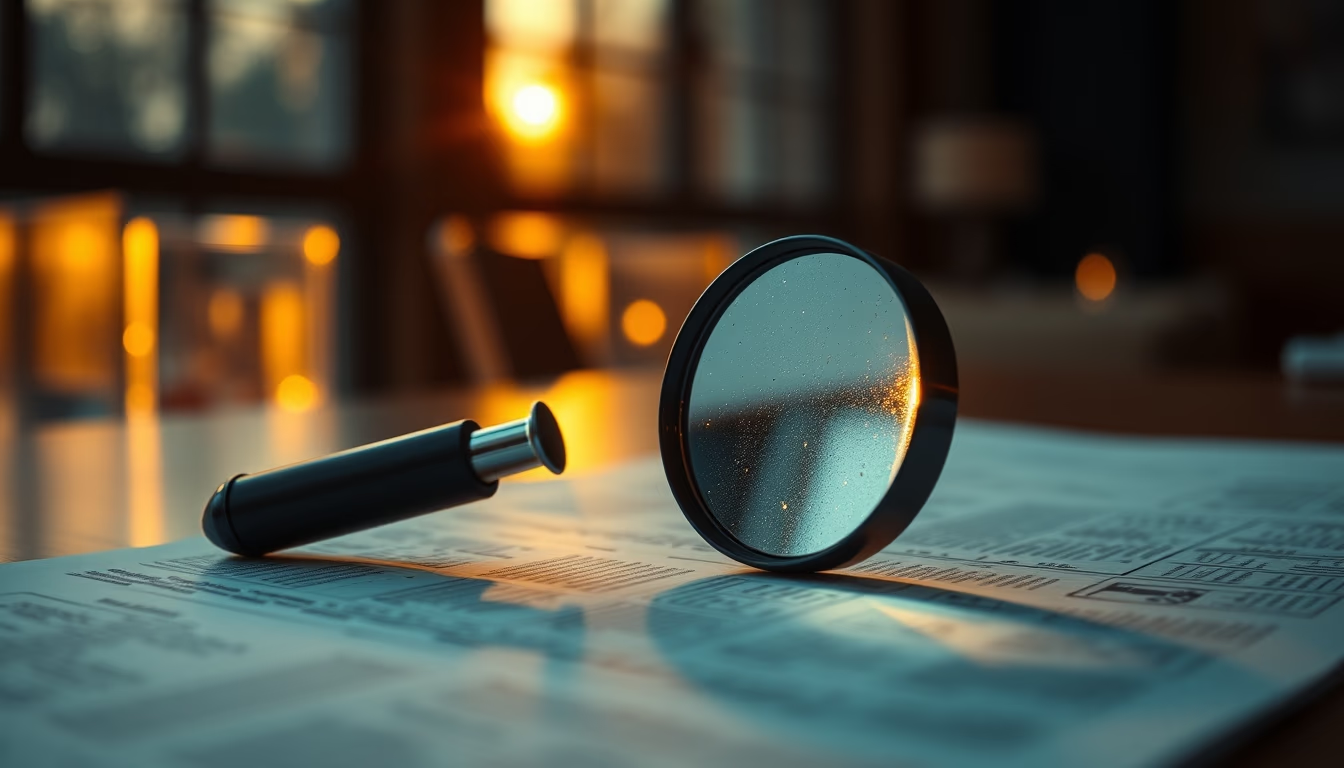
Magnifying glass over antique papers: an essential tool for examining historical documents, revealing details imperceptible to the naked eye.
About this subject
The use of magnifying glasses to examine antique papers dates back to the earliest collectors and scholars of historical documents, such as letters, maps, and manuscripts. These magnifying lenses, often with wooden or metal handles and ground glass lenses, allow observation of paper texture, watermarks, and ink strokes. In paleography, the study of ancient handwriting, the magnifying glass is indispensable for reading faded or erased writings. In conservation, it helps identify deterioration or previous interventions.
Antique papers produced between the 15th and 19th centuries were handmade from cotton or linen fibers, giving them a different resilience than modern paper. The magnifying glass reveals elements such as irregular fiber distribution and watermarks, which help date and authenticate the document. Often such papers were stored in humid archives or exposed to light, causing rust stains or foxing only visible under magnification.
Interestingly, the word “magnifying glass” comes from Latin “magnificare,” and the first handheld magnifiers appeared in the 17th century, used by naturalists and philosophers. For historical documents, the ideal magnification is 5x to 10x, as higher magnifications can distort the image. Today, even with digital scanners, the magnifying glass remains the preferred tool for archivists for a first inspection due to its simplicity and because it does not damage the paper.
Frequently Asked Questions
Why use a magnifying glass to examine antique papers?
The magnifying glass reveals details such as watermarks, paper fibers, and ink residues invisible to the naked eye, crucial for authenticating and dating the document.
What magnification is recommended for historical documents?
A magnification of 5x to 10x is ideal, providing sufficient detail without distorting the image or causing eye strain.
Does the magnifying glass damage antique paper?
No, if used correctly. The magnifying glass does not touch the paper; it only enlarges the image, preserving the document's integrity.
Direct URL
https://pub-c7d6a6ea828543ac903a74a341ccb2e1.r2.dev/imagens/magnifying-glass-papers-cinematic-wide-shot-p5.avifHow to credit
Include a visible link back to UtilizAí. Copy one of the snippets below:
<a href="https://xn--utiliza-eza.com/en/midia/imagens/magnifying-glass-papers-cinematic-wide-shot-p5">Magnifying glass papers</a> by <a href="https://xn--utiliza-eza.com">UtilizAí</a>, licensed under <a href="https://creativecommons.org/licenses/by/4.0/">CC BY 4.0</a>.
[Magnifying glass papers](https://xn--utiliza-eza.com/en/midia/imagens/magnifying-glass-papers-cinematic-wide-shot-p5) by [UtilizAí](https://xn--utiliza-eza.com), CC BY 4.0
License: CC-BY-4.0