Lizard scales pattern
1344×768 · AVIF · CC BY 4.0
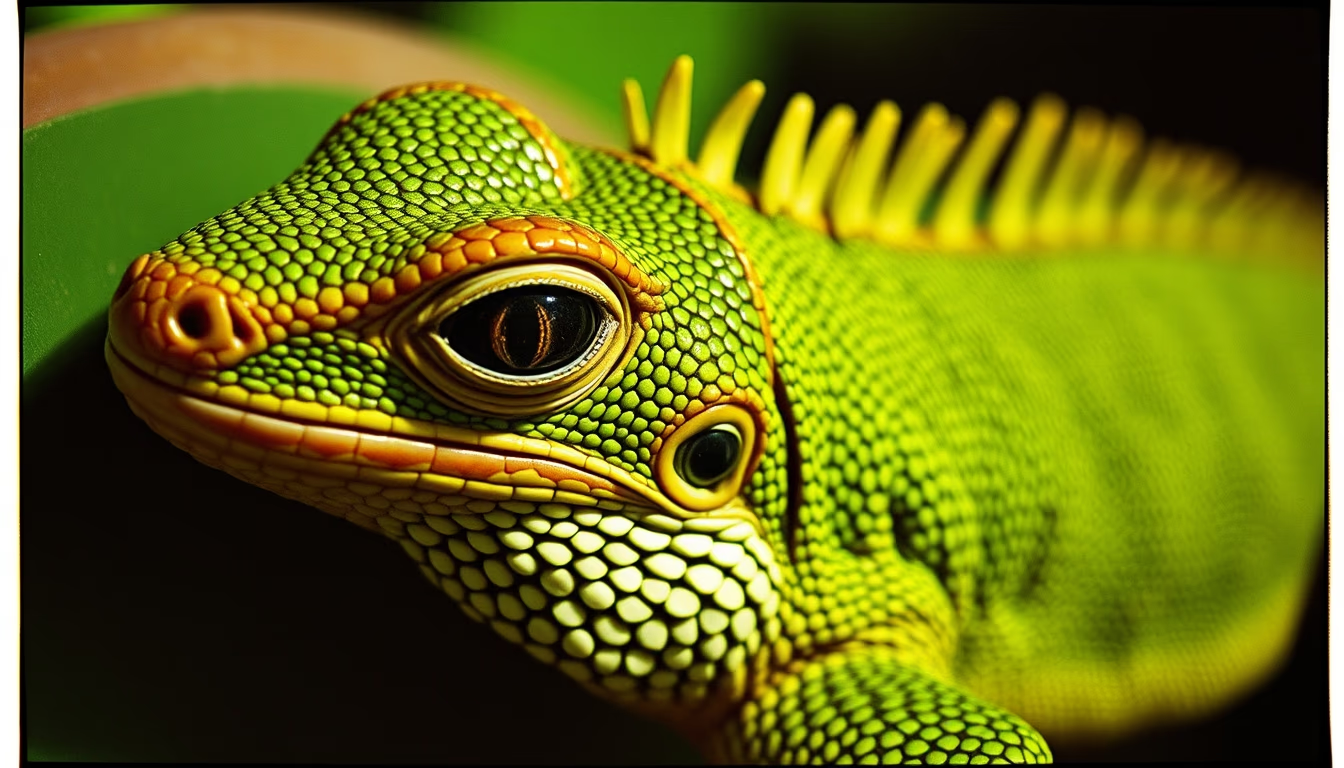
Lizard scales are rigid keratin plates covering the body of these reptiles, providing protection and aiding in thermal and water regulation.
About this subject
Lizard scales are epidermal structures composed mainly of beta-keratin, a protein tougher than the alpha-keratin found in mammals. They form a physical barrier against predators, parasites, and water loss, crucial for survival in arid environments. Unlike snakes, lizards have overlapping or juxtaposed scales that vary in shape and texture: granular (small and rounded), keeled (with a central ridge), or smooth, depending on the species and body region.
The arrangement and pattern of scales are so specific that they serve as taxonomic criteria to identify lizard families and genera. For instance, geckos (Gekkonidae) have modified scales into adhesive lamellae on their toes, while iguanids possess keeled dorsal scales that aid in camouflage. Scale coloration is produced by pigment cells (chromatophores) and by microscopic structures that refract light, generating metallic or iridescent tones in some groups.
Scale shedding, called ecdysis, occurs periodically as the animal grows. Unlike snakes, which shed their entire skin in one piece, lizards shed scales in patches, often helping to remove ectoparasites. During the process, the outermost layer peels off and a new layer is already formed beneath. The frequency of shedding varies with age, metabolism, and environmental conditions. In captivity, inadequate humidity can hinder ecdysis, leading to health problems.
Beyond biological function, lizard scales have inspired patterns in art and design, replicated in fabric textures, architecture, and technological products. The study of scale microstructure also contributes to biomimetics, aiding in the development of materials that mimic their strength and hydrophobicity. In some cultures, scales are used in handicrafts and jewelry, though predatory collection of threatened species is regulated.
Frequently Asked Questions
What are lizard scales made of?
Lizard scales are made primarily of keratin, the same protein as human nails and hair, but with greater rigidity due to the presence of beta-keratin.
Do all lizards shed their scales?
Yes, all lizards undergo molting (ecdysis), but unlike snakes, they shed scales in patches rather than all at once.
Can lizard scales indicate the species?
Yes, the pattern, size, and type of scales are important taxonomic features for identifying lizard species and groups.
Direct URL
https://pub-c7d6a6ea828543ac903a74a341ccb2e1.r2.dev/imagens/lizard-scales-pattern-lo-fi-disposable-camera-p3.avifHow to credit
Include a visible link back to UtilizAí. Copy one of the snippets below:
<a href="https://xn--utiliza-eza.com/en/midia/imagens/lizard-scales-pattern-lo-fi-disposable-camera-p3">Lizard scales pattern</a> by <a href="https://xn--utiliza-eza.com">UtilizAí</a>, licensed under <a href="https://creativecommons.org/licenses/by/4.0/">CC BY 4.0</a>.
[Lizard scales pattern](https://xn--utiliza-eza.com/en/midia/imagens/lizard-scales-pattern-lo-fi-disposable-camera-p3) by [UtilizAí](https://xn--utiliza-eza.com), CC BY 4.0
License: CC-BY-4.0